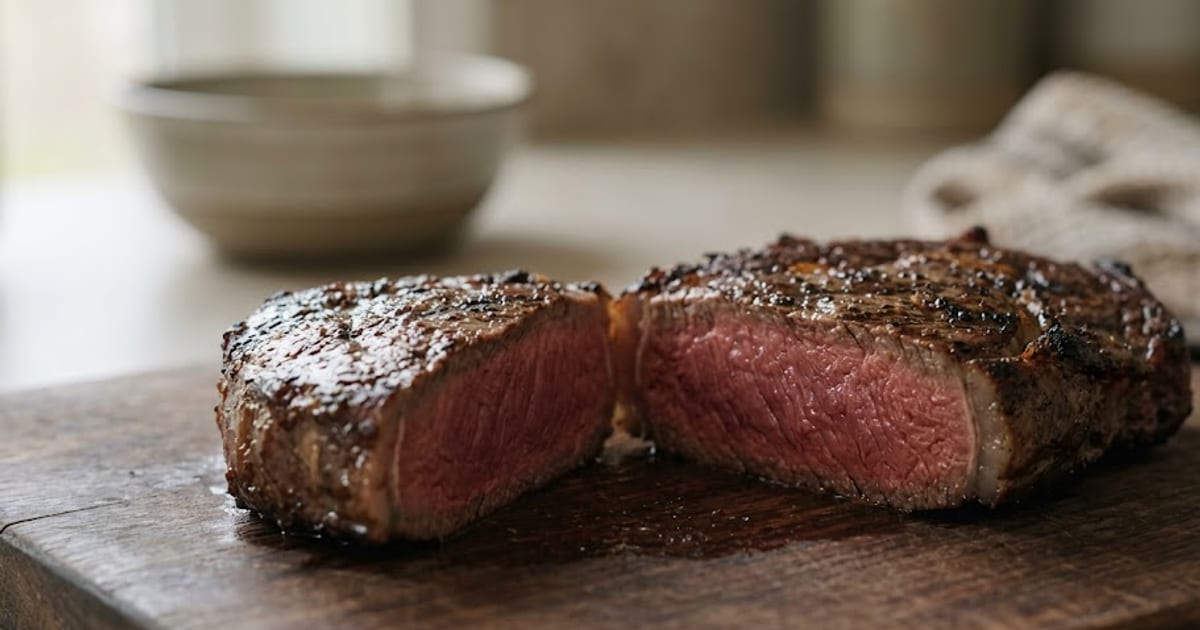
A steak is rare at 120 to 125°F, medium rare at 130 to 135°F, medium at 135 to 145°F, medium well at 145 to 155°F and well done at 155°F and above. Those are serving temperatures, measured after the steak has rested. Take it off the heat about 5°F below the number you want, because it keeps rising for several minutes after it leaves the pan.
| Doneness | Pull at | Serves at | Centre after cutting | Feel when pressed |
|---|---|---|---|---|
| Rare | 115–120°F | 120–125°F | Deep red, cool, looks wet | Soft, close to raw |
| Medium rare | 120–125°F | 130–135°F | Warm red, almost edge to edge | Soft with a little spring |
| Medium | 130–135°F | 135–145°F | Rosy pink, red gone | Springs back |
| Medium well | 140–145°F | 145–155°F | Faint pink streak | Firm |
| Well done | 150°F+ | 155°F+ | Grey-brown throughout | Very firm, dense |
The temperatures are culinary doneness targets, the numbers restaurants and cooking schools work to. The USDA safe minimum for whole cuts of beef is a separate figure, 145°F followed by a 3-minute rest, according to the FoodSafety.gov chart. That sits between medium and medium well on this chart. Why most steak is still served below it is covered further down.
What each stage looks like once it is cut
Rare. The centre is a deep, almost purple red and looks moist, as if the heat has barely reached it. It is warm on the outside and cool at the middle. The meat is soft and the fat has not started to melt, so a marbled cut can taste waxy at this stage.
Medium rare. The red turns warmer and brighter, and it runs almost to the edges of the steak with only a thin band of grey-brown under the crust. This is the stage where the steak holds the most juice while the fat has begun to soften. For most cuts it is the one chefs aim for.
Medium. The red is gone and the centre is an even rosy pink. The tan band under the crust gets wider. The steak gives up a little more juice when cut, and the texture firms up noticeably.
Medium well. Only a narrow streak of faint pink remains in the middle. The rest is tan to grey. Juice loss is clear on the board, and a lean cut starts to taste dry.
Well done. No pink at all. The meat is grey-brown from crust to centre, it has shrunk, and it presses back hard. Fat is fully rendered, which is the one thing well done does well.
Why the colour changes where it does
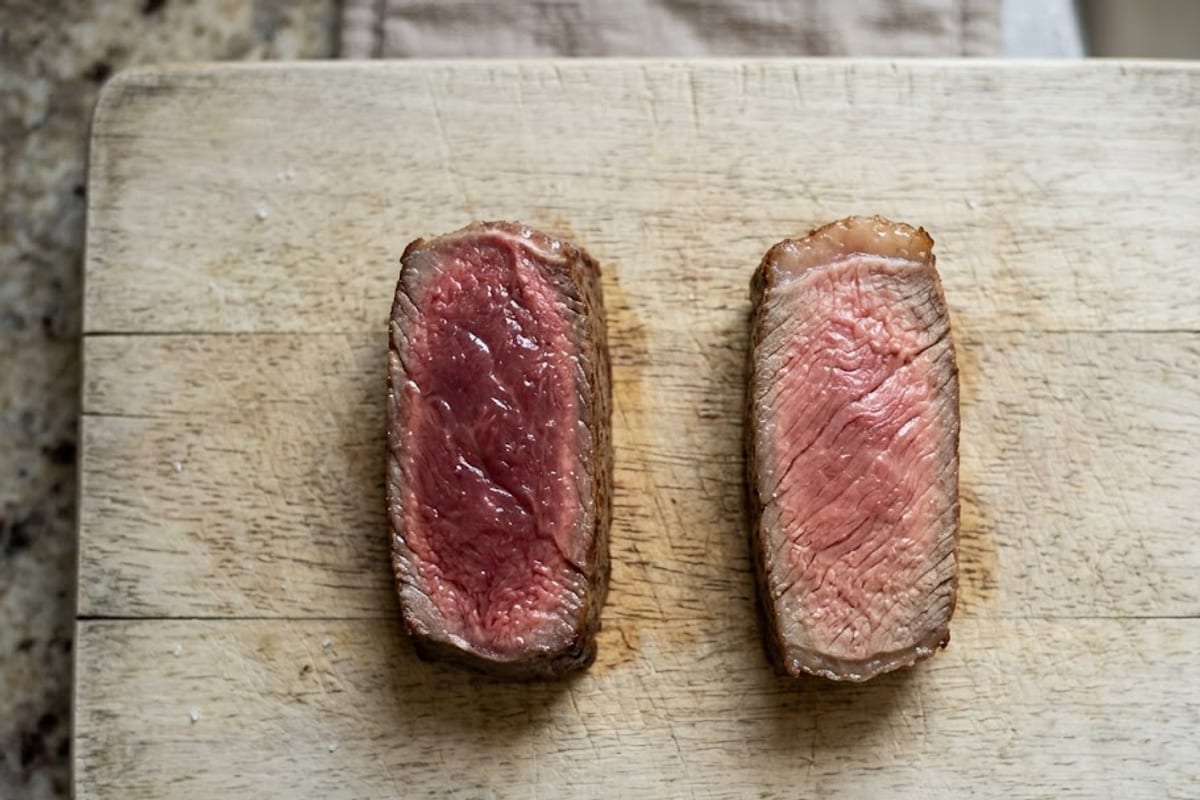
Meat is red because of a protein called myoglobin. As the temperature climbs through the 130s and 140s °F, myoglobin changes form and loses its red, first turning pink and then tan. At the same time the muscle proteins shrink and squeeze out water. The two changes run together, which is why a pink centre usually means a juicier steak.
They do not run perfectly together, though, and that is why colour is a confirmation rather than a measurement. Meat from older animals has more myoglobin and looks redder at the same temperature. Beef that was frozen, or that sat in the air for a while before cooking, can brown earlier than expected. The thermometer reading is the fact; the colour is how you check the thermometer was in the right place.
The grey band, and what causes it
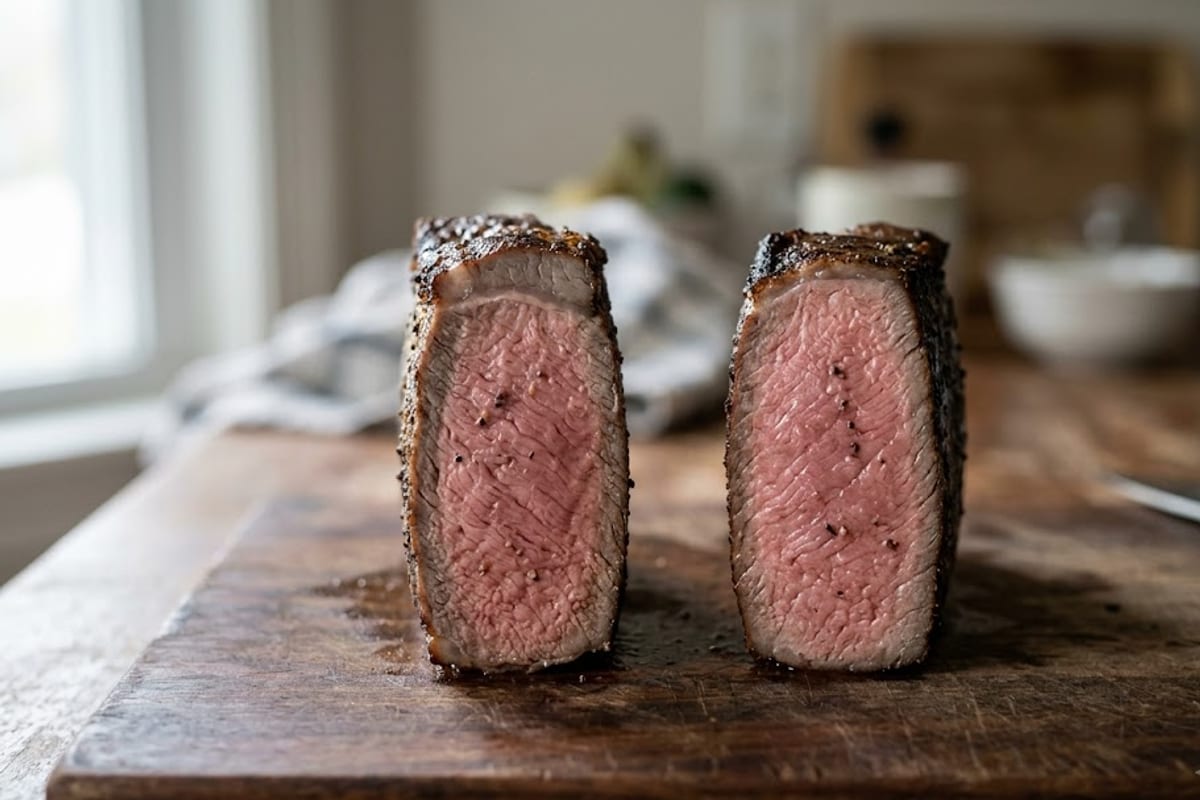
Two steaks can be exactly medium rare in the middle and look very different when cut. One has a thick grey band a quarter of an inch deep under the crust. The other is pink almost to the surface.
The difference is the cooking method. A steak seared hard in a very hot pan from cold has a steep temperature gradient: the outside races past 160°F while the centre is still climbing, and everything in between overcooks. A steak brought up slowly in a low oven, at 225 to 275°F, and then seared for a minute a side has a shallow gradient and an even colour from edge to edge. The second method is usually called a reverse sear, and it is worth using for anything thicker than about an inch and a half.
Which cuts suit which doneness
Not every steak is at its best at the same temperature. What decides it is mostly fat and connective tissue.
| Cut | Best at | Why |
|---|---|---|
| Filet mignon (tenderloin) | Rare to medium rare | Very lean; dries fast past 135°F |
| Strip (New York) | Medium rare | Moderate fat; firm but tender |
| Ribeye | Medium rare to medium | Heavy marbling needs heat to soften |
| Flank, skirt | Medium rare | Thin and lean; slice across the grain |
| Sirloin | Medium rare | Lean, can toughen at medium well |
| Hanger | Medium rare | Loose texture turns livery when well done |
A ribeye cooked rare often has pockets of fat that stay solid and chewy, which is why many cooks take it a stage further than a filet. A filet cooked to medium well has almost no fat to fall back on and eats dry. If someone at the table wants well done, a ribeye or a chuck-eye holds up far better than a tenderloin.
The hand test, and why it misleads
The hand test compares the firmness of a steak with the fleshy base of your thumb as you touch different fingers to it. It is quick and it works for a cook who has done it on the same cut hundreds of times.
For everyone else, it is unreliable for three reasons. Different cuts have different natural firmness, so a flank steak at medium rare feels firmer than a filet at medium. Hands differ from person to person. And firmness depends on thickness, so a thin steak feels tighter than a thick one at the same temperature. An instant-read thermometer costs less than one good steak and removes the guesswork.
Where to put the thermometer
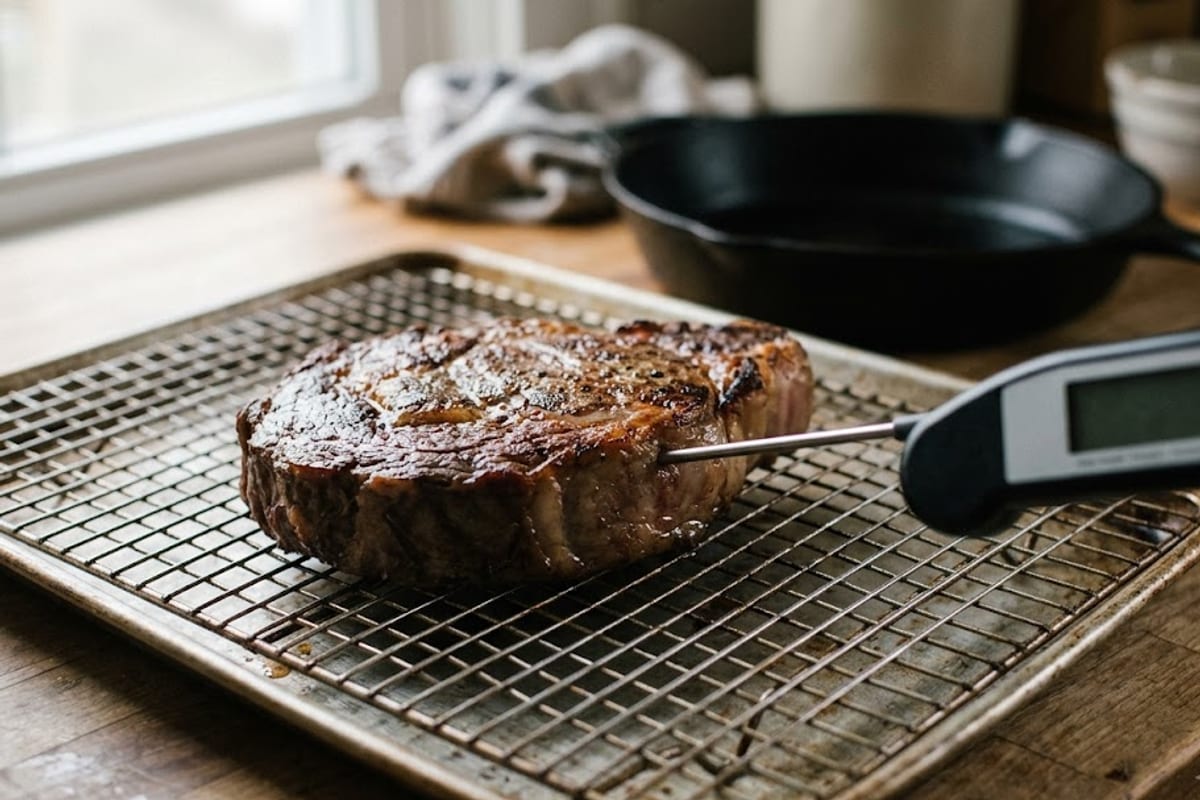
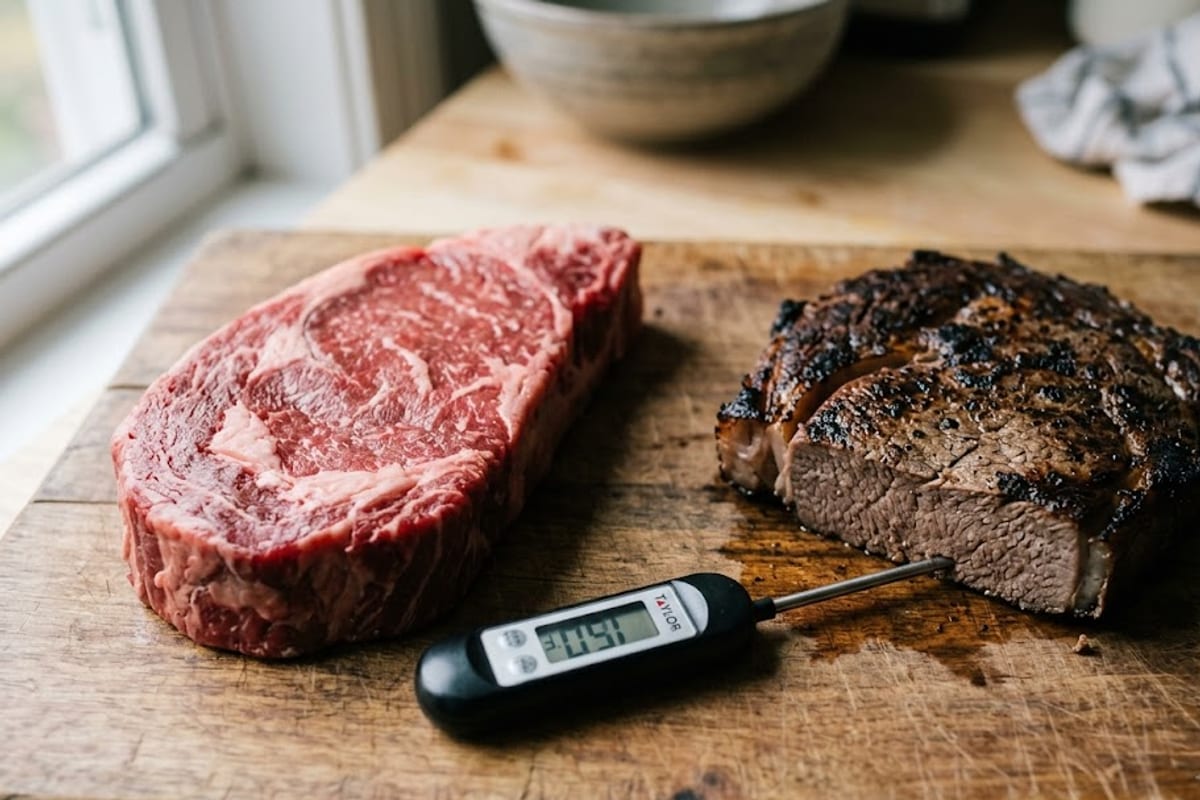
Insert the probe through the side of the steak, horizontally, so the tip sits in the middle of the thickness. Pushing it down from the top on a steak an inch thick puts the tip closer to the pan than to the centre, and the reading comes out high.
Keep the tip away from bone, which runs hotter, and from large pockets of fat, which read low. Wait two or three seconds for the number to settle. In a pan with several steaks, check the thickest one or the one furthest from the heat, and time the rest to it.
Resting and carryover
A steak keeps cooking after it comes off the heat. Heat stored in the outer layers moves toward the cooler centre, and the reading can climb 3 to 5°F on a one-inch steak and 5 to 8°F on a thick one seared hard. That is why the pull column in the chart sits below the serving column.
Rest steaks on a wire rack, uncovered, for about five minutes per inch of thickness. Covering them with foil traps steam against the crust and adds a few degrees you did not plan for. The full numbers by cut are in how long to rest meat and the physics behind the rise is in carryover cooking.
Well done without drying out
Well done does not have to mean tough. A few things make a large difference.
Choose a fatty cut. Marbling keeps a steak moist long after the proteins have tightened. Cook it more gently. A lower pan temperature, or starting the steak in a 275°F oven and finishing it in a pan, avoids the burnt exterior that usually comes with a long cook. Salt it well ahead of time, 40 minutes or overnight, because salted meat holds more water as it cooks. Slice thin, across the grain, so each bite has short fibres.
Where the USDA number fits
The USDA figure for whole cuts of beef, 145°F plus a 3-minute rest, is a safety threshold, not a doneness preference. Most restaurant steak is served below it because on a whole, intact steak, bacteria sit on the surface, and the sear takes the surface far past any temperature they survive. The centre of an intact muscle has not been exposed.
That reasoning does not carry over to ground beef, blade-tenderized steaks or steaks that have been injected with marinade, where surface bacteria can be pushed inside. Those should reach 160°F, the ground-meat figure on the same chart, and the burger version of this chart is in internal temp for burgers. Anyone cooking for a young child, a pregnant person, an older adult or someone with a weakened immune system should use the USDA temperatures.
For the medium rare stage in detail, with carryover by thickness, see internal temperature for medium rare steak. For oven timing on a thick steak, see ribeye at 400°F.
Frequently asked questions
What temperature is medium rare steak? 130 to 135°F after resting. Take it off the heat at about 125°F.
What temperature is medium steak? 135 to 145°F after resting, pulled at 130 to 135°F.
What temperature is well done steak? 155°F and above. Pull it at about 150°F.
Is pink steak safe? For an intact whole steak, pink in the centre is the normal result of medium rare or medium cooking. The USDA safe minimum is 145°F with a 3-minute rest, and anyone at higher risk should cook to that.
Why is my steak grey on the outside and red in the middle? A very hot pan overcooks the outer layer before the centre catches up. Starting thick steaks in a low oven and searing at the end gives an even colour.