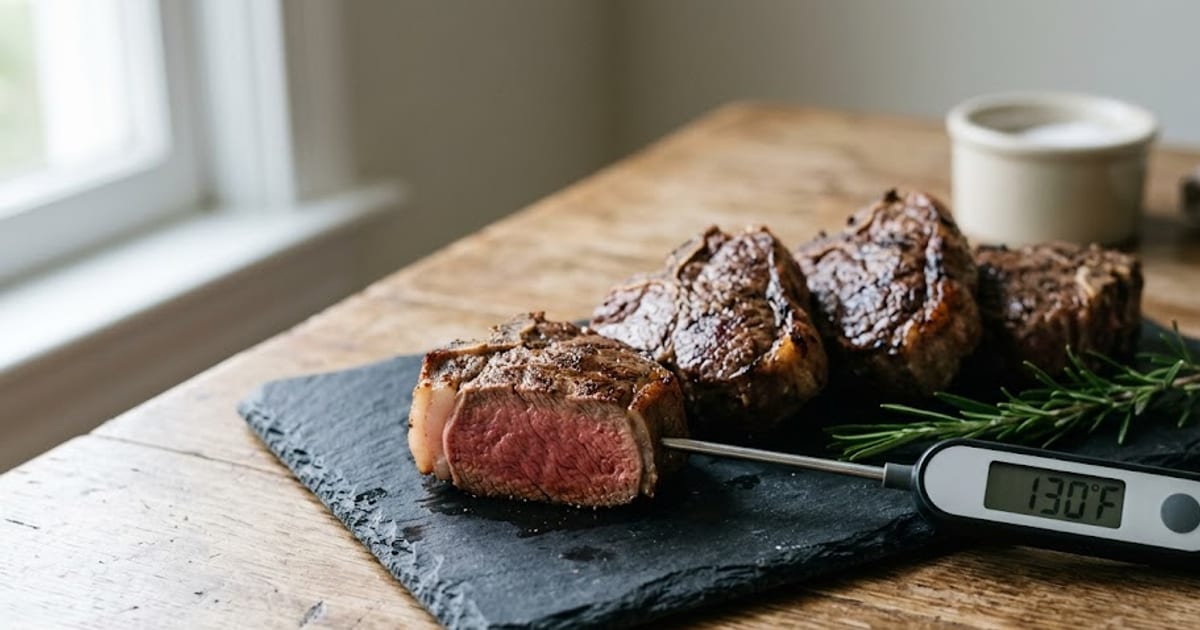
Lamb chops and rack of lamb are medium rare at 130 to 135°F. Take them off the heat at about 125 to 130°F, because a chop gains only a few degrees as it rests. A bone-in leg of lamb is usually pulled at 135°F and climbs to around 143°F while it rests. The USDA safe minimum for lamb steaks, chops and roasts is 145°F with a 3-minute rest, and ground lamb is 160°F (FoodSafety.gov).
Lamb temperature chart
| Doneness | Pull at | Serves at | Centre |
|---|---|---|---|
| Rare | 115–120°F | 120–125°F | Deep red |
| Medium rare | 125–130°F | 130–135°F | Warm rosy red |
| Medium | 135°F | 140–145°F | Pink |
| Medium well | 145°F | 150–155°F | Trace of pink |
| Well done | 155°F | 160°F+ | Grey-brown |
| Ground lamb (safe minimum) | 158°F | 160°F | No pink |
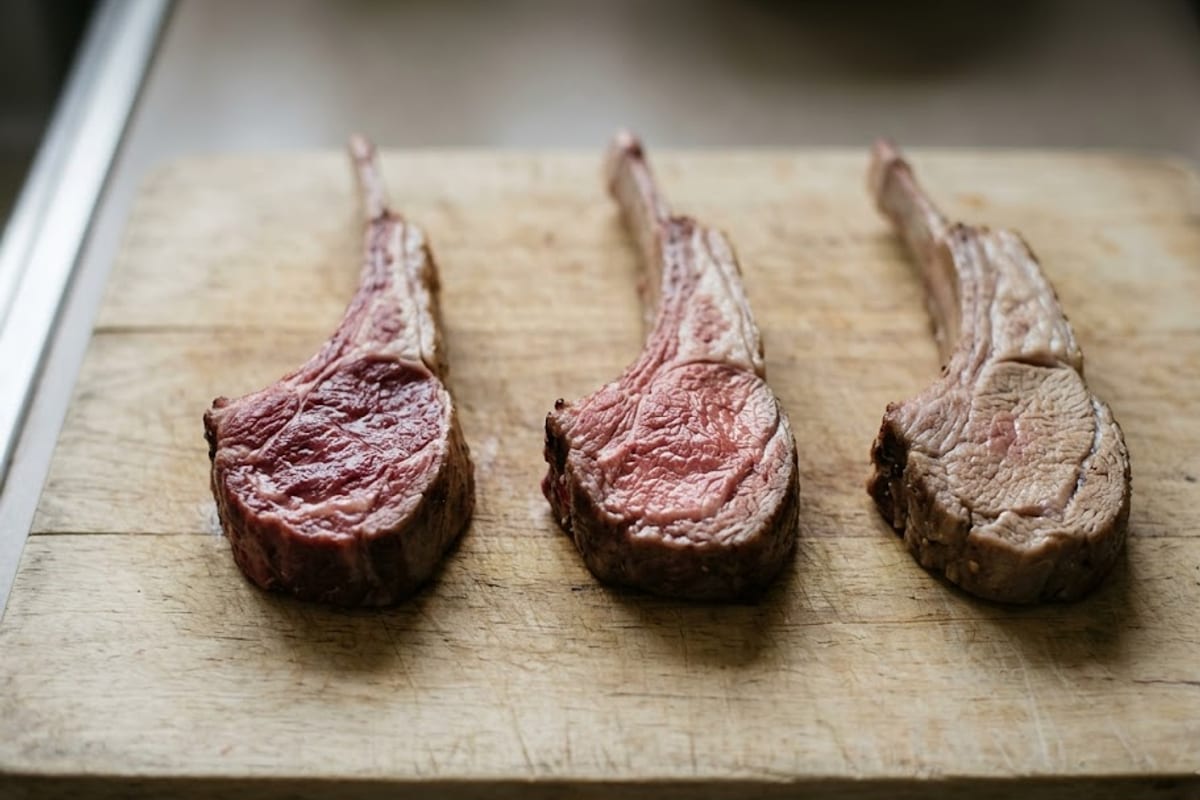
These are the same doneness stages used for beef, and for the same reason: the colour changes with the same protein at the same temperatures. Lamb tends to be served one step more cooked in Mediterranean and Middle Eastern cooking, where slow-roasted shoulder and well-done kebabs are traditional, and one step less in French and British restaurant cooking, where rack and loin are served pink.
By cut
| Cut | Typical target | Pull at | Carryover |
|---|---|---|---|
| Loin chops, 1 in | Medium rare | 128–130°F | 3–4°F |
| Rib chops, ¾ in | Medium rare | 125–128°F | 2–3°F |
| Rack of lamb | Medium rare | 125°F | 5–7°F |
| Boneless leg, rolled | Medium rare to medium | 130–135°F | 6–8°F |
| Bone-in leg, 5 lb | Medium | 135°F | 8–10°F |
| Shoulder, for slicing | Medium | 140°F | 5–8°F |
| Shoulder, slow-roasted | Falling apart | 195–200°F | Little |
| Shanks | Braised tender | 195–205°F | Little |
| Ground lamb, burgers, kofta | Safe minimum | 158°F | 2°F |
The chop and leg figures match the timing pages for lamb chops at 425°F, which pulls a 1-inch chop at 130°F, and leg of lamb at 325°F, which pulls a 5 lb bone-in leg at 135°F.
Chops: small, fast, and little carryover
A lamb chop is thin and has a bone along one side. It cooks in a few minutes on a grill or in a pan, and once it is off the heat it barely rises, 2 to 4°F on a typical chop. So pull chops close to the temperature you want to eat them at.
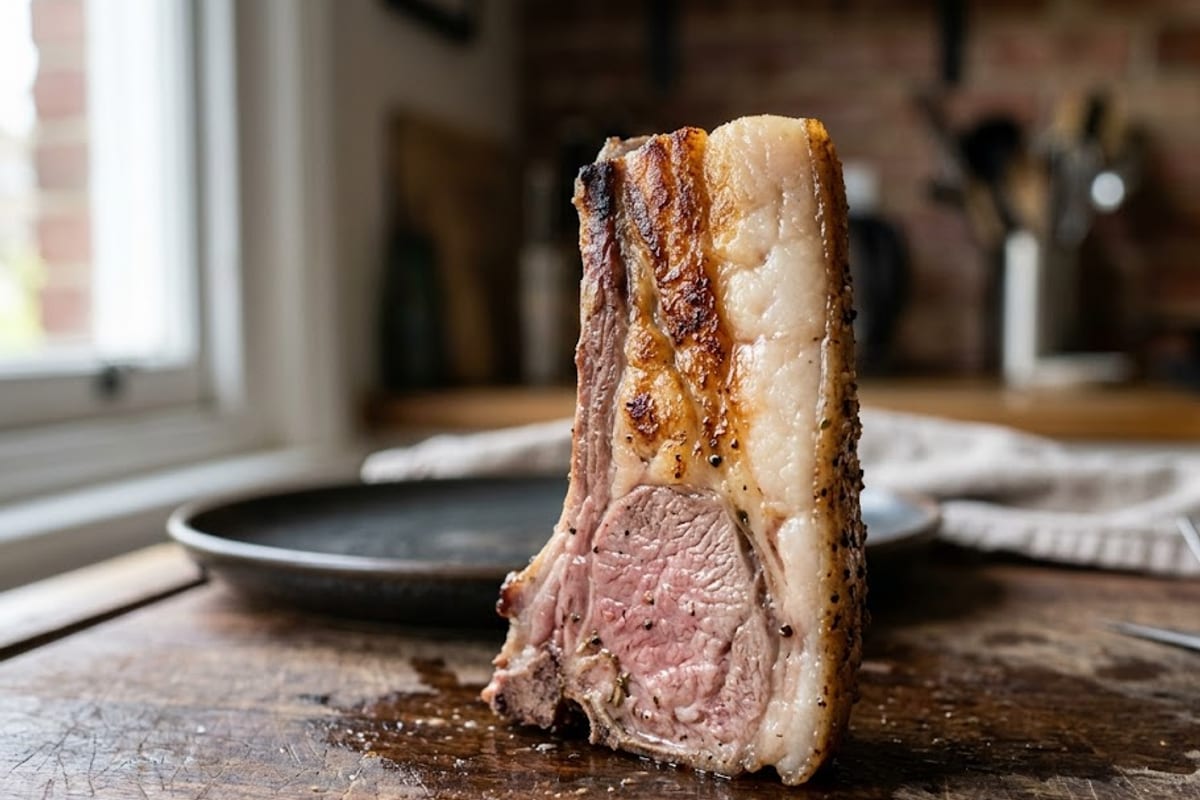
The fat cap along the edge needs direct heat to render. On a grill or in a pan, stand the chops on their fat edge for a minute or two before searing the flat sides. Unrendered lamb fat is waxy and has a strong flavour; rendered, it is crisp and much milder.
Measure through the side of the chop into the thickest part of the eye of meat, not near the bone. On rib chops that are only three quarters of an inch thick, an instant-read probe with a thin tip gives a much better reading than a thick one.
Rack of lamb
A rack is a row of rib chops left joined. It is usually seared, then roasted at 425 to 450°F for 15 to 25 minutes. Because the meat is a single thick eye protected by bone on one side, it carries over more than a single chop, around 5 to 7°F. Pulling at 125°F and resting for 10 minutes brings it to medium rare.
Measure in the centre of the eye of meat, between two ribs, with the probe inserted from the end of the rack. Cut between the bones after resting.
Leg of lamb
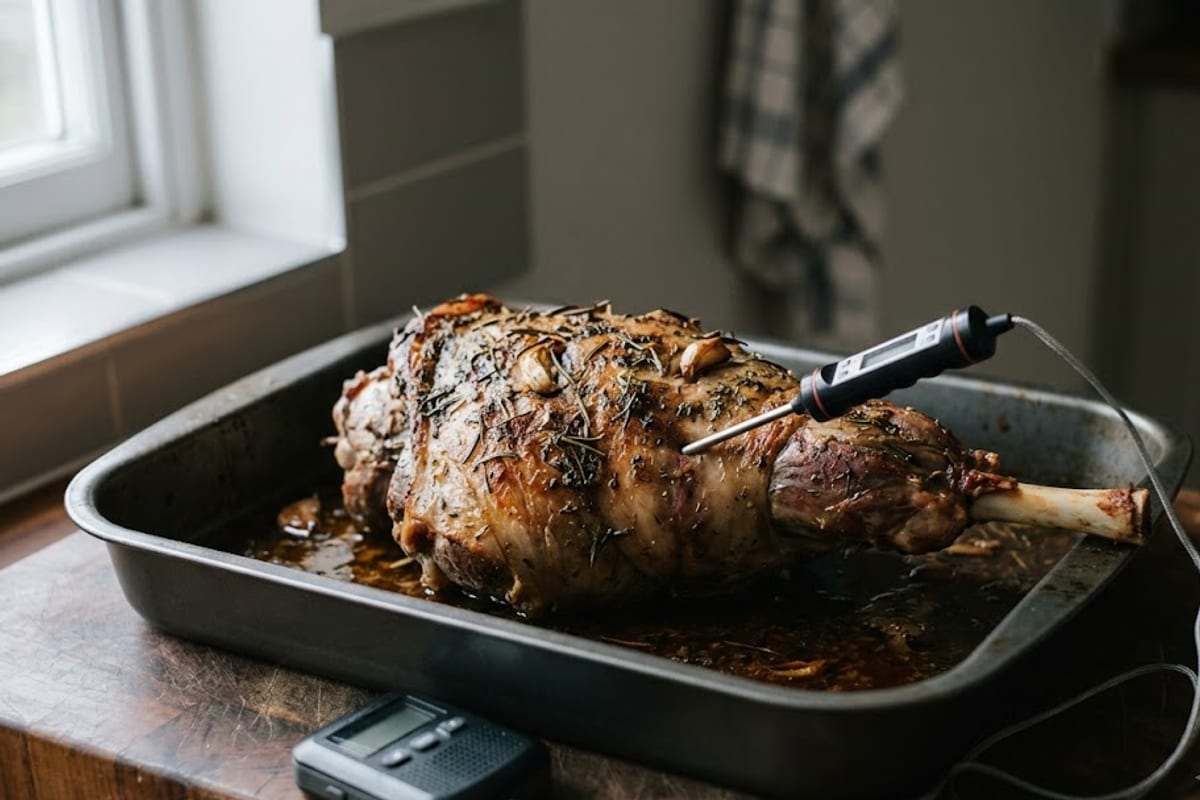
A whole leg is thick at the top and thin at the shank end. That shape means it is never one doneness throughout. When the thickest part reads 135°F, the shank end will be well done. That suits a table where people want different doneness levels, and it is why the thick end is the only place worth measuring.
Bone-in legs take longer than boneless but the bone also conducts some heat into the middle. A 5 lb bone-in leg at 325°F takes around 1½ to 1¾ hours to reach 135°F, and it gains 8°F or more while resting for 15 to 20 minutes. Tent it loosely only if the kitchen is cold.
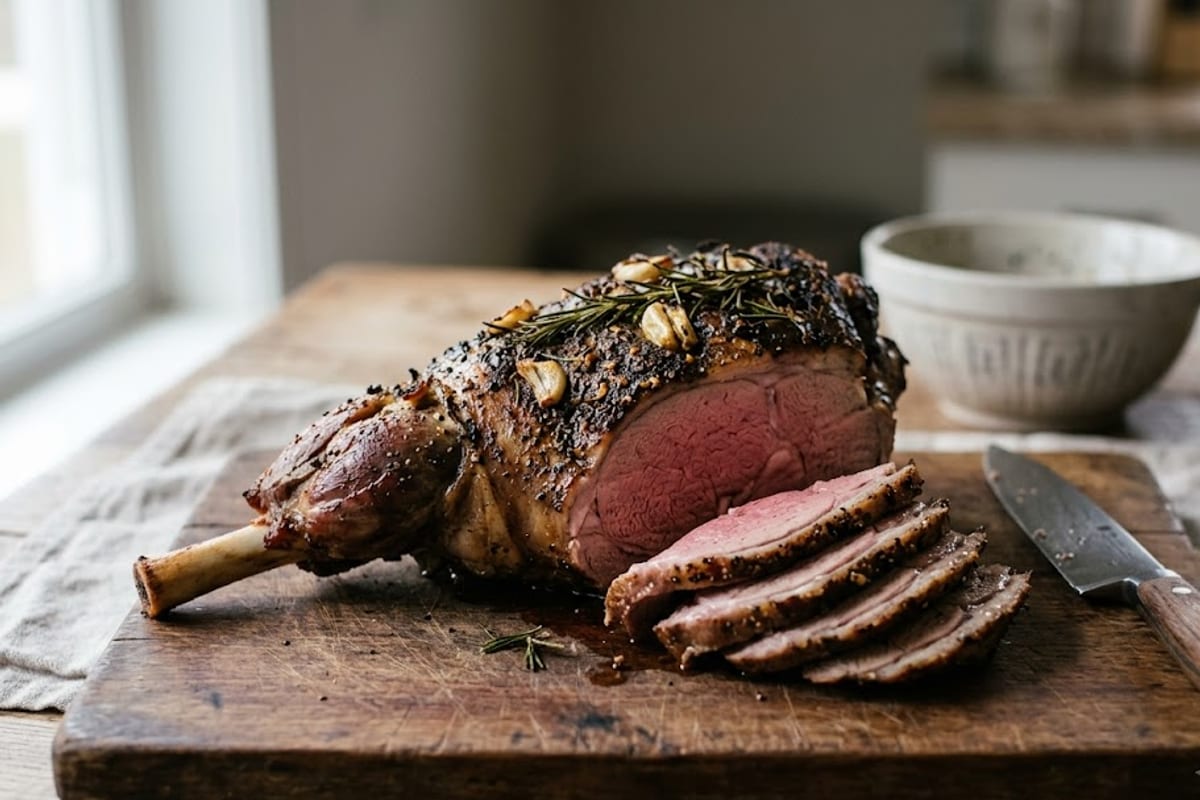
Insert the probe into the thickest part of the meat from the side, parallel to the bone but not touching it. Check a second spot on the other side of the bone before taking it out of the oven.
Shoulder and shanks: a different goal
Shoulder and shanks contain much more connective tissue than the loin and leg. At 140°F they are safe but chewy. Cooked slowly to 195 to 205°F, the collagen converts to gelatin and the meat pulls apart easily. This is the temperature range for slow-roasted shoulder and braised shanks, and resting temperature matters very little because the meat is already close to the oven temperature at the end.
A shoulder cooked for slicing, rather than pulling, is usually taken to medium, around 140°F, and sliced thin across the grain.
Why lamb is often served pink
As with beef, bacteria on a whole cut of lamb sit on the surface. Searing or roasting takes the outside well past any temperature they survive, so an intact chop or leg served pink in the centre is standard in restaurants. The USDA minimum of 145°F with a rest is still the official figure for whole cuts.
That reasoning does not apply to ground lamb. Mincing mixes the surface into the centre, so burgers, kofta and meatballs should reach 160°F. It also does not apply to anyone at higher risk from foodborne illness, including pregnant people, young children and older adults, who should use the USDA figures.
Flavour and doneness
Lamb's distinctive flavour comes largely from its fat. Cooking lamb further renders more fat out and makes the taste milder, which is one reason people who find lamb strong often prefer it medium rather than rare. Grass-fed lamb from New Zealand and Australia tends to taste stronger than grain-finished American lamb, and it is also leaner, so it dries faster past medium.
Resting lamb on a rack, uncovered, keeps the crust crisp. The general rules on resting are in how long to rest meat.
Carving a leg of lamb
Rest a leg for 15 to 20 minutes. Stand it on the board with the shank end up, holding the shank with a cloth. Cut thin slices down to the bone from the thick meaty side, then run the knife along the bone to release them. Turn the leg and repeat on the other side. A boneless leg is simply sliced across the grain.
Leftovers
Leftover roast lamb keeps 3 to 4 days in the fridge. It is good cold, sliced thin, or cut into pieces and warmed in a sauce or stew. Reheating whole slices in the oven tends to overcook them, so warm gently and briefly. Reheat leftovers to 165°F, as for any cooked meat.
Lamb bought as "spring lamb" or from a younger animal is paler, milder and more tender, and it suits pink cooking well. Mutton, from older sheep, is darker and stronger, with more connective tissue, and it is usually slow-cooked to a higher temperature, as in curries and braises, where the texture matters more than the colour.
Frequently asked questions
What temperature should lamb chops be cooked to? 130 to 135°F for medium rare, pulled at about 128°F. The USDA minimum is 145°F with a 3-minute rest.
What temperature is a leg of lamb done? Pull at 135°F in the thickest part for medium; it rises to about 143°F while resting. For medium rare, pull at 130°F.
Is it safe to eat pink lamb? An intact chop or roast cooked pink in the centre is standard practice. Ground lamb should always reach 160°F.
What temperature is lamb in Celsius? Medium rare is 54 to 57°C, medium is 60 to 63°C, the USDA minimum is 63°C and ground lamb is 71°C.