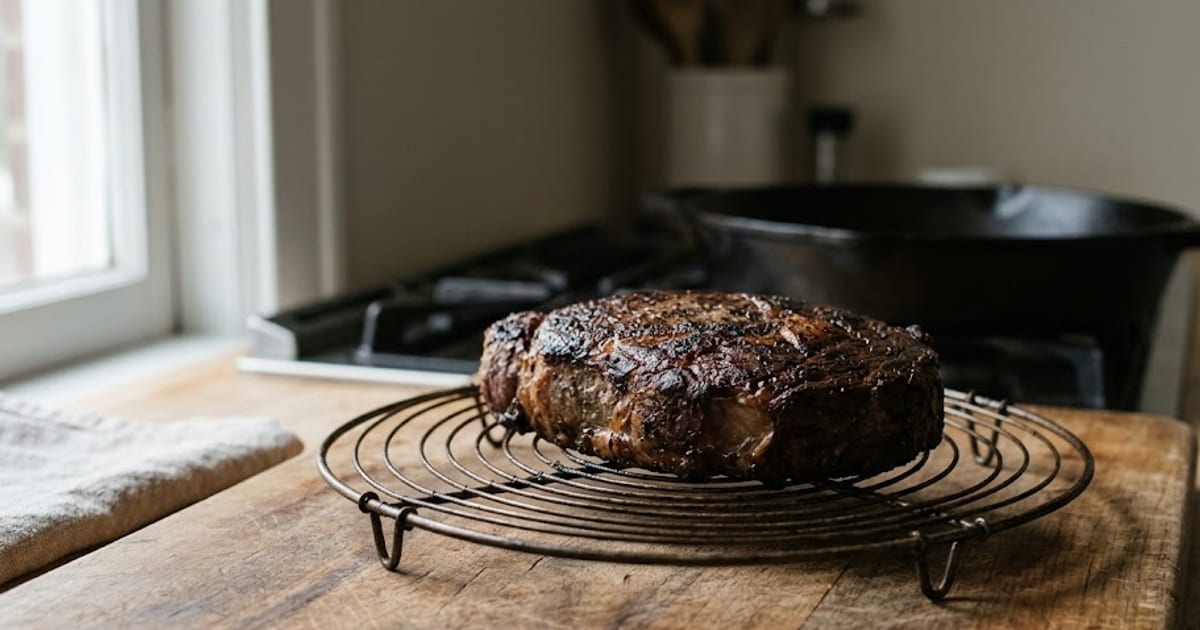
Rest a steak about 5 minutes per inch of thickness. Rest a roast 10 to 20 minutes, depending on size, and a whole turkey 20 to 30 minutes. Chicken pieces, chops and burgers need about 5 minutes. Fish needs only 2 or 3. During that time the inside of the meat keeps getting hotter, by 2 to 4°F on a thin steak and by 10 to 15°F on a large turkey, so the rest is part of the cooking.
Resting time by cut
| Cut | Rest | Temperature rise |
|---|---|---|
| Steak, ¾–1 in | 5 min | 2–4°F |
| Steak, 1½–2 in | 8–10 min | 5–8°F |
| Pork chops | 5 min | 3–4°F |
| Lamb chops | 5 min | 2–4°F |
| Chicken breast or thighs | 5 min | 2–5°F |
| Pork tenderloin | 5–10 min | 4–5°F |
| Beef tenderloin roast | 10–15 min | 5–8°F |
| Roast, about 3 lb | 15–20 min | 5–10°F |
| Prime rib, 5 lb+ | 20–30 min | 8–12°F |
| Whole chicken | 15 min | 5–10°F |
| Whole turkey, 14 lb+ | 20–30 min | 10–15°F |
| Brisket, pork shoulder | 30–60 min, wrapped | Little |
| Burgers | 2–3 min | 2–3°F |
| Fish fillets | 2–3 min | 2–3°F |
A useful rule is 5 minutes per inch of thickness for steaks and chops, and about 10 minutes per pound for a roast up to a limit of 30 minutes. For turkey, FSIS recommends letting the bird stand for 20 minutes before carving (FSIS, Let's Talk Turkey).
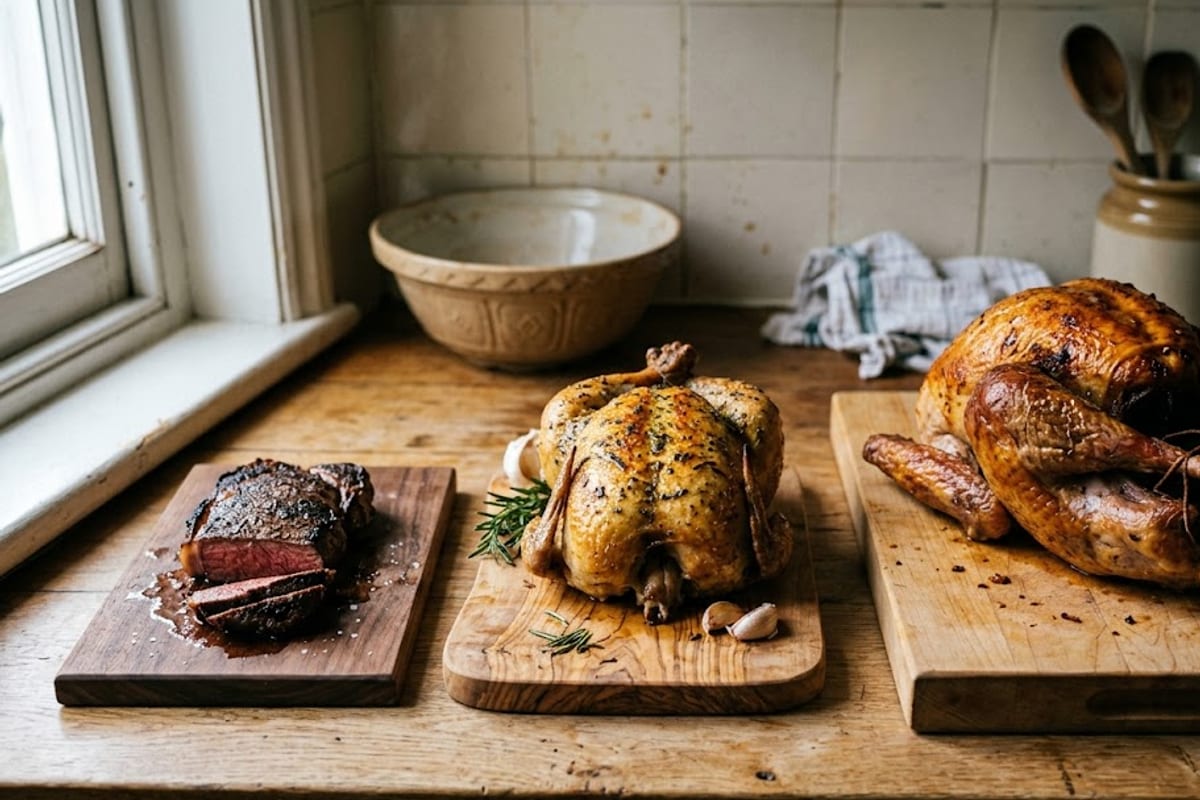
How long to rest a steak
For a typical 1-inch steak, 5 minutes is enough. A thick 1½ to 2-inch ribeye or strip needs 8 to 10 minutes. A thin skirt or flank steak, which is usually under an inch, needs 3 to 5.
Sirloin, filet and other lean steaks follow the same rule. The size of the steak matters, not the cut. A steak cooked by reverse searing, started in a low oven and seared at the end, needs less rest because its outside is not much hotter than its centre; a few minutes is enough.
The two things that happen during a rest
The temperature keeps rising. When meat comes off the heat, the outer layers are much hotter than the centre. That heat keeps moving inward, and the centre climbs. This is carryover cooking, and it is why every chart on this site gives a pull temperature lower than the serving temperature. A steak you want at 130°F comes off at about 125°F; a turkey breast you want at 165°F may come out at 160°F. The details are in carryover cooking.
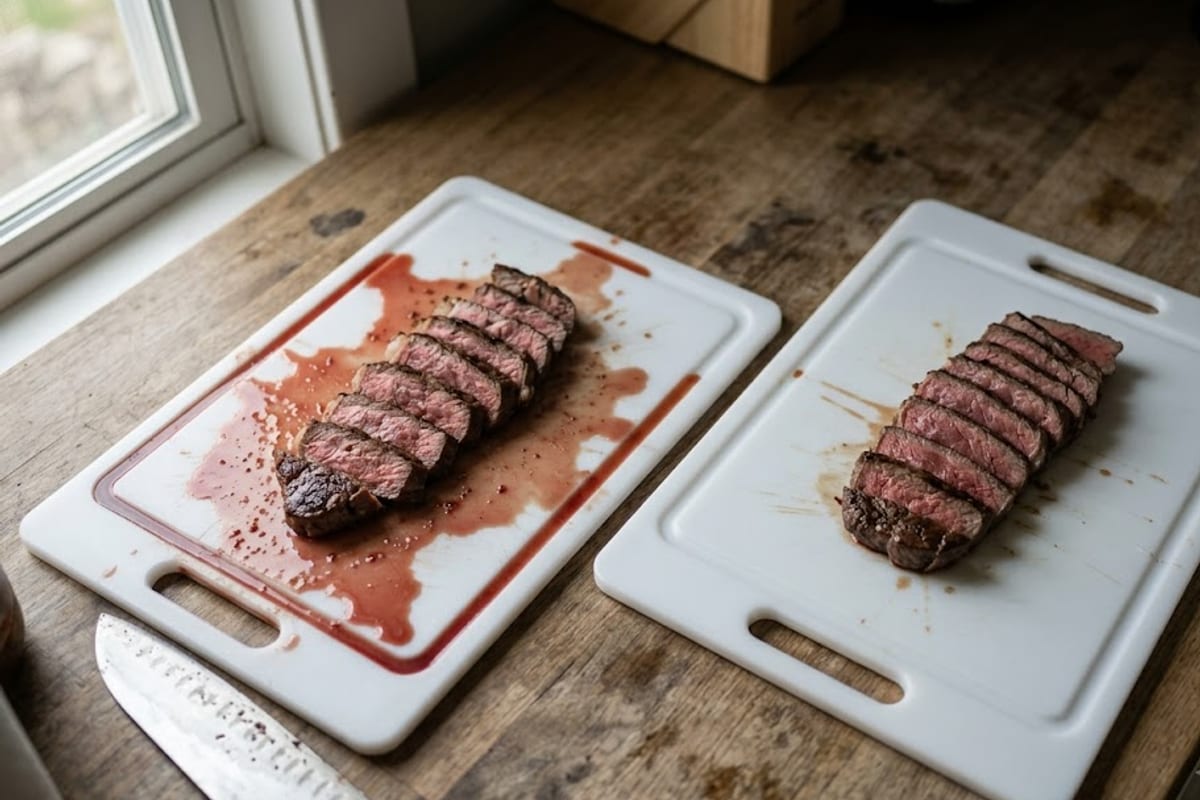
The muscle relaxes. Heat makes muscle fibres contract and push liquid toward the centre. As the outside cools a little, the fibres loosen and the juices spread more evenly and thicken slightly. Cut too soon and more of that liquid runs out onto the board.
Of the two, carryover has the bigger effect on the result. A steak cut straight away loses more juice than one rested for five minutes, but a steak that was pulled 5°F too late is overcooked however long it rests.
On a rack, uncovered
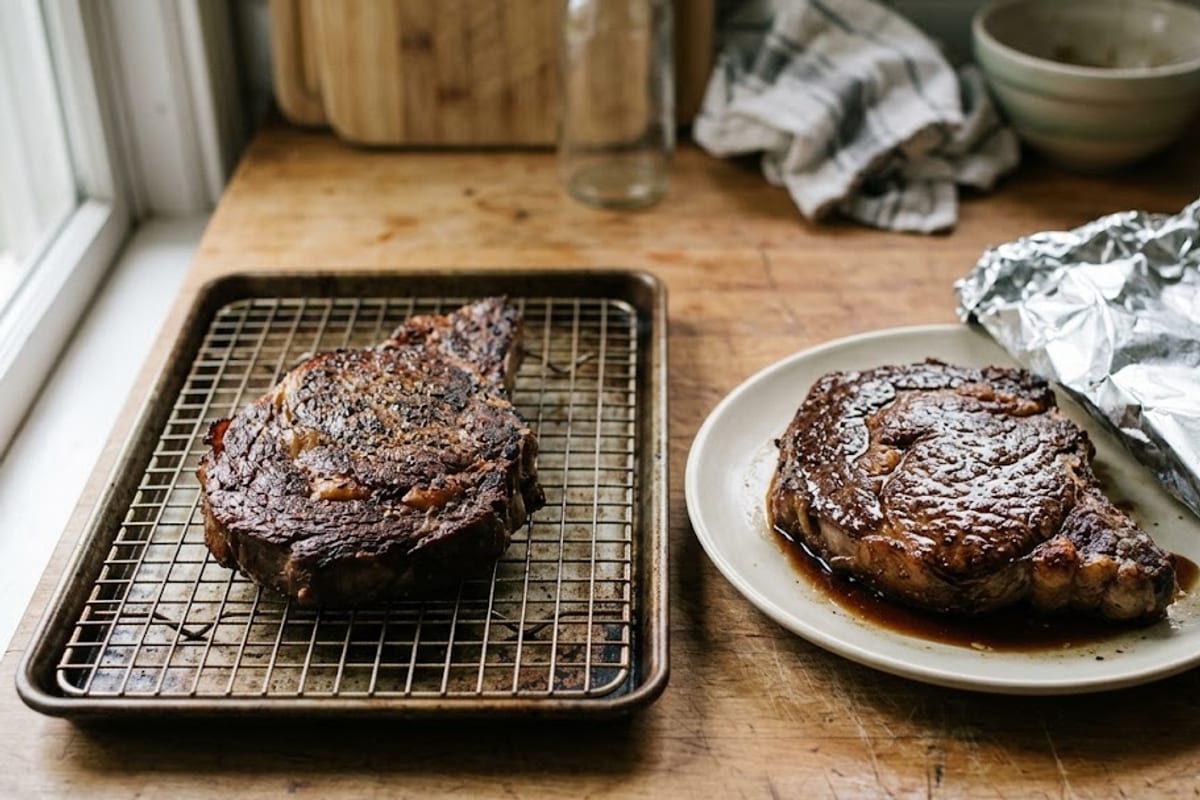
Rest meat on a wire rack, or on a board with nothing over it. A rack lets air reach the bottom, so the underside does not sit in liquid and steam.
Foil is usually unnecessary. A foil tent traps steam against the surface and softens the crust that the searing or roasting built. It also holds in heat, so a tented roast can rise several degrees more than expected, which matters when the target is medium rare.
There are two exceptions. A large roast or turkey resting for 20 minutes or more in a cool kitchen can be tented loosely, with the sides open so steam escapes. And brisket or pork shoulder is often wrapped tightly in foil or butcher paper and held in a warm cooler for an hour or more, which keeps it hot while the gelatin settles.
Watching the rise
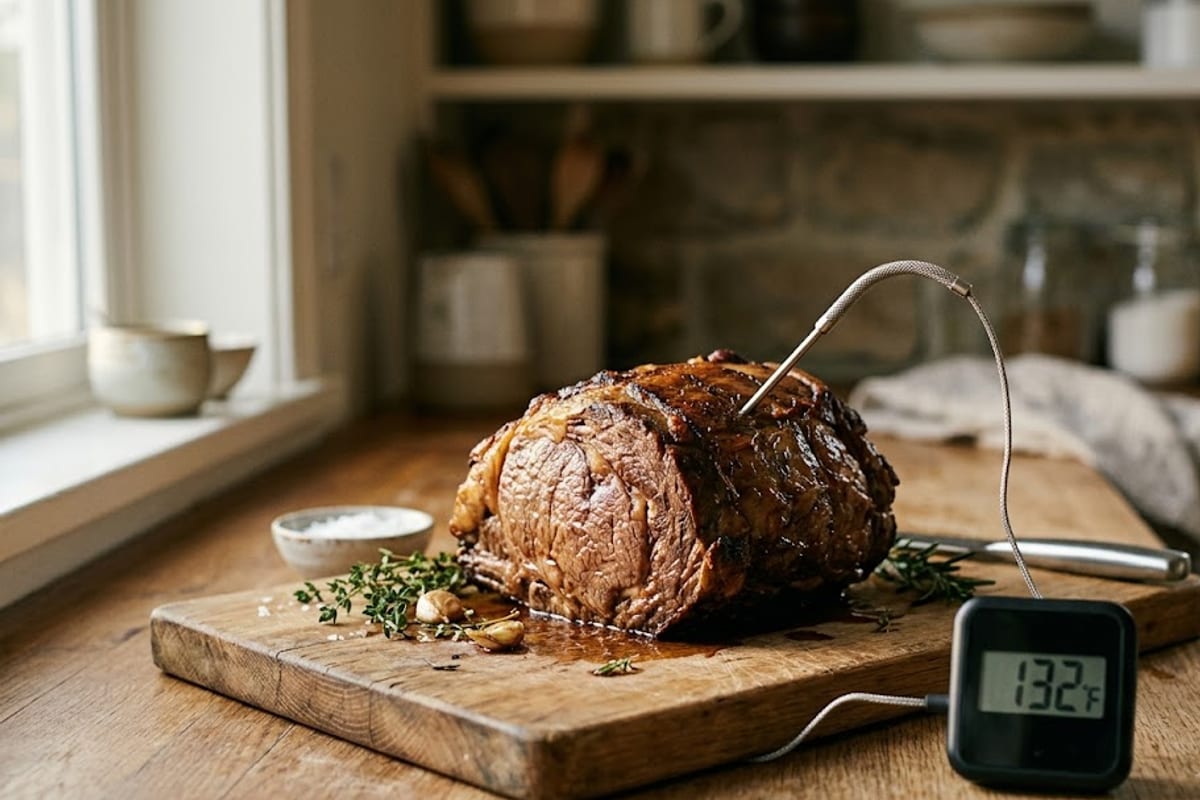
A leave-in probe thermometer shows carryover directly. Leave it in the centre of a roast after it comes out and watch the number keep climbing for several minutes, level off, then start to fall. The peak is the temperature you will serve at. It usually arrives 5 to 15 minutes after the meat leaves the oven, depending on size.
If you use an instant-read thermometer, take one reading when you pull the meat and another just before carving. The difference tells you how much carryover to allow next time with the same cut, oven and method.
Resting and food safety
For whole cuts of beef, pork, veal and lamb, the USDA safe minimum is 145°F followed by a 3-minute rest (FoodSafety.gov). FoodSafety.gov explains that the rest time allows "the innermost parts and juices of the meats to become fully and safely cooked". In that standard, the rest counts as part of reaching a safe result.
Ground meat and poultry have no rest time in the chart; they are safe once they reach 160°F and 165°F respectively. They still benefit from a short rest for texture.
What does not need a long rest
Fish. Fillets are thin, carry very little heat and have almost no connective tissue. Two or three minutes is plenty, and more just lets them cool.
Burgers. A burger gains 2 to 3°F and has no long muscle fibres to relax. Rest it for the time it takes to assemble the bun.
Anything cooked in liquid. Stews and braises are already surrounded by liquid at the same temperature. They can be served straight away, though braised meat is often better the next day.
Cuts that rest much longer
Brisket and pork shoulder are cooked to 195 to 205°F to break down collagen. After many hours of cooking, a long rest of an hour or more, wrapped and kept warm, lets the meat relax and reabsorb liquid, and it makes slicing brisket or pulling pork much easier. Slicing a brisket straight off the smoker leaves it drier than one rested properly.
Keeping food hot while it rests
Resting does not make food cold. A roast rested for 20 minutes is still well above 140°F in the centre. FSIS guidance is not to leave cooked meat and poultry at room temperature for more than 2 hours, or 1 hour when it is above 90°F. A normal rest is far short of that.
Common resting mistakes
Resting on a plate. The meat sits in its own juices and the underside turns soft and grey. Use a rack or tilt the board so liquid runs away.
Pulling at the serving temperature. If you take a steak off at 135°F and rest it, it will be medium, not medium rare. Pull 5°F early for steaks and 5 to 15°F early for roasts.
Resting a thin cut too long. Ten minutes is too long for a thin flank steak or a fish fillet. They are small enough to cool quickly and gain little.
Throwing away the juices. The liquid that collects under a resting roast is concentrated flavour. Pour it into the sauce or over the sliced meat.
Frequently asked questions
How long should I let a steak rest? About 5 minutes per inch of thickness.
How long do you rest a sirloin or fillet steak? The same rule applies: about 5 minutes for a 1-inch steak.
How long should roast beef rest? 15 to 20 minutes for a 3 lb roast; up to 30 minutes for a large rib roast.
Should I cover meat with foil while it rests? Usually no. Leave it uncovered on a rack to keep the crust crisp. Tent loosely only for large roasts in a cool room.
Does resting meat make it cold? No. The centre usually keeps rising for several minutes, and a large roast stays hot for half an hour or more.
For the temperatures to pull each cut at, see steak doneness chart, internal temperature for pork and turkey internal temperature.