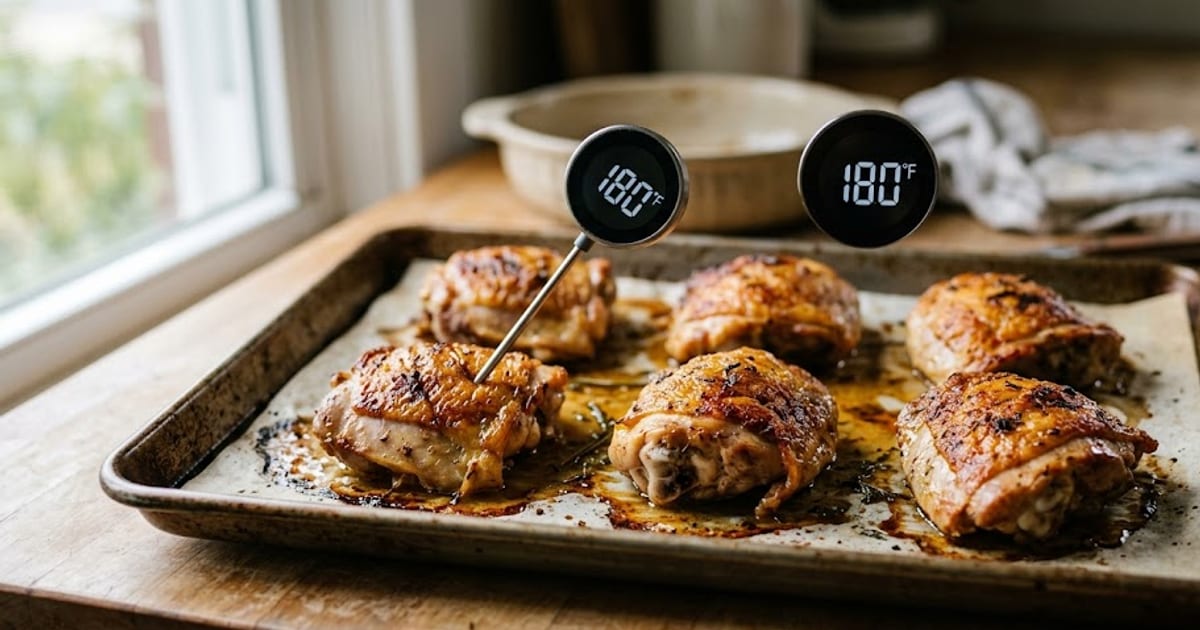
Chicken thighs are safe to eat at 165°F, the USDA safe minimum for all poultry (FoodSafety.gov). They taste much better when cooked to 175 to 185°F. At that temperature the connective tissue in the thigh has started to break down, the meat pulls easily from the bone and it stays moist because thighs carry more fat than breasts.
Chicken thigh temperature chart
| Internal temperature | Result |
|---|---|
| Below 165°F | Not yet safe |
| 165°F | Safe; firm, slightly rubbery, can look pink near the bone |
| 170–175°F | Tender, juicy, the texture most people expect |
| 180–185°F | Very tender; meat pulls from the bone easily |
| 190–195°F | Falling apart; good for shredding and braises |
| 200°F+ | Starting to dry at the edges, though still edible |
For roasting, grilling and pan-searing, aim for 175 to 185°F in the thickest part. The site's timing page for chicken thighs at 400°F pulls bone-in thighs at 180°F, which takes about 26 to 34 minutes.
Why thighs need more heat than breasts
Breast meat and thigh meat are built differently. The breast is lean muscle with little connective tissue, so it is at its best at 160 to 165°F and dries quickly beyond that. The thigh works harder when the bird walks, so it has more connective tissue, mostly collagen, and more fat.
Collagen is tough and rubbery until it gets hot enough to start converting to gelatin. That conversion begins in earnest above about 160 to 170°F and speeds up with temperature and time. At 165°F a thigh is safe, but much of its collagen is still intact, which is why it can feel chewy and cling to the bone. At 180°F enough has converted that the meat is soft and slick with gelatin.
The fat in the thigh also melts and bastes the meat from inside as it cooks. Together, the gelatin and fat keep the thigh juicy at temperatures that would make breast meat dry.
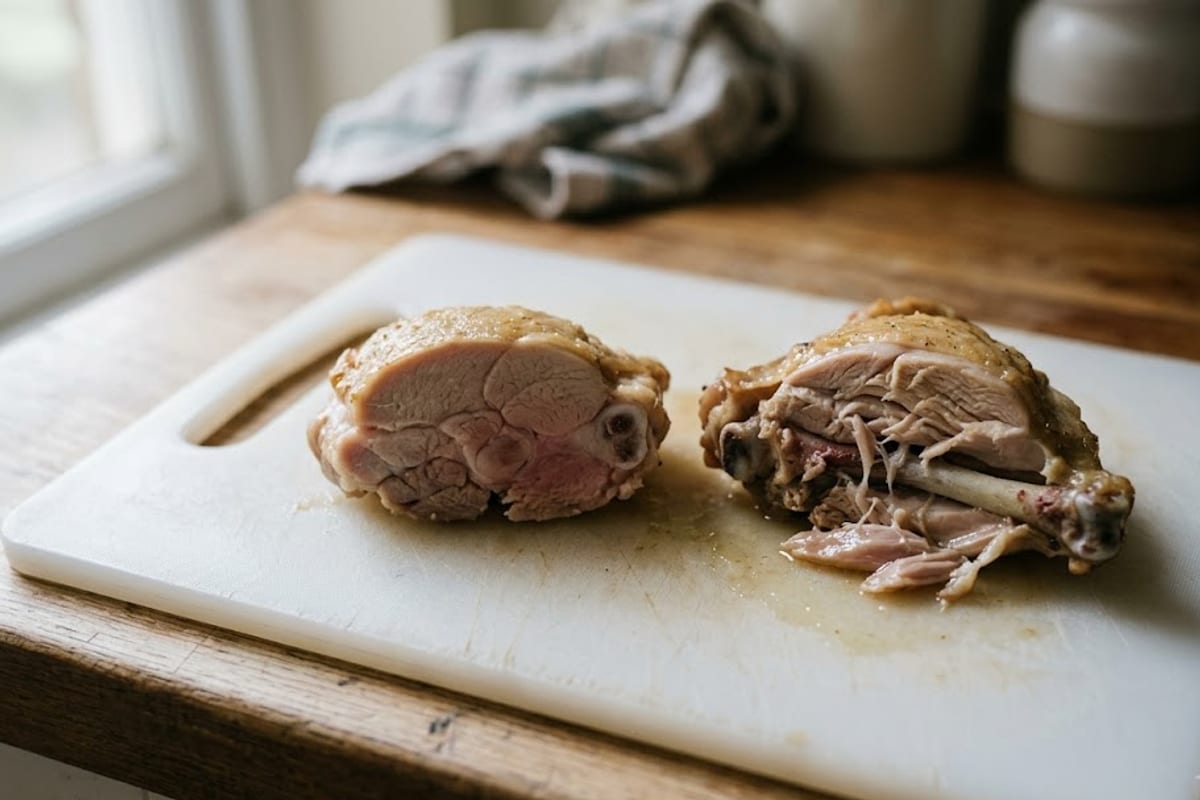
Pink near the bone
A thigh cooked to 165°F often has pink or even dark red meat right next to the bone. In young chickens the bones are porous, and pigment from the marrow can seep into the surrounding meat. FSIS also notes that young birds and grilled or smoked poultry often stay pink after reaching a safe temperature (FSIS, Is Pink Turkey Meat Safe?).
Cooking thighs to 175 to 185°F usually removes most of that pink, which is one more reason the higher range works well for dark meat. If you see pink near the bone, check the temperature rather than relying on the colour.
Where to put the thermometer
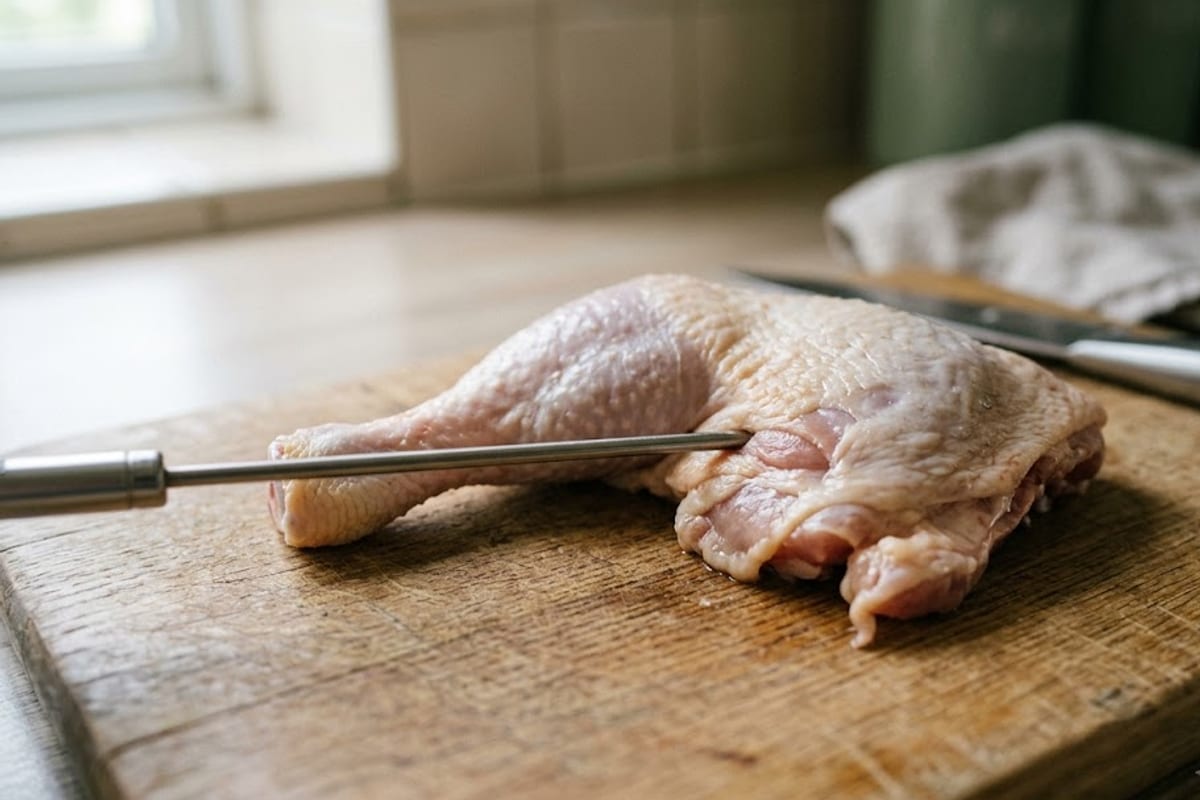
Insert the probe into the thickest part of the thigh from the side, so it runs alongside the bone without touching it. Bone heats faster than meat and gives a false high reading. On a boneless thigh, go into the thickest part from the side.
Thighs vary a lot in size in the same pack. Check the largest one, or two or three of them, before taking the tray out.
Times by method
| Method | Cut | Time to about 180°F |
|---|---|---|
| Oven, 400°F | Bone-in, skin-on | 26–34 min |
| Oven, 425°F | Bone-in, skin-on | 24–30 min |
| Oven, 400°F | Boneless, skinless | 18–22 min |
| Air fryer, 380–400°F | Bone-in, skin-on | 20–25 min |
| Air fryer, 380–400°F | Boneless | 14–18 min |
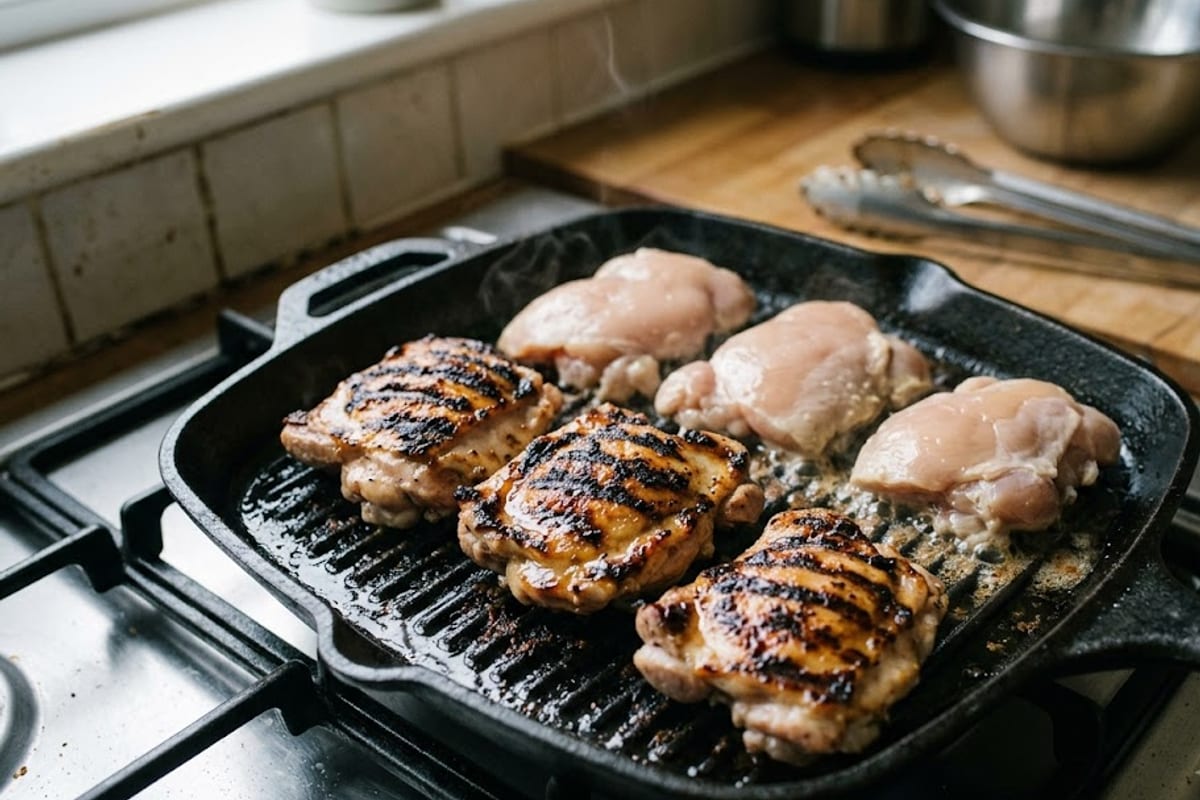
| Grill, medium direct heat | Boneless | 5–7 min per side |
| Grill, indirect then direct | Bone-in | 30–40 min |
| Pan-sear skin side down, then oven 400°F | Bone-in | 8–10 min + 15–20 min |
These are starting points for checking. The air fryer figures match air fryer chicken thighs, and oven figures at 425°F are on chicken thighs at 425°F.
Crisp skin
Skin needs its fat rendered and its surface dried to crisp. Pat the thighs dry, salt them, and if you have time leave them uncovered in the fridge for a few hours or overnight. Roast skin side up on a rack or directly on the tray at 400 to 425°F. Because thighs can go to 180°F or more without drying out, there is time for the skin to render fully, which is harder to manage on breast meat.
For pan-searing, start skin side down in a cold or medium pan and let the fat render for 8 to 10 minutes before turning. Pressing the thighs flat with a spatula for the first minute helps the skin make full contact.
Resting
Thighs gain only a few degrees after cooking, around 3°F for bone-in pieces, because they are small. Rest them for 5 minutes. There is little benefit to longer, and the skin softens as it sits.
Drumsticks and wings follow the same rule
Drumsticks and wings are also dark meat with plenty of connective tissue. Both are safe at 165°F and better at 175 to 190°F. Wings in particular are usually cooked well past 180°F to crisp the skin, and they stay juicy because of their fat and collagen.
If you are cooking a whole chicken
On a whole bird, the breast and the thighs finish at different times. When the breast reaches 160 to 165°F, the thigh is often only at 165 to 170°F. Spatchcocking, which flattens the bird, puts the thighs closer to the heat and helps them get ahead of the breast. Checking the thigh and the breast separately is the only way to know. The general guide is in how to tell if chicken is done.
Bone-in or boneless
Bone-in thighs take longer to cook but give more margin. The bone slows heating in the meat next to it and holds some moisture, so a bone-in thigh left a few minutes too long is still pleasant. Skin-on thighs also protect the meat from direct heat and give you the crisp skin that many people buy thighs for.
Boneless, skinless thighs cook quickly and evenly, which makes them good for grilling, stir fries and skewers. They are thin, so they reach 175°F fast, and they dry out sooner than bone-in pieces once they pass 190°F. Trim any large pieces of fat and even out very thick parts with a knife so they cook at the same rate.
Marinades and brines
Because thighs tolerate high temperatures well, they suit sweet marinades and glazes that would burn on breast meat before it cooked through. Honey, soy and gochujang marinades caramelise on the surface while the inside reaches 180°F.
A salt brine or a dry brine of salt on the surface for a few hours seasons the meat all the way through and helps the skin crisp. Acidic marinades with lots of vinegar or citrus should be kept short, under a few hours, or the surface turns mushy.
Slow cooker and braising
In a slow cooker or a braise, thighs go well past 185°F and stay moist because they cook in liquid. They are done when the meat shreds easily with a fork, usually 3 to 4 hours on low in a slow cooker or about an hour at a gentle simmer on the stove. The temperature will be close to 200°F by then, and that is fine for this style of cooking.
Thighs also reheat better than breasts. Leftover thighs keep 3 to 4 days in the fridge and can be warmed in a 350°F oven or an air fryer until they reach 165°F, the reheating figure for leftovers, without turning dry. That makes them a practical choice for cooking a large batch at once and using the rest over the next few days.
Frequently asked questions
What is the minimum safe temperature for chicken thighs? 165°F.
Is 180°F too high for chicken thighs? No. Thighs are tender and juicy at 175 to 185°F.
Why are my chicken thighs rubbery? They were likely cooked only to 165°F. Take them to 175 to 185°F.
What temperature are chicken thighs in Celsius? Safe at 74°C, best at 79 to 85°C.