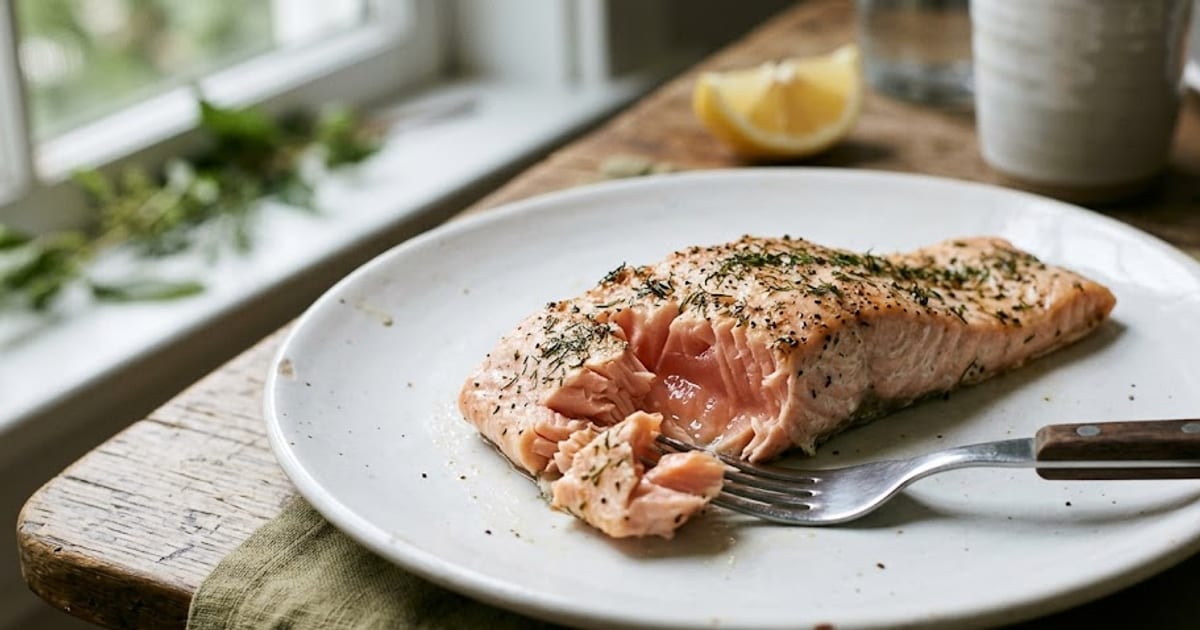
Salmon is done when the flesh at its thickest point has turned from translucent to opaque and separates into flakes when you press it with a fork. With a thermometer, the USDA and FDA safe minimum is 145°F. Many cooks take salmon off the heat at 120 to 125°F for a moist, slightly glossy centre, knowing that is below the safety figure.
Both ways of checking come down to the same place: the thickest part of the fillet, because it is the last part to cook through.
The fork test
Push the tines of a fork into the thickest part of the fillet and twist gently. Look at what opens up.
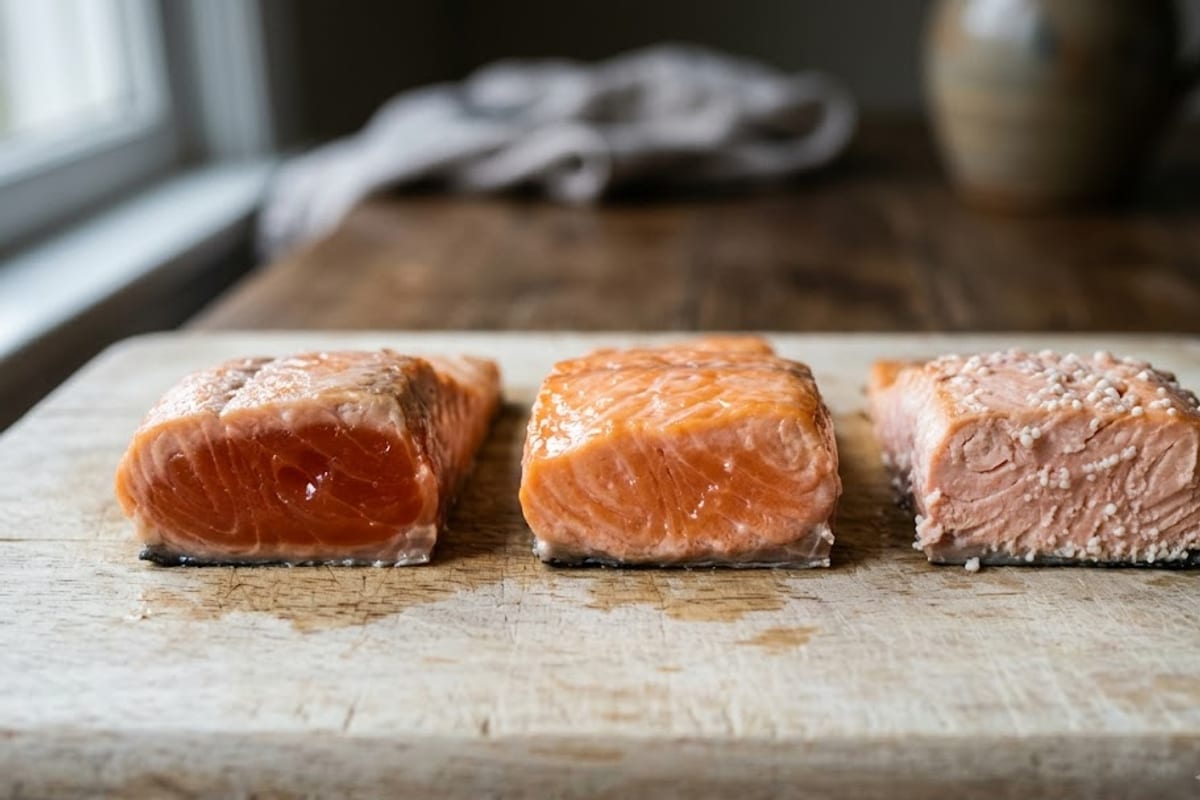
| What you see | What it means |
|---|---|
| Dark orange, glassy, resists flaking | Undercooked |
| Opaque outside, centre still slightly glossy and coral | Medium, most cooks' target |
| Opaque pale pink all through, flakes easily | Fully cooked, at about 140–145°F |
| Pale, dry flakes, white beads on the surface | Overcooked |
The FoodSafety.gov chart describes finished fish in exactly those terms: cook to 145°F, or until the flesh "is no longer translucent and separates easily with a fork" (FoodSafety.gov). Opaque and flaking are the signs of 145°F. A glossy centre means you are below it.
The thermometer numbers
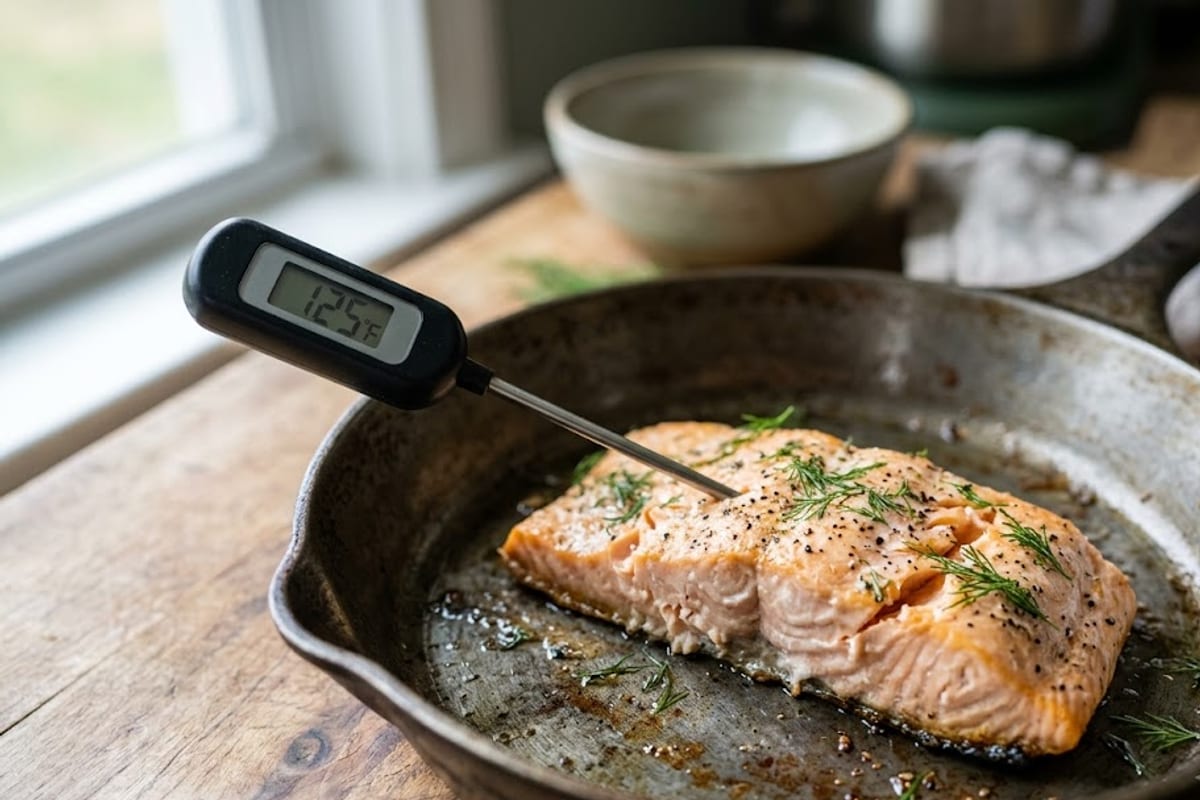
| Internal temperature | Result |
|---|---|
| 110–115°F | Rare; centre translucent, soft |
| 120–125°F | Medium rare to medium; centre glossy, moist |
| 130–135°F | Medium; mostly opaque, still juicy |
| 140–145°F | Fully cooked; opaque, flakes cleanly |
| 150°F+ | Dry; albumin appears on the surface |
Salmon has very little connective tissue, so it goes from moist to dry over a narrow range. Farmed Atlantic salmon has more fat and tolerates a few extra degrees. Wild sockeye and coho are much leaner and dry out quickly past 125°F, which is why many recipes for wild salmon give lower targets.
A fillet gains only 2 to 3°F after it comes off the heat because it is thin. Pull it within a few degrees of your target. The same number is used on the timing page for salmon at 400°F, which pulls a 1-inch fillet at 125°F.
White stuff on salmon
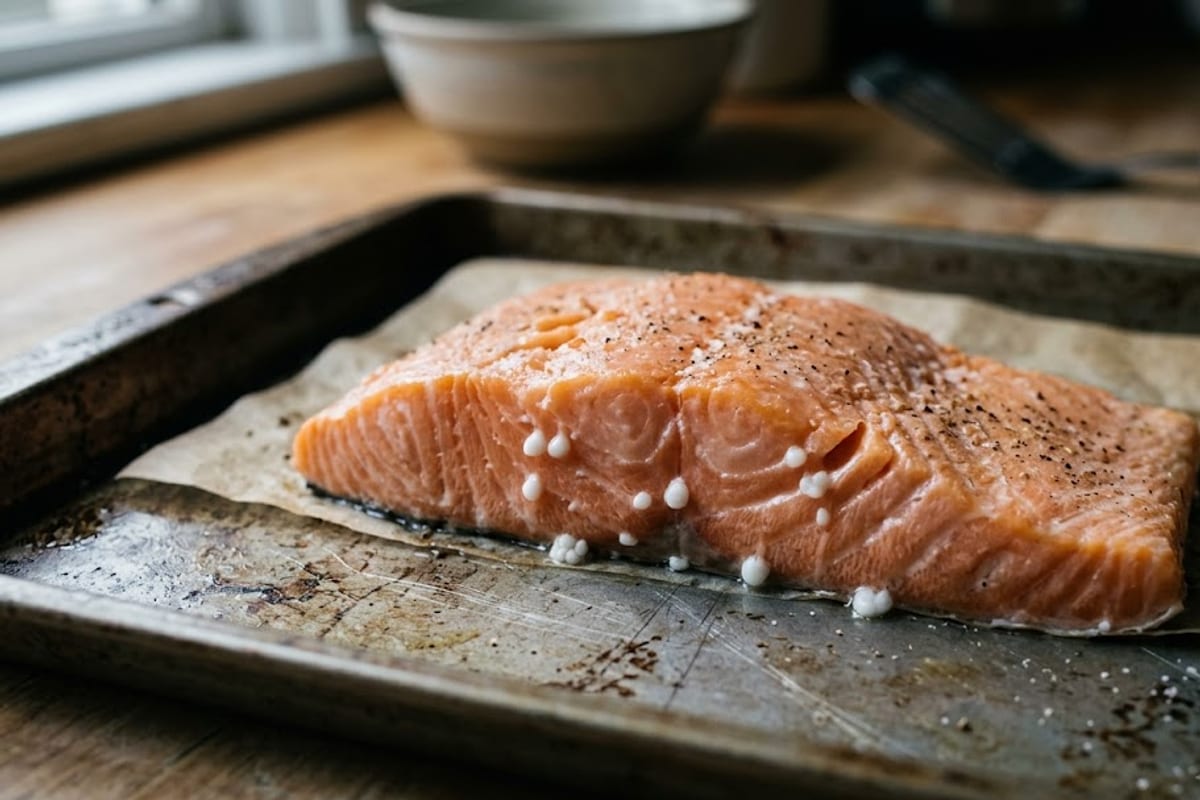
The white, curd-like beads that sometimes appear on cooked salmon are albumin, a protein dissolved in the fish's muscle fluid. As the muscle fibres heat and contract, they squeeze this fluid out, and the albumin sets white on the surface, much like egg white.
A few beads are normal. A lot of them means the fish cooked too hot or too long, because the fibres contracted hard. Cooking at a lower temperature, brining the fillet for ten minutes in salted water, or pulling it earlier all reduce it. Albumin is harmless to eat.
Checking without a thermometer
The fork test is the main method. A few other signs help.
Colour at the side. On a fillet cooking in a pan, you can watch the opaque layer climb up the side from the bottom. When it reaches about two thirds of the way up, turn the fish or take it off the heat. The remaining heat finishes the top.
Firmness. Raw salmon is soft and yields to a finger. Cooked through, it springs back and the flakes start to separate at the surface. This is harder to judge than on meat because fish is soft at every stage.
A knife tip. Slide a thin knife into the thickest part for three seconds, then touch the flat of the blade to your lower lip. Cool means undercooked. Warm means about medium. Hot means cooked through or past it. It is imprecise but better than guessing.
Time. Roughly 4 to 6 minutes per half inch of thickness at 400°F, but ovens and fillets vary enough that time only tells you when to start checking.
Why the edges finish first
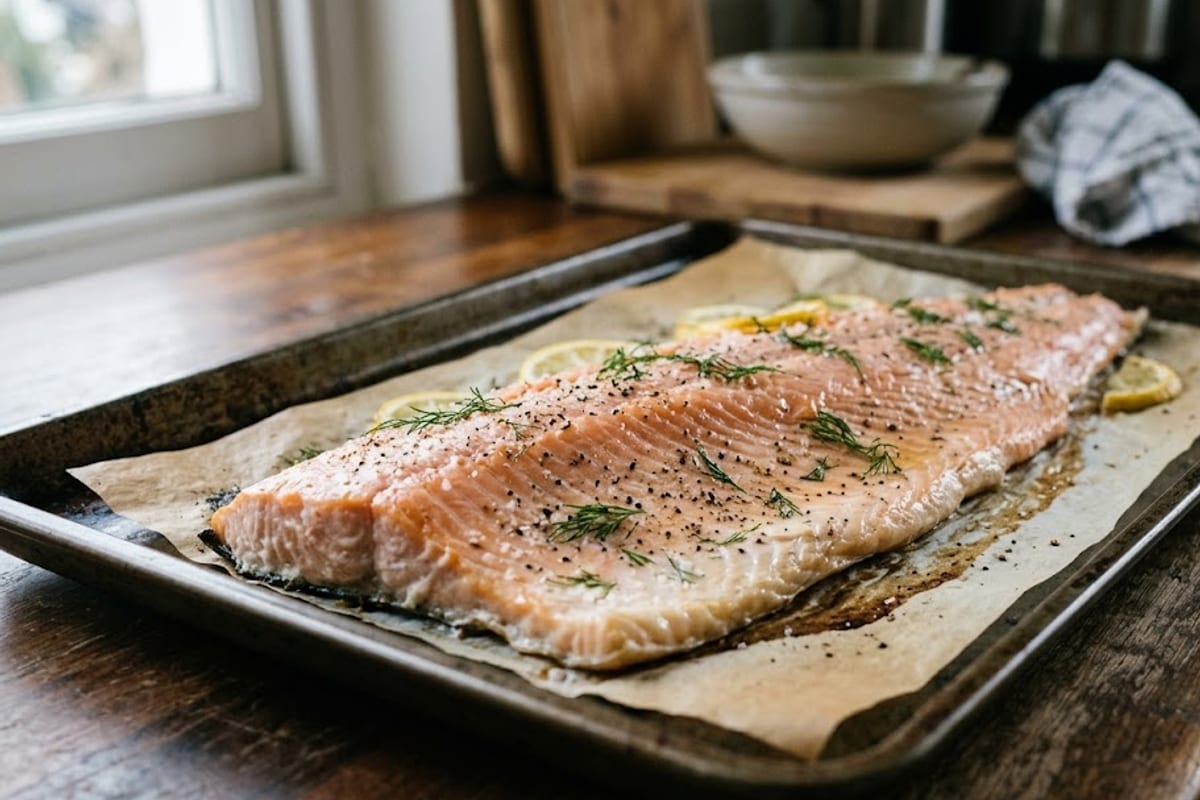
A fillet is thick along the back and thin at the belly and tail. The thin parts can be fully cooked, even dry, while the centre line is still translucent. That is normal, and it is why the check must be made at the thickest point.
On a whole side of salmon, folding the thin tail end under itself evens out the thickness. For a dinner with several portions, cutting the fillet into pieces of similar thickness means they all finish together.
Skin, and which side is up
Skin-on salmon cooked skin side down protects the flesh from direct heat and makes it harder to overcook the bottom. When the fillet releases easily from the pan, the skin is crisp. If it sticks, it usually needs another minute.
In the oven, skin down on a sheet pan is the common method. The skin helps hold the fillet together when you lift it and slides off easily once cooked if you do not want to eat it.
When the lower temperatures are not a good idea
The 145°F figure is the one the USDA and FDA give for all fish. Cooking salmon below it is common practice in restaurants and in many recipes, but it means eating fish that has not reached the recommended temperature.
Pregnant people, young children, older adults and anyone with a weakened immune system should cook salmon to 145°F. Fish intended to be eaten raw or barely cooked, as in sushi, is normally frozen first to kill parasites under FDA guidance for parasite destruction; ordinary supermarket salmon may not have been handled that way unless it is labelled for raw use.
Timing by method
| Method | 1-inch fillet | Notes |
|---|---|---|
| Oven, 400°F | 11–13 min | Skin down on a sheet pan |
| Oven, 275°F | 20–25 min | Very even colour, little albumin |
| Pan sear | 4 min skin side, 2–3 min flesh side | Medium-high heat |
| Air fryer, 390°F | 8–10 min | Check at 7 min |
| Grill, direct medium heat | 8–10 min total | Oil the grates and the fish |
Times are for a starting point only. Check the thickest part at the low end of each range, then every minute or two. For other thicknesses and oven settings, the bake salmon guide scales the time.
Cooking salmon from frozen
Frozen salmon fillets can go straight into a 400 to 425°F oven without thawing. Rinse off any ice glaze, pat dry, and expect the cooking time to be roughly half again as long as for a thawed fillet. The outside cooks further before the centre reaches temperature, so the colour will be less even, and more albumin tends to appear. The same signs apply: opaque at the thickest point, flaking under a fork, or a thermometer reading at the thickest point.
Leftover salmon
Cooked salmon keeps 3 to 4 days in the fridge. It reheats poorly because it goes from moist to dry over a narrow range. Many people prefer it cold, flaked into salads or grain bowls. To warm it, use a low oven, around 275°F, covered, for 10 to 15 minutes, until it is just heated through. FoodSafety.gov gives 165°F as the reheating temperature for leftovers.
A last check for any method: when the salmon comes off the heat, it should look slightly less done in the very centre than you want it on the plate. It finishes cooking on the way to the table. If it already looks exactly right in the pan, it will be a little past that point when you eat it.
Frequently asked questions
Is salmon done at 125°F? It is cooked to medium, moist and slightly glossy in the centre, and many recipes stop there. The USDA safe minimum for fish is 145°F.
Can salmon be pink in the middle? Salmon is naturally pink or orange even when fully cooked. What matters is whether the centre is translucent and glossy or opaque. Opaque pink is cooked through.
How long should salmon rest? Two to three minutes is enough. It is thin and carries over very little heat.
Why is my salmon mushy? Usually it was undercooked, or it was previously frozen and thawed poorly. Cook to at least 120°F and thaw frozen fillets overnight in the fridge.
For the same checks on other seafood, see how to tell if shrimp is done.