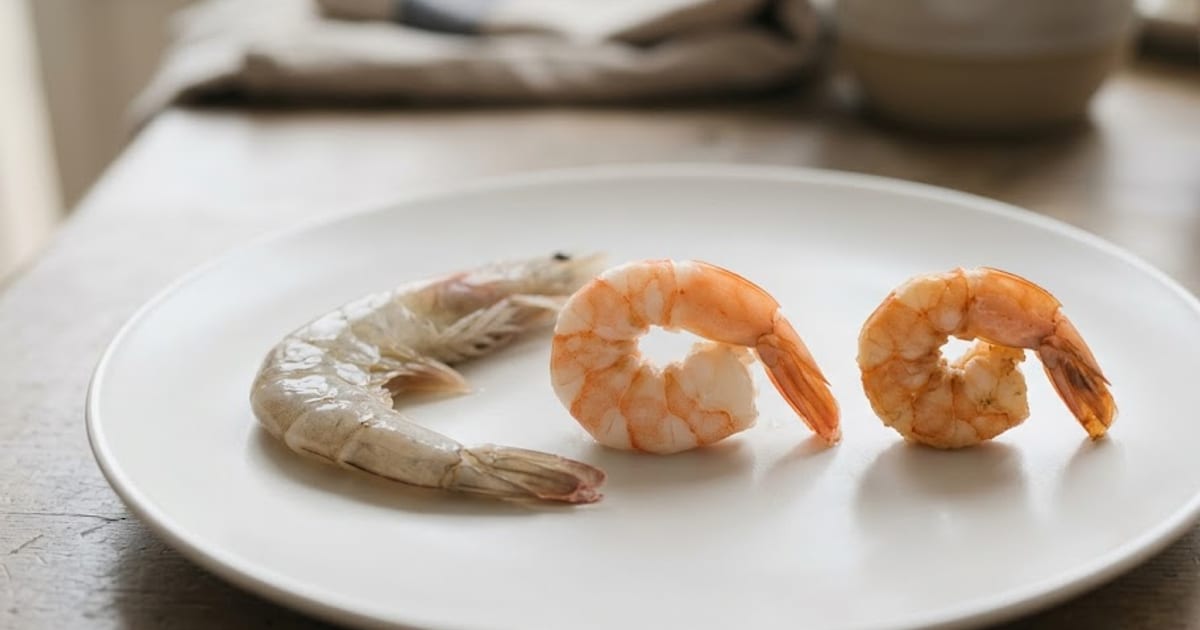
Shrimp is done when the flesh has turned from grey and translucent to pearly white and opaque, with pink or orange on the outside, and the body has curled into a loose C. If it has pulled into a tight O, it is overcooked. For the most reliable check, cut one shrimp in half at its thickest point: the centre should be opaque with no glassy grey left.
FoodSafety.gov gives no temperature for shrimp. Its guidance for shrimp, lobster, crab and scallops is to cook "until flesh is pearly or white, and opaque" (FoodSafety.gov). If you want a number, most shrimp is opaque at about 120°F in the centre and turns tough above about 140°F.
The three signs, in order of reliability
1. Opaque all the way through. This is the one that matters. Raw shrimp flesh is grey and slightly see-through. As it cooks, the proteins set and it turns white and opaque. The thickest part, near the head end, is the last to turn. Cutting one open is the surest test.
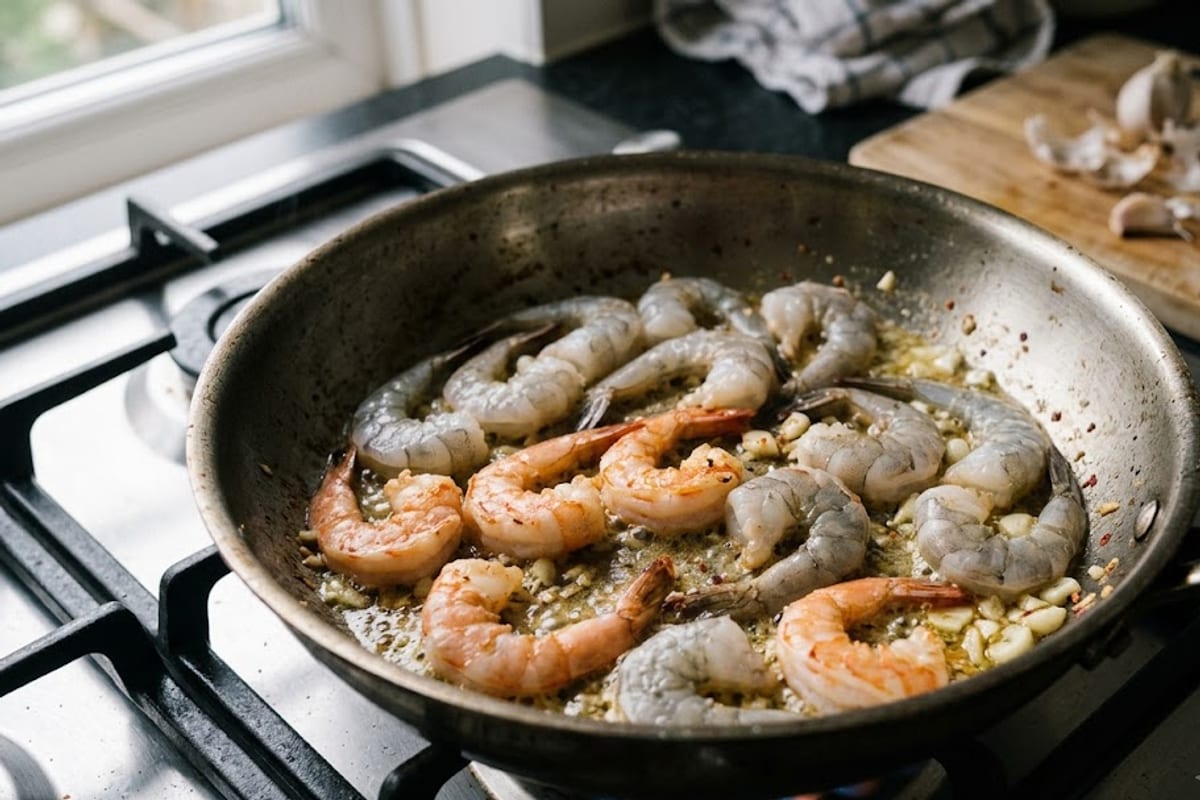
2. Colour on the outside. The shell, or the surface of peeled shrimp, turns pink to orange-red as it heats. This happens early, often before the centre is cooked, so pink outside alone does not mean done.
3. Shape. Raw shrimp is almost straight. As the muscle contracts, it curls. A loose C means the shrimp is cooked. A tight O means the muscle has contracted too far and the texture will be rubbery. Shape is a quick visual check across a whole pan.
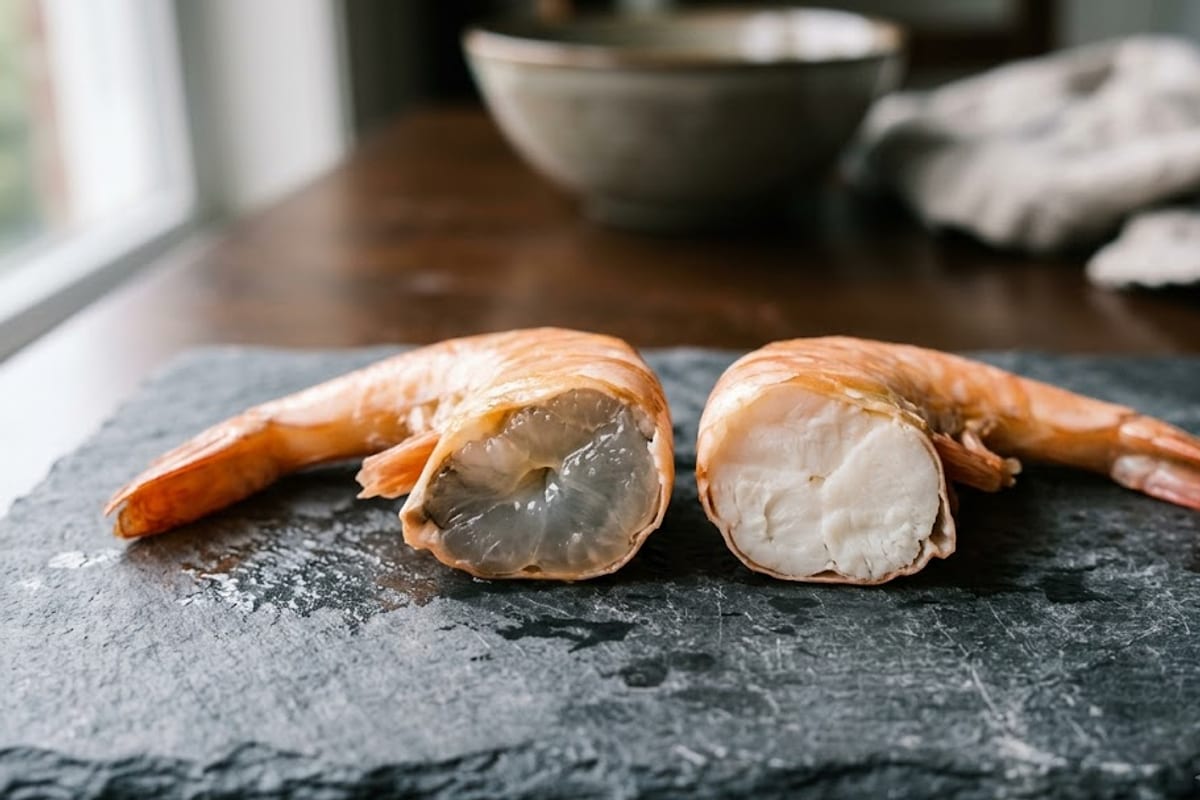
Shape and texture at each stage
| Stage | Colour | Shape | Texture |
|---|---|---|---|
| Raw | Grey, translucent | Almost straight | Soft, slippery |
| Partly cooked | Opaque outside, grey centre | Slight curve | Soft centre |
| Done | Pearly white inside, pink outside | Loose C | Firm, snaps when bitten |
| Overcooked | White, dull | Tight O | Rubbery, dry |
The window between done and overcooked is short. For large shrimp in a hot pan it is often less than a minute. Take them off the heat as soon as the last grey disappears; the residual heat in the pan and in the shrimp finishes the job.
Times by method
These are for large shrimp, sold as 21/25 per pound, peeled.
| Method | Time | Watch for |
|---|---|---|
| Pan sear, medium-high | 1–2 min per side | Flip when the bottom half turns opaque |
| Boil | 2–3 min after the water returns to a boil | They float and turn pink |
| Oven, 400°F | 7–9 min | Check at 6 min |
| Air fryer, 400°F | 5–7 min | Shake the basket at 3 min |
| Grill, direct high heat | 2–3 min per side | Thread on skewers so they do not fall through |
| Steam | 4–6 min | Covered pot, single layer |
The oven figures match the shrimp at 400°F timing page. Jumbo shrimp need about a minute longer; small shrimp can be done in half the time.
Size changes everything
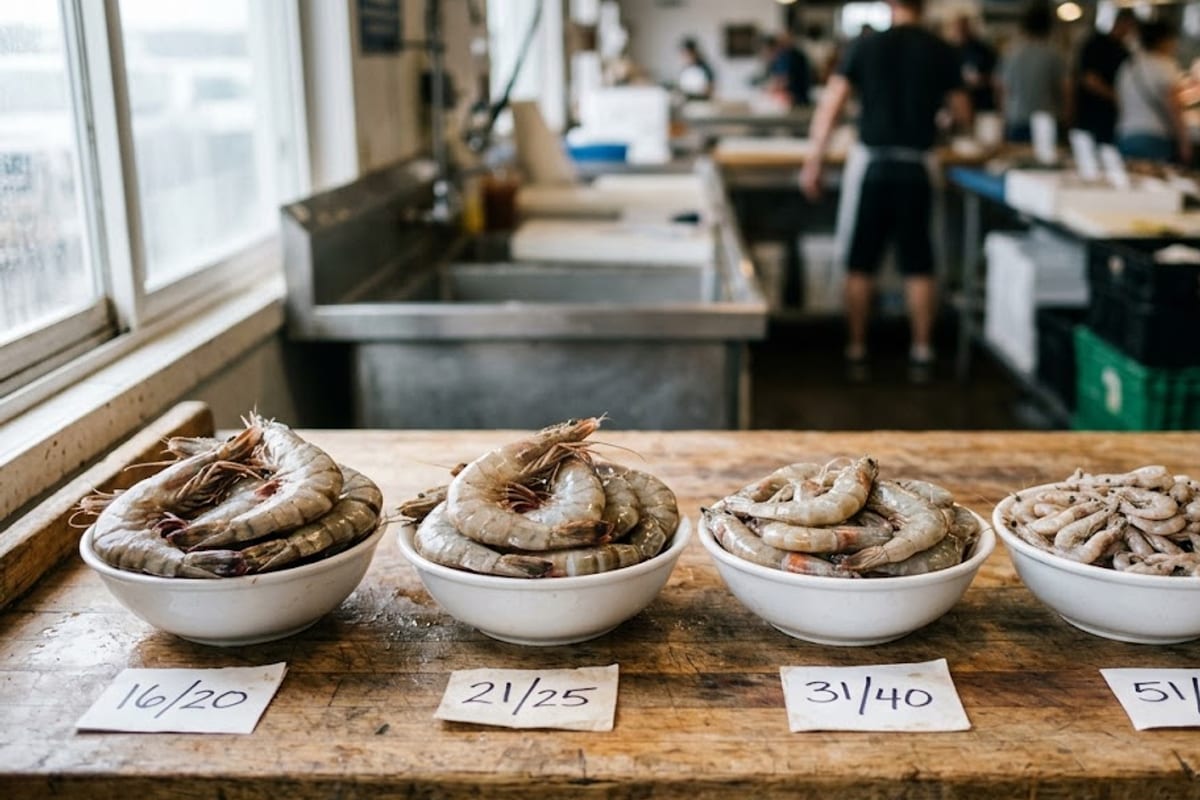
Shrimp are sold by count per pound. The lower the number, the bigger the shrimp. "21/25" means 21 to 25 shrimp make up a pound.
| Label | Common name | Pan time per side |
|---|---|---|
| U/15 | Colossal | 3 min |
| 16/20 | Jumbo | 2–3 min |
| 21/25 | Large | 1½–2 min |
| 31/40 | Medium | 1–1½ min |
| 51/60 | Small | 1 min |
Small shrimp overcook almost as soon as they are done, so they suit dishes where they are added at the very end, such as fried rice or pasta. Large and jumbo shrimp give more margin and are easier to cook to a precise point on a grill or in a pan.
Frozen shrimp
Most shrimp sold in the United States has been frozen, even when it sits thawed on ice at the counter. Frozen shrimp can go straight into boiling water or a hot pan, but it releases water and browns less. For searing, thaw it first: a sealed bag in a bowl of cold water takes about 15 to 20 minutes for large shrimp. Pat the shrimp dry before cooking.
Shrimp labelled "cooked" or pink when you buy it only needs heating through. Cooking it again as if it were raw is the most common reason for rubbery shrimp. Add it at the end, for a minute or two.
Shell on or off
Shrimp cooked in the shell stays juicier and gains flavour from the shell, which is why boiled and grilled shrimp are often left whole. The shell also slows cooking slightly and gives a little more margin. The downside is that it is harder to see the flesh, so rely on the shape and cut one open to check.
Peeled shrimp cook faster and take on seasoning directly. Deveining, removing the dark digestive tract along the back, is a matter of texture and appearance; it is not needed for safety once the shrimp is cooked.
When it is hard to see
In a sauce or a curry, the colour of the shrimp is hidden. Take one out after the shortest time for its size and cut it at the thickest part. If the centre is still grey, give the rest another minute and check again. In a thick sauce, shrimp keeps cooking after the heat is off, so turn off the burner as soon as the test shrimp is opaque.
Ceviche and lime juice
In ceviche, raw shrimp turns opaque in lime juice because the acid sets the proteins the way heat does. It looks cooked, but acid does not kill bacteria and parasites the way cooking does. Many ceviche recipes briefly poach the shrimp first for that reason. For anyone at higher risk from foodborne illness, shrimp should be cooked by heat until opaque.
Buying and storing shrimp
Shrimp spoils faster than most seafood. Fresh shrimp should smell clean and slightly briny, with no ammonia smell, and the flesh should be firm rather than slimy. Black spots on the shell can mean the shrimp is old. Because most shrimp is frozen soon after harvest, buying it frozen and thawing it at home is often fresher than buying thawed shrimp from a display.
Keep raw shrimp in the coldest part of the fridge and cook it within a day or two of buying or thawing. Cooked shrimp keeps 3 to 4 days in the fridge.
Shell-on shrimp is usually cheaper per pound than peeled, and the shells make a quick stock for sauces and soups. Simmer them with a little water, onion and a bay leaf for 15 minutes and strain.
Grilling
Shrimp grills quickly over high direct heat. Thread them onto two parallel skewers so they do not spin when turned, or use a grill basket. They are ready to turn when the side facing the fire is opaque and the upper side is starting to change colour. Large shrimp take about 2 to 3 minutes per side. Brush with oil rather than a sugary glaze until the last minute, since sugar burns before the shrimp is cooked.
Shrimp keeps cooking for a short time after it leaves the heat, especially in a hot pan or a thick sauce. Transfer it to a plate as soon as it is done instead of leaving it in the pan while you finish the rest of the dish. For a cold shrimp cocktail, move boiled shrimp straight into ice water to stop the cooking, then drain and chill.
Frequently asked questions
What temperature is shrimp done? There is no official temperature. Shrimp is done when it is opaque in the centre, which happens at about 120°F. Past 140°F it turns tough.
Is it OK if shrimp is a little translucent? A slight glassy look at the very centre of a large shrimp means it is just under done. Give it another 30 seconds to a minute.
Why did my shrimp turn out rubbery? It cooked too long, or it was already cooked when bought and was cooked again. Take shrimp off the heat as soon as the last grey disappears.
Do shrimp float when they are done? Boiled shrimp usually float when they are close to done, but floating is not a reliable test on its own. Check the colour.
For fish, the same kind of visual checks are in how to tell if salmon is done.