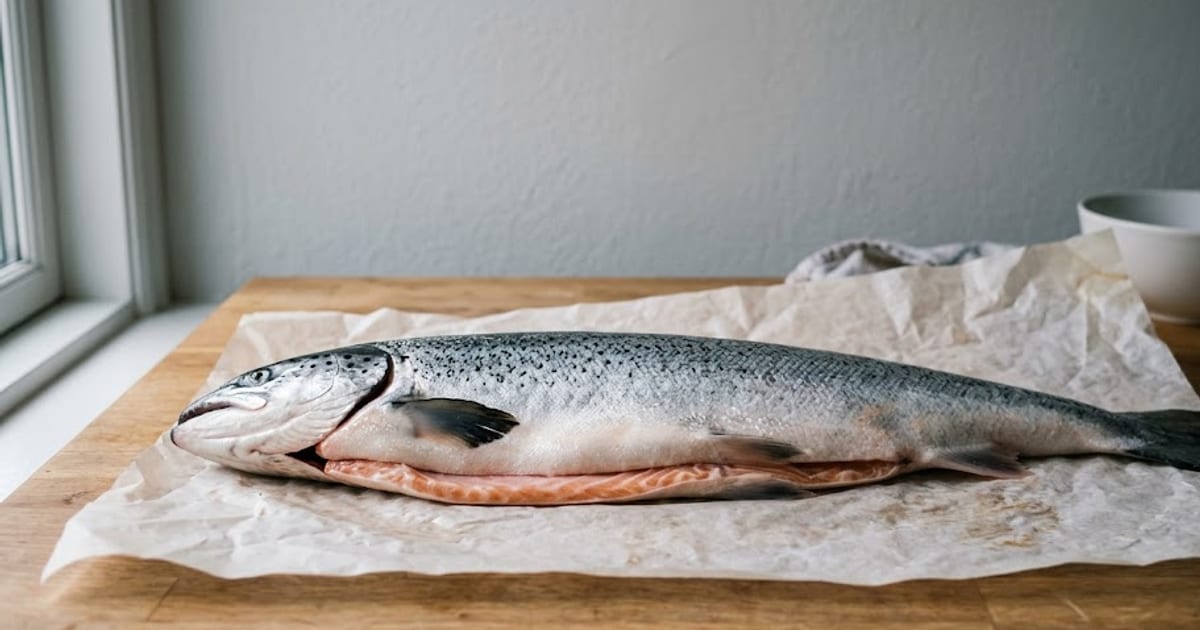
12 to 15 minutes at 400°F for a fillet an inch thick. Pull at 125°F for a moist centre, or 140°F if you want it firm all the way through.
By thickness, not by weight
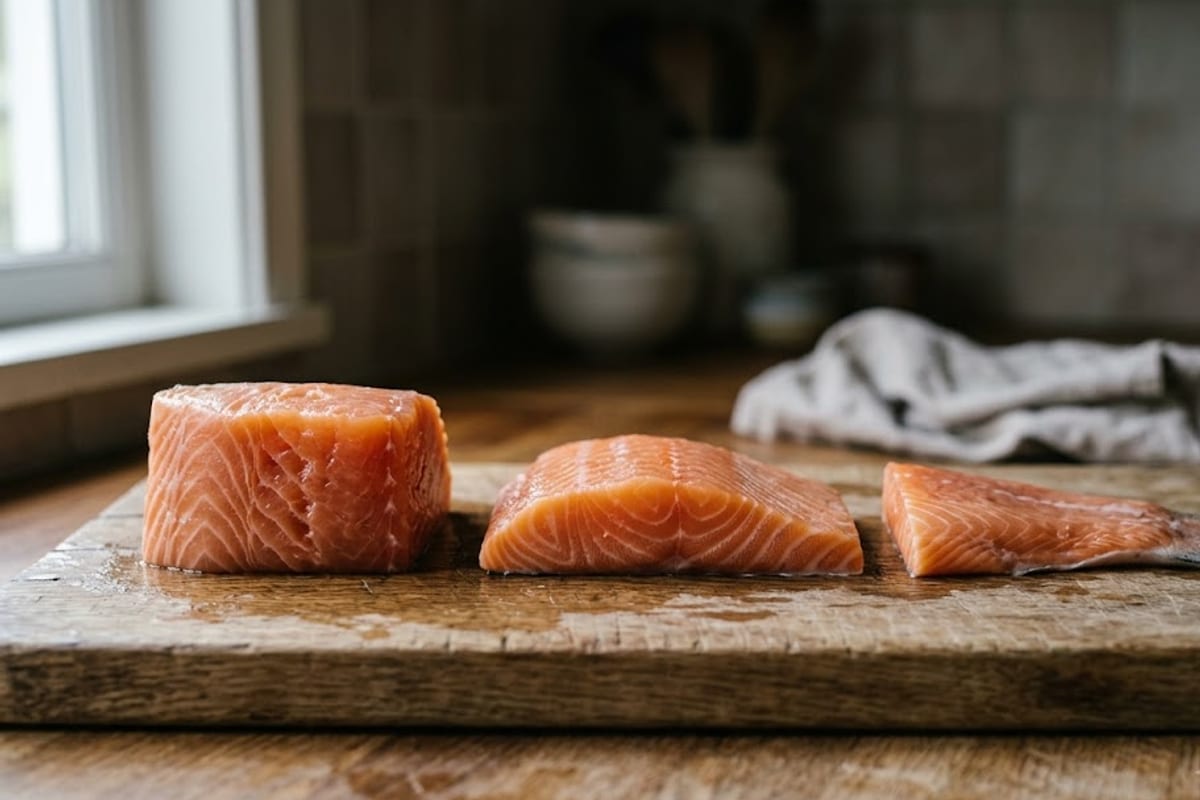
A side of salmon tapers from about an inch and a half at the shoulder to half an inch at the tail. Weight tells you nothing useful about how long that takes; thickness tells you everything.
| Thickness | 350°F | 400°F | 425°F |
|---|---|---|---|
| ½ in | 10–12 min | 7–9 min | 6–8 min |
| ¾ in | 14–16 min | 10–12 min | 8–10 min |
| 1 in | 17–20 min | 12–15 min | 11–13 min |
| 1¼ in | 21–24 min | 15–18 min | 13–16 min |
| 1½ in | 25–28 min | 18–22 min | 16–19 min |
The old rule of 10 minutes per inch of thickness at 400°F is a reasonable approximation and it is where these numbers come from. It works because fish is thin enough that heat reaches the centre before the surface has time to dry — which is not true of a roast.
A whole side cooks unevenly by design. Either fold the thin tail under to double its thickness, or accept that the tail end will be firmer and serve it to whoever prefers it that way.
Two different target temperatures
The USDA figure for fish is 145°F. Most cooks and most restaurants pull salmon at 125 to 130°F.
That gap is larger than it is for any other food in a domestic kitchen, and it is worth being straight about why. At 145°F salmon is firm, opaque and noticeably drier — the muscle fibres have contracted and squeezed out moisture. At 125°F the centre is translucent, silky, and still holds its fat.
The safety case for 145°F is real. The practical case for 125°F is that farmed Atlantic salmon sold for eating raw as sashimi carries a very low parasite risk, and commercial salmon in most markets has been frozen at some point, which kills parasites outright.
Anyone pregnant, immunocompromised, elderly or cooking for young children should use the 145°F figure. Everyone else is making an informed choice, which is different from a mistake.
The white stuff is a doneness signal
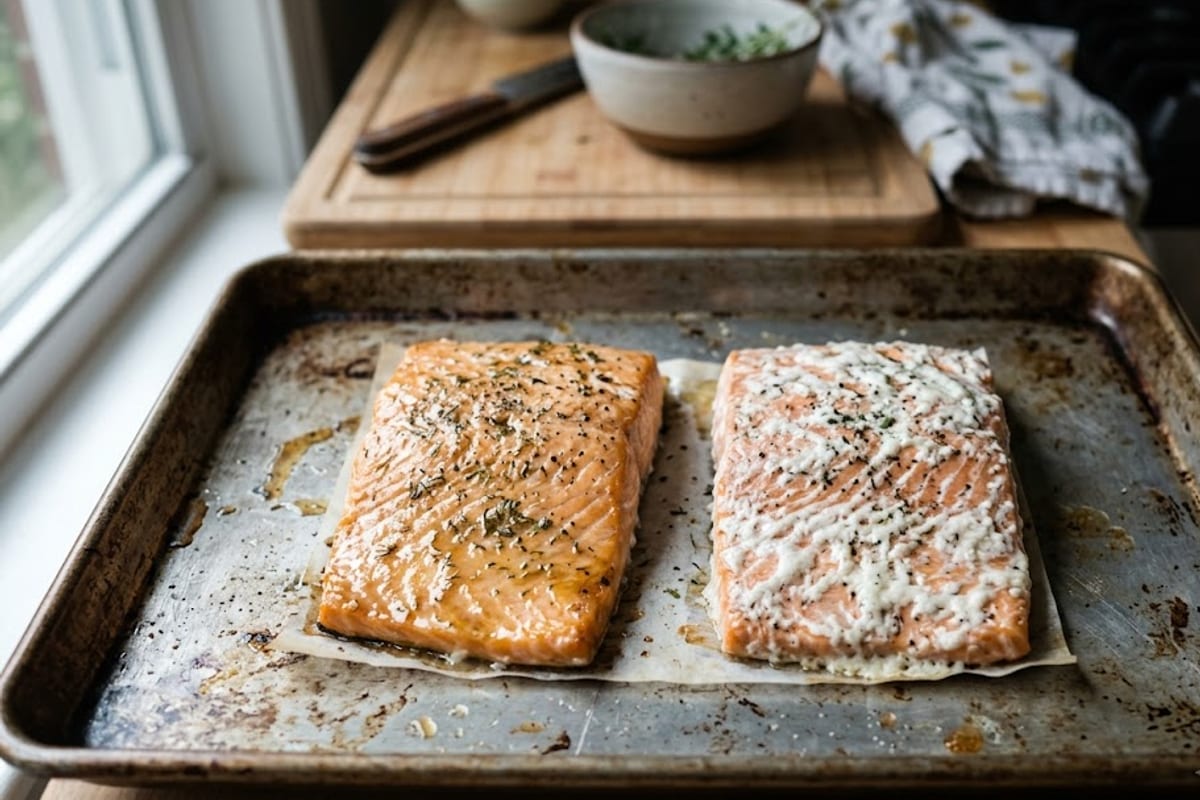
The white curd that appears on the surface is albumin, a protein squeezed out of the muscle as it contracts. It is harmless and it is information: it appears when the flesh has passed roughly 130°F and is expelling water.
A little means the fillet is done. A lot means it went past. It appears sooner and in greater quantity on a fillet cooked at high heat, which is one argument for the lower end of the temperature range.
Salting the surface 10 minutes before cooking noticeably reduces it, for the same reason a brine holds moisture in chicken.
Skin on or off
Skin on, skin side down is the better default for baking. The skin insulates the bottom of the fillet from direct pan heat and holds the flesh together, and it lifts off easily after cooking if nobody wants to eat it.
Skin only crisps under direct contact heat — a hot pan or a grill. In an oven it goes soft regardless of temperature, so a recipe promising crisp skin from baking alone is promising something the method cannot deliver.
What foil and parchment change
Wrapped in foil (en papillote) the fish steams rather than roasts. It stays moist, it takes 3 to 5 minutes longer, and it will not brown at all. That is a legitimate method, not a failed roast.
On parchment, uncovered is the ordinary case and the times above assume it.
Under the broiler is a different exercise altogether — 6 to 8 minutes at close range, watched continuously, and the surface is doing most of the work.
Thickness governs the answer here the same way it governs everything else in the oven, and the pull-against-serving distinction is the same one that applies to meat.