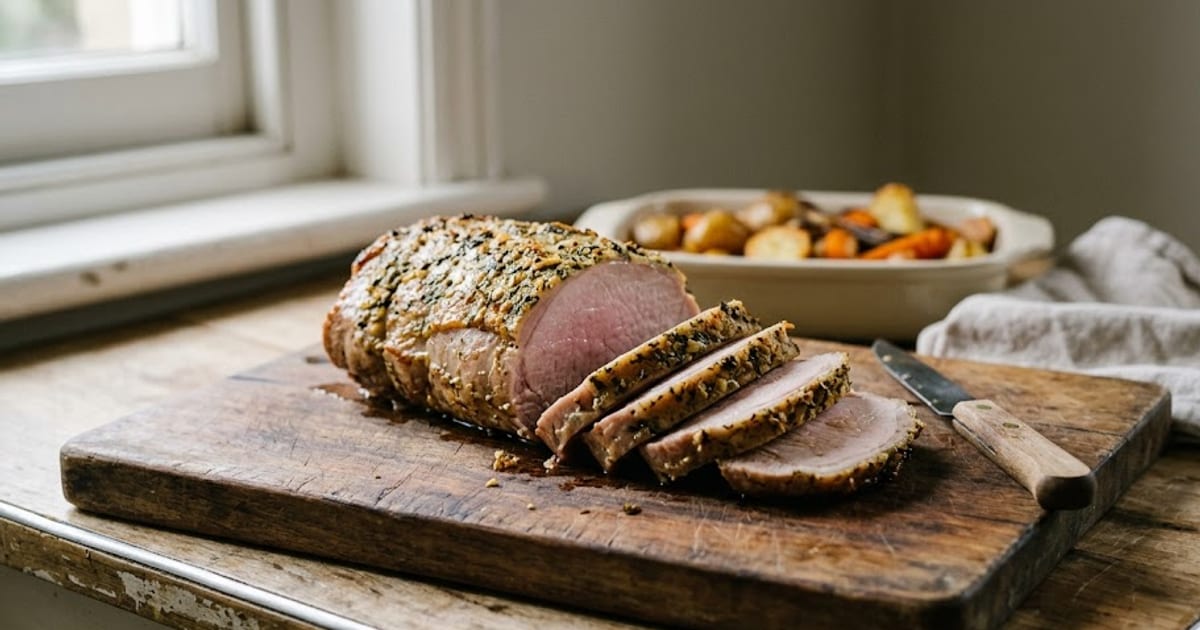
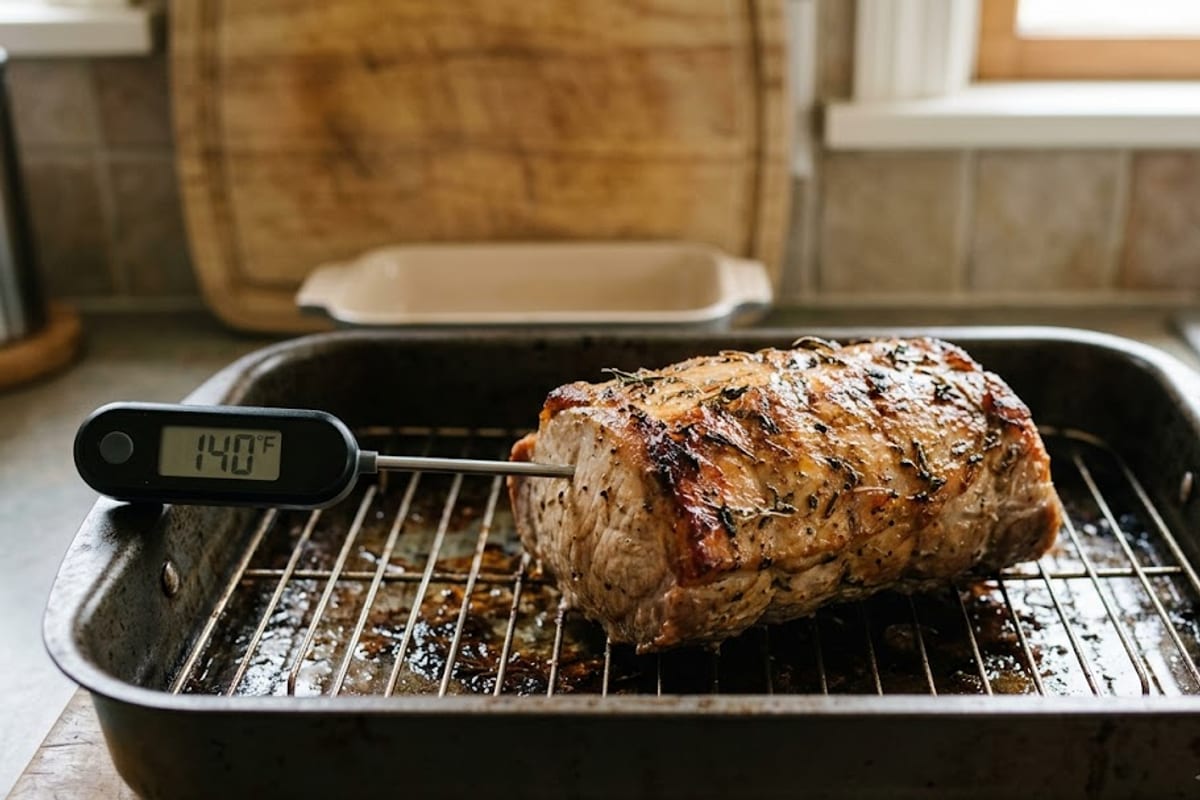
Pork loin, pork tenderloin and pork chops are done at 145°F, followed by a 3-minute rest. That is the USDA safe minimum for pork steaks, roasts and chops (FoodSafety.gov). Take them off the heat at about 140°F, because they keep rising while they rest. Ground pork and sausage must reach 160°F. Shoulder, butt and ribs are safe at 145°F but are cooked to 195 to 205°F so the connective tissue breaks down and the meat becomes tender.
Pork temperature chart
| Cut | USDA safe minimum | Pull at | Serves at | Result |
|---|---|---|---|---|
| Tenderloin | 145°F + 3 min rest | 140°F | 145°F | Juicy, faint pink |
| Loin roast, boneless | 145°F + 3 min rest | 140°F | 148°F | Juicy, faint pink |
| Chops, bone-in or boneless | 145°F + 3 min rest | 140°F | 144°F | Juicy, faint pink |
| Fresh (raw) ham | 145°F + 3 min rest | 140°F | 148°F | Sliceable |
| Precooked ham, reheated | 140°F (USDA-inspected, packaged) or 165°F | 135–160°F | 140–165°F | Hot through |
| Ground pork, sausage | 160°F | 158°F | 160°F | No pink |
| Shoulder, butt, for pulled pork | 145°F | 200–205°F | 203°F | Falls apart |
| Ribs | 145°F | 195–203°F | 195–203°F | Tender, pulls from bone |
| Belly | 145°F | 190–200°F | 195°F | Rendered, soft |
The reheating figure for ham comes from the same chart: precooked ham is reheated to 165°F, or to 140°F for cooked hams packaged in USDA-inspected plants.
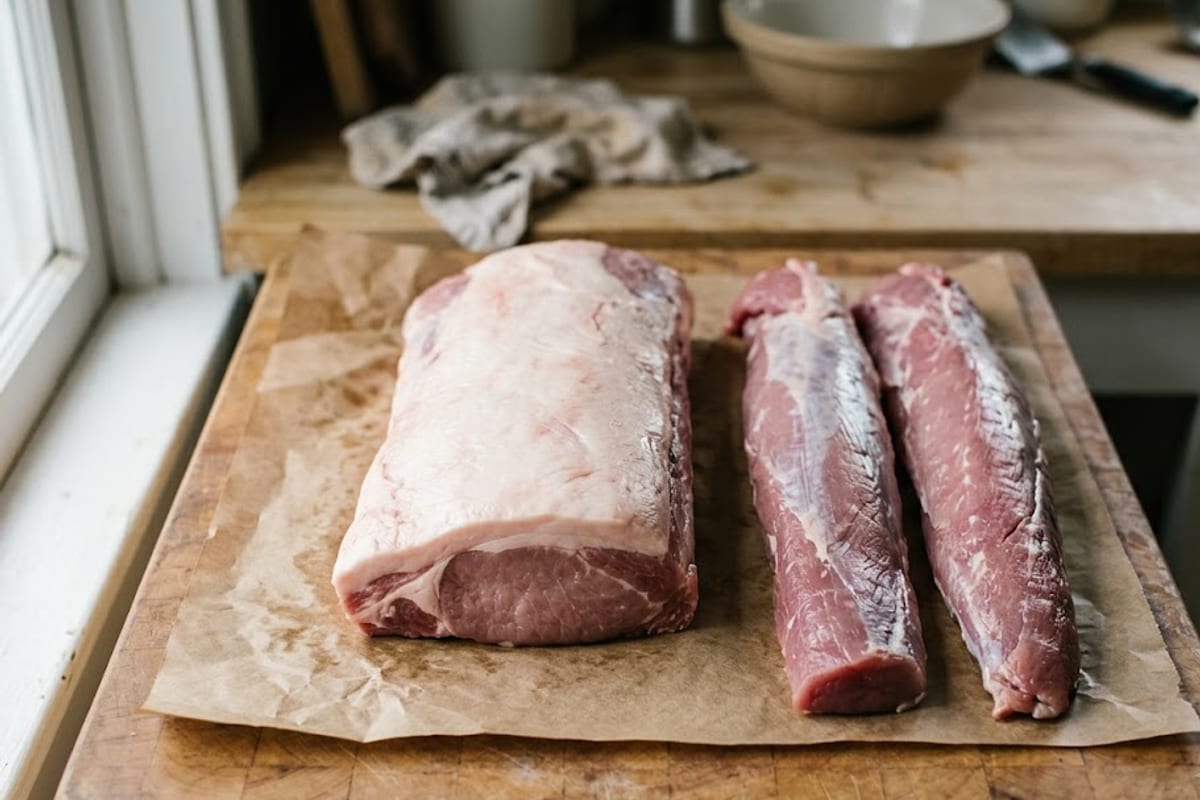
Pork loin and pork tenderloin are not the same
The two names get mixed up constantly, and the difference matters for timing though not for the target temperature.
Pork loin is a wide, thick roast from the back of the pig, usually 3 to 5 lb, often with a fat cap on top. It is sold as a roast or cut into chops. A 3 lb boneless loin at 350°F takes about 65 to 83 minutes to reach 140°F and rises about 8°F while resting (pork loin roast at 350°F).
Pork tenderloin is a long, thin, very lean muscle, usually 1 to 1½ lb and about two inches across. At 425°F it reaches 140°F in 18 to 22 minutes and gains about 5°F (pork tenderloin at 425°F).
Both are done at 145°F. The tenderloin, being so lean, overcooks faster and has less margin past that point.
Why the number changed from 160°F
For decades, recipes told cooks to take pork to 160 or even 170°F. The high figure came from the risk of trichinella, a parasite once common in pork. Changes in how pigs are raised and fed in the United States have made it very rare in commercial pork. Recent cases have mostly come from wild game.
In 2011 the USDA lowered the recommendation for whole cuts of pork to 145°F with a 3-minute rest, bringing it into line with beef, veal and lamb. The rest is part of the standard: holding the meat at that temperature for a few minutes gives the same reduction in bacteria as an instant at a higher temperature.
Many recipes, cookbooks and family habits never caught up. A pork loin cooked to 160°F loses noticeably more moisture than one cooked to 145°F, and modern pork is much leaner than the pork the old advice was written for.
Pink pork is cooked pork
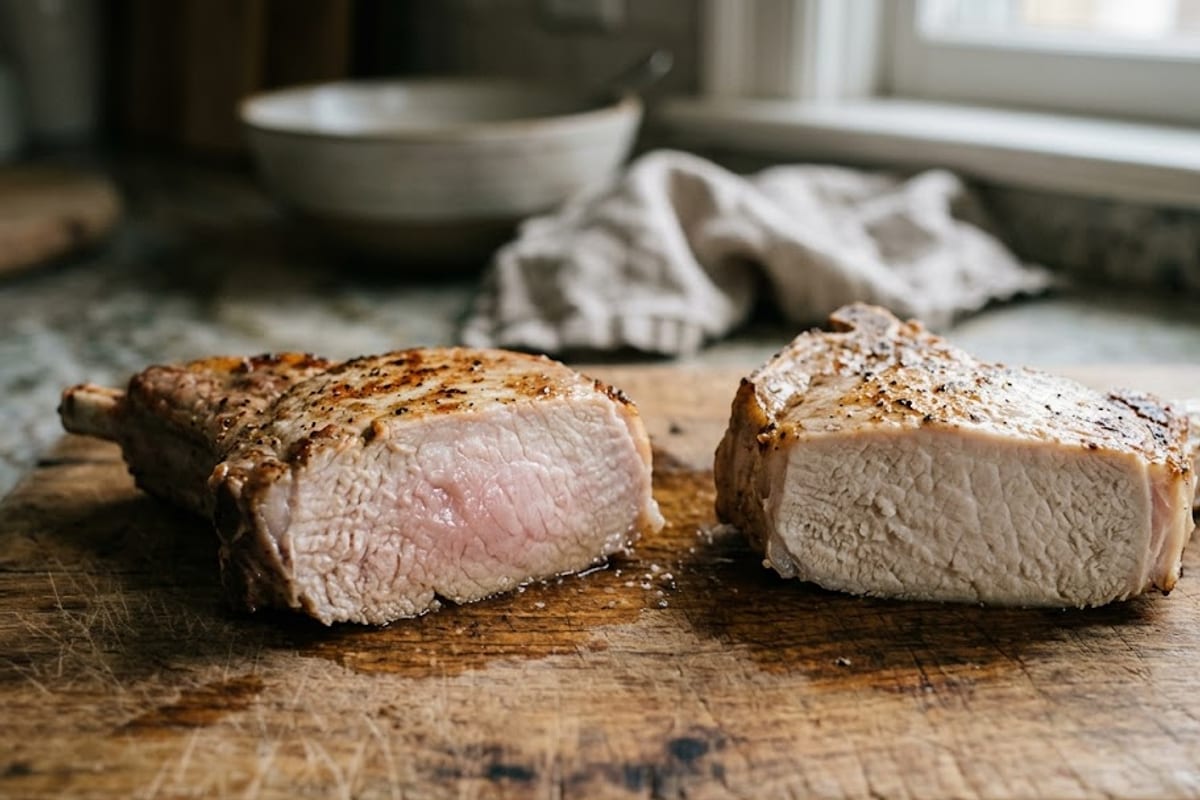
At 145°F, loin, tenderloin and chops have a faint blush of pink in the centre. That is the expected result and it is safe. If a recipe tells you to cook pork "until the juices run clear" or "until no pink remains", it was written for the old standard and it will dry the meat.
Ground pork is the exception. Grinding mixes any bacteria from the surface into the centre, where a sear does not reach, so ground pork, sausage and meatballs stay at 160°F with no pink.
Where to measure
Insert the thermometer into the thickest part of the cut, from the side or the end, so the tip sits in the centre. On a bone-in chop or roast, keep the tip away from the bone. On a tenderloin, go in from the thick end, since the thin end finishes several minutes earlier.
For a loin roast, check two places along its length. Loins are rarely perfectly even, and the reading from the thickest part decides when it comes out.
The cuts that want 200°F
Shoulder (also sold as Boston butt), ribs and belly are full of collagen and fat. At 145°F they are safe but tough and chewy. Collagen converts to gelatin slowly at temperatures above about 160°F, and the higher and longer, the more converts.
Pulled pork falls apart at around 203°F because by then most of the connective tissue holding the muscle fibres together has dissolved. Ribs are tender at 195 to 203°F; the bone starts to show at the ends and the rack bends easily when lifted. Belly roasted or braised to around 195°F has soft, rendered fat under a crisp or glazed top.
For these cuts, the thermometer tells you when to start checking, and texture tells you when to stop. A probe should slide into shoulder with almost no resistance.
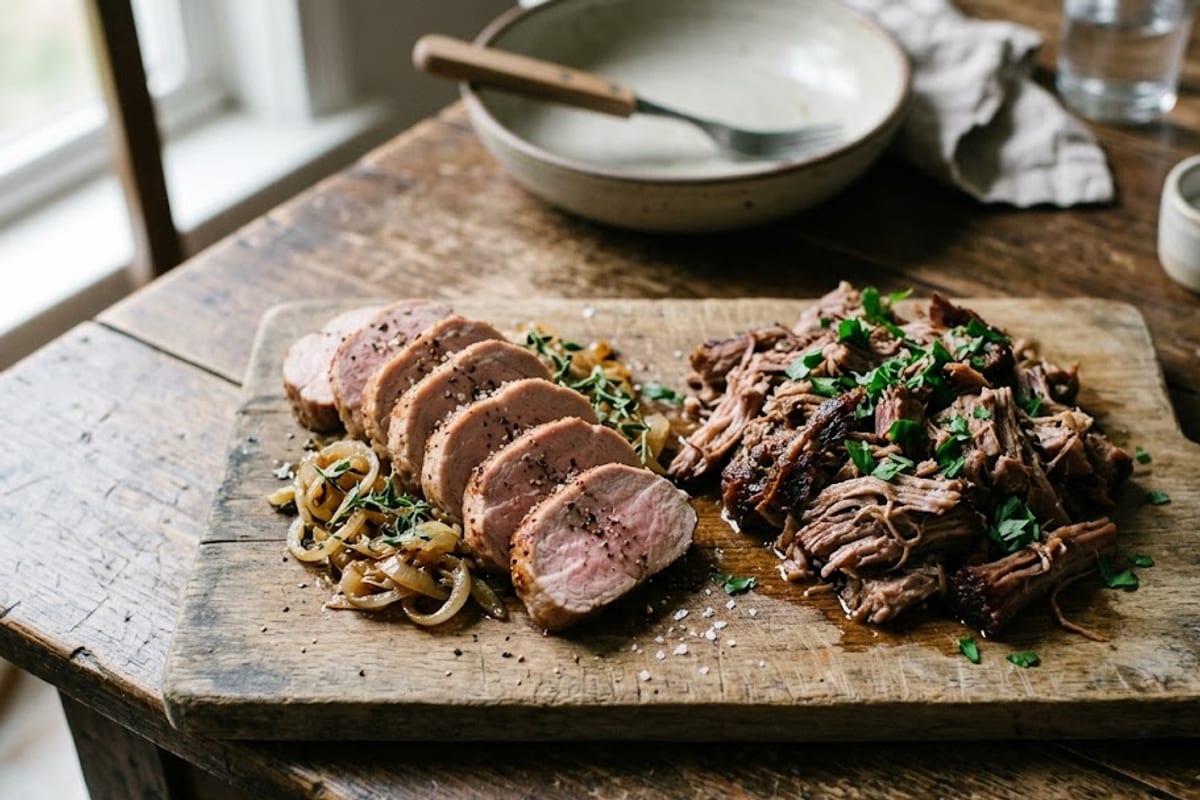
The stall
When smoking or slow-roasting a large shoulder, the internal temperature often stops rising somewhere between 150 and 170°F and can stay there for hours. Moisture evaporating from the surface is cooling the meat as fast as the heat goes in.
It passes on its own. Wrapping the meat tightly in foil or butcher paper stops the evaporation and pushes it through faster, at the cost of a softer bark.
Carryover by cut
| Cut | Gains while resting | Rest time |
|---|---|---|
| Chop, 1 in | 3–4°F | 5 min |
| Tenderloin | 4–5°F | 5–10 min |
| Loin roast, 3 lb | 6–8°F | 10–15 min |
| Fresh ham, 12 lb | 8–10°F | 20 min |
| Shoulder at 203°F | Little | 30–60 min |
Small cuts barely change, so pull chops close to 145°F. Large roasts gain more, so the pull temperature matters most on a loin or ham. A shoulder is already close to the oven temperature at the end and gains almost nothing, but it benefits from a long rest wrapped, which lets the juices settle before pulling. More on resting in how long to rest meat.
Brining
Pork loin and chops are lean enough that a brine makes a visible difference. A wet brine of a quarter cup of kosher salt per quart of water for 30 minutes to 2 hours, depending on thickness, or a dry brine of salt on the surface left uncovered in the fridge for a few hours or overnight, helps the meat hold more moisture as it cooks.
Check the label first. "Enhanced" pork has already been injected with a salt solution, and brining it again makes it too salty.
Thick and thin chops
Chops are sold from half an inch to two inches thick. Thin chops, under three quarters of an inch, cook in a few minutes per side and are very easy to overcook; sear them hard and fast and take them off at 140°F. Thick chops, an inch and a half or more, cook more evenly if you start them in a low oven around 275°F and sear them at the end, or sear first and finish in a 400°F oven (pork chops at 400°F). Bone-in chops take a little longer and are slightly more forgiving near the bone.
Frequently asked questions
What temperature is pork loin done? 145°F, with a 3-minute rest. Take it out of the oven at about 140°F.
What temperature should pork tenderloin be cooked to? 145°F. Pull at 140°F and rest 5 to 10 minutes.
What temperature are pork chops done? 145°F after resting. A 1-inch chop gains only a few degrees, so take it off at 140 to 142°F.
Is it safe to eat pork that is a little pink? Yes, for whole cuts cooked to 145°F with a rest. Ground pork should reach 160°F.
What temperature is pork in Celsius? Whole cuts 63°C; ground pork 71°C; pulled pork about 95°C.
For the same approach to beef, see steak doneness chart.