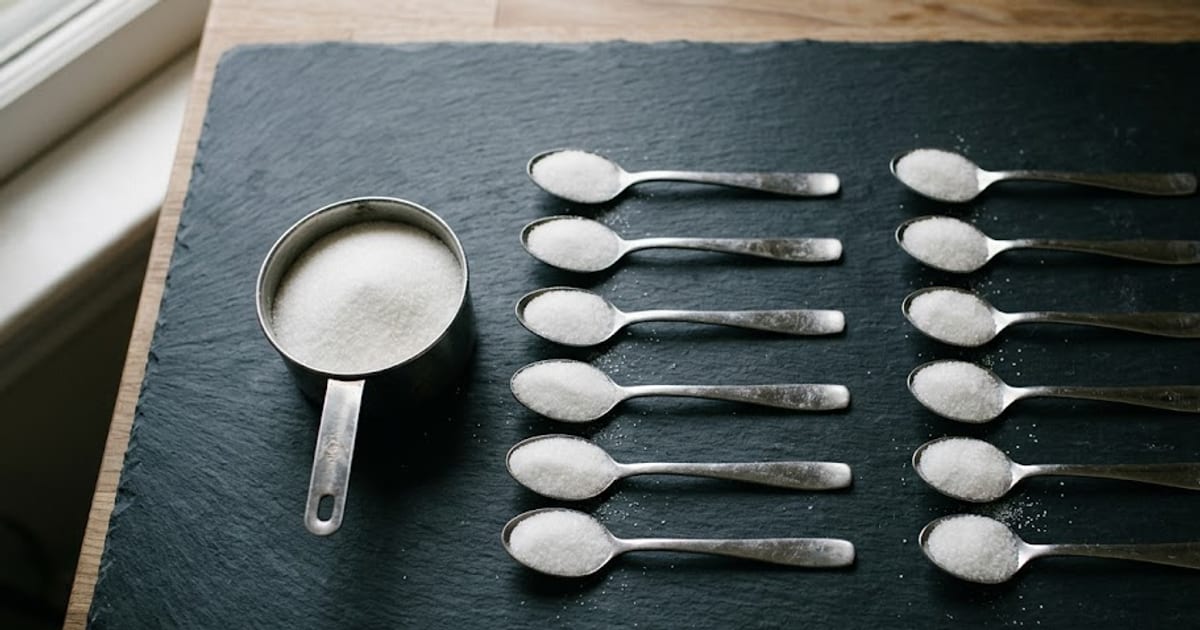
16 tablespoons in a US cup. Three teaspoons in a tablespoon, so 48 teaspoons in a cup.
| Cup | Tablespoons | Teaspoons | Fluid oz |
|---|---|---|---|
| 1 cup | 16 | 48 | 8 |
| ¾ cup | 12 | 36 | 6 |
| ⅔ cup | 10⅔ | 32 | 5⅓ |
| ½ cup | 8 | 24 | 4 |
| ⅓ cup | 5⅓ | 16 | 2⅔ |
| ¼ cup | 4 | 12 | 2 |
| ⅛ cup | 2 | 6 | 1 |
| 1 tbsp | 1 | 3 | ½ |
The thirds are the awkward ones
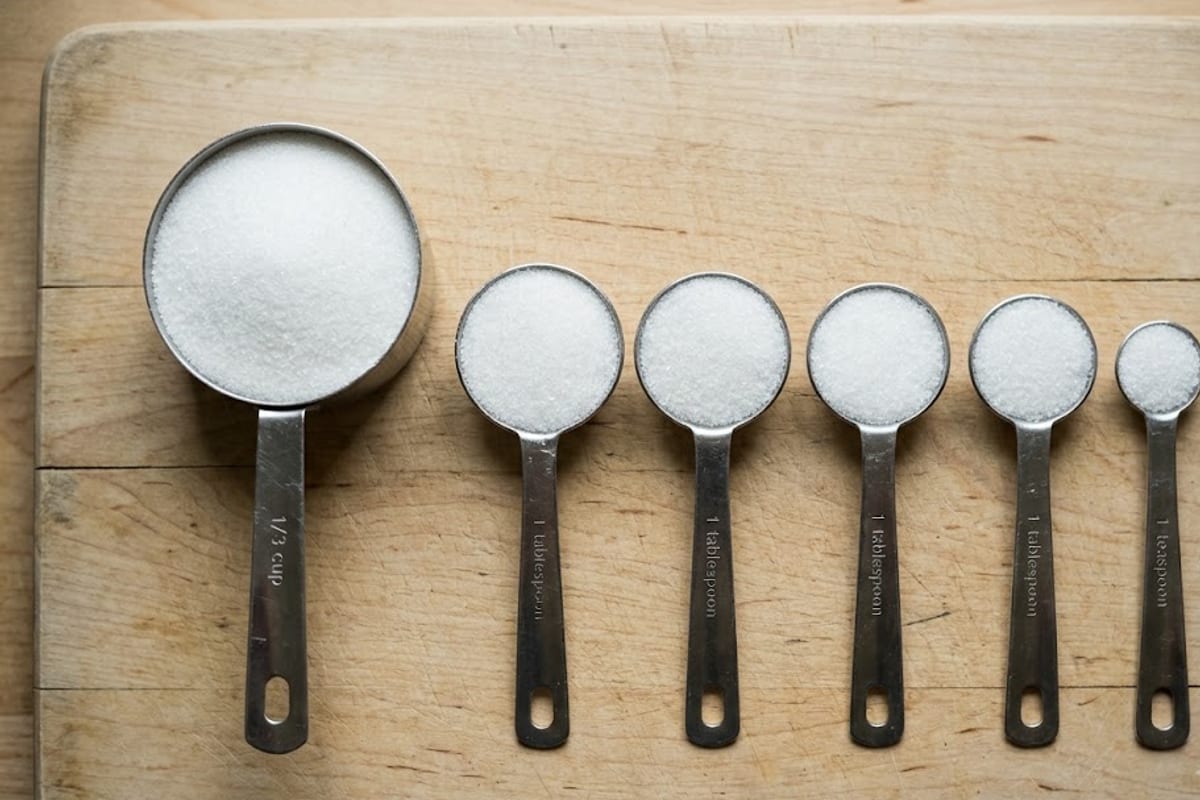
Sixteen divides cleanly by two, four and eight. It does not divide by three, which is why every third-based fraction lands on a remainder:
- ⅓ cup = 5 tablespoons + 1 teaspoon (5⅓ tbsp)
- ⅔ cup = 10 tablespoons + 2 teaspoons (10⅔ tbsp)
- ⅙ cup = 2 tablespoons + 2 teaspoons
Those two conversions are worth committing to memory, because a ⅓ cup measure is the one most likely to be dirty or missing when you need it, and "five and a third tablespoons" is not a thing anyone can measure directly.
Halving and thirding a recipe
Scaling down runs out of measuring equipment quickly. The ladder, when it gets small:
| Original | Half | Third |
|---|---|---|
| 1 cup | ½ cup | 5 tbsp + 1 tsp |
| ¾ cup | 6 tbsp | ¼ cup |
| ⅔ cup | ⅓ cup | 3 tbsp + 1½ tsp |
| ½ cup | ¼ cup | 2 tbsp + 2 tsp |
| ⅓ cup | 2 tbsp + 2 tsp | 1 tbsp + 1¾ tsp |
| ¼ cup | 2 tbsp | 1 tbsp + 1 tsp |
| 1 tbsp | 1½ tsp | 1 tsp |
| 1 tsp | ½ tsp | ¼ tsp (scant) |
Below a quarter teaspoon, volume measuring stops being meaningful. That is the point at which a scale, or simply not scaling that ingredient, is the honest answer — and it comes up constantly with salt, yeast and leavening in halved bread recipes.
The tablespoon that is not 15 mL
| Tablespoon | |
|---|---|
| United States | 14.8 mL (3 tsp) |
| United Kingdom, modern metric | 15 mL |
| Canada | 15 mL |
| Australia and New Zealand | 20 mL (4 tsp) |
The Australian tablespoon is a four-teaspoon spoon, one third larger than everyone else's. In a recipe using two tablespoons of a strong ingredient — baking soda, salt, a spice — that is a 33% overshoot, which is enough to ruin the dish rather than merely alter it.
Australian recipes usually note it. American recipes read by an Australian cook with Australian spoons do not, and that is the direction the error usually runs.
Teaspoons are 5 mL everywhere, including Australia, which is why the Australian tablespoon is four teaspoons rather than three.
Sticks of butter, for once, are easy
| 1 stick | 8 tbsp = ½ cup = 4 oz = 113 g |
| ½ stick | 4 tbsp = ¼ cup = 2 oz |
| 2 tbsp | ⅛ stick = 1 oz |
The wrapper is marked in tablespoons, so butter is the one ingredient you can measure accurately with a knife and no measuring equipment at all.
When the tablespoon is the wrong tool
Measuring spoons are accurate for liquids and for free-flowing powders. They are unreliable for anything sticky or anything that packs.
Honey, syrup and molasses leave a measurable amount behind in the spoon. Oiling the spoon first, or weighing instead, recovers it.
Brown sugar and cocoa pack. A tablespoon of firmly packed brown sugar holds noticeably more than a loose one, in the same way a cup of flour varies by 25% with how it is filled.
For the larger measures the whole ladder is halves — see the gallon table and the fluid ounce trap.