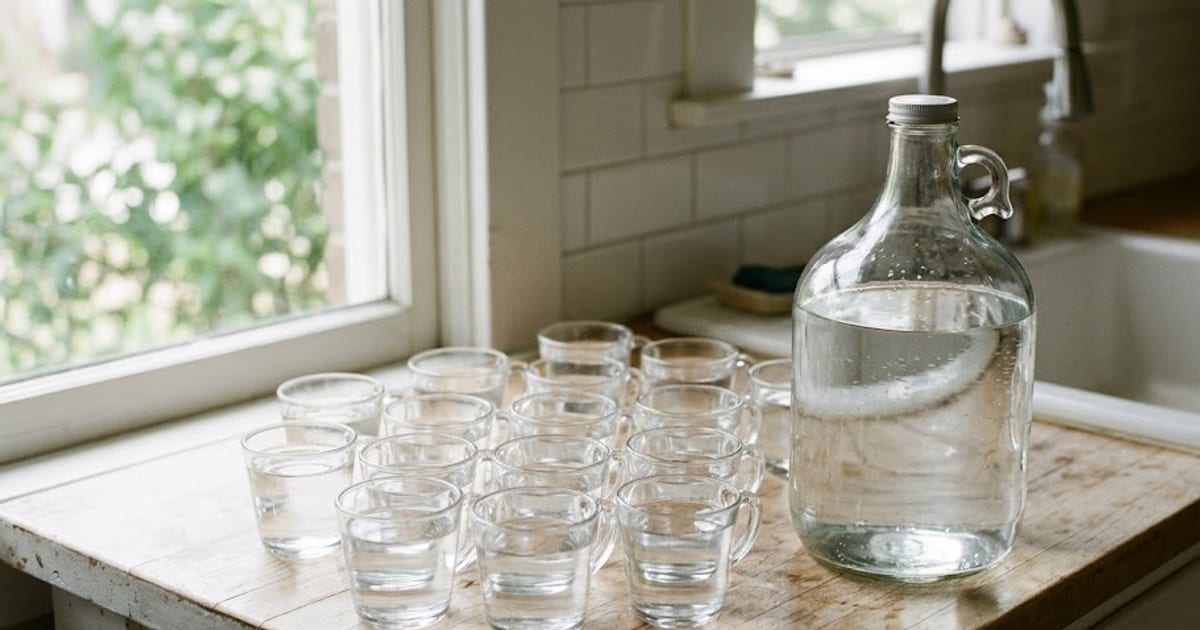
16 cups in a US gallon.
| Cups | Fluid ounces | |
|---|---|---|
| 1 gallon | 16 | 128 |
| ½ gallon (2 quarts) | 8 | 64 |
| 1 quart | 4 | 32 |
| 1 pint | 2 | 16 |
| 1 cup | 1 | 8 |
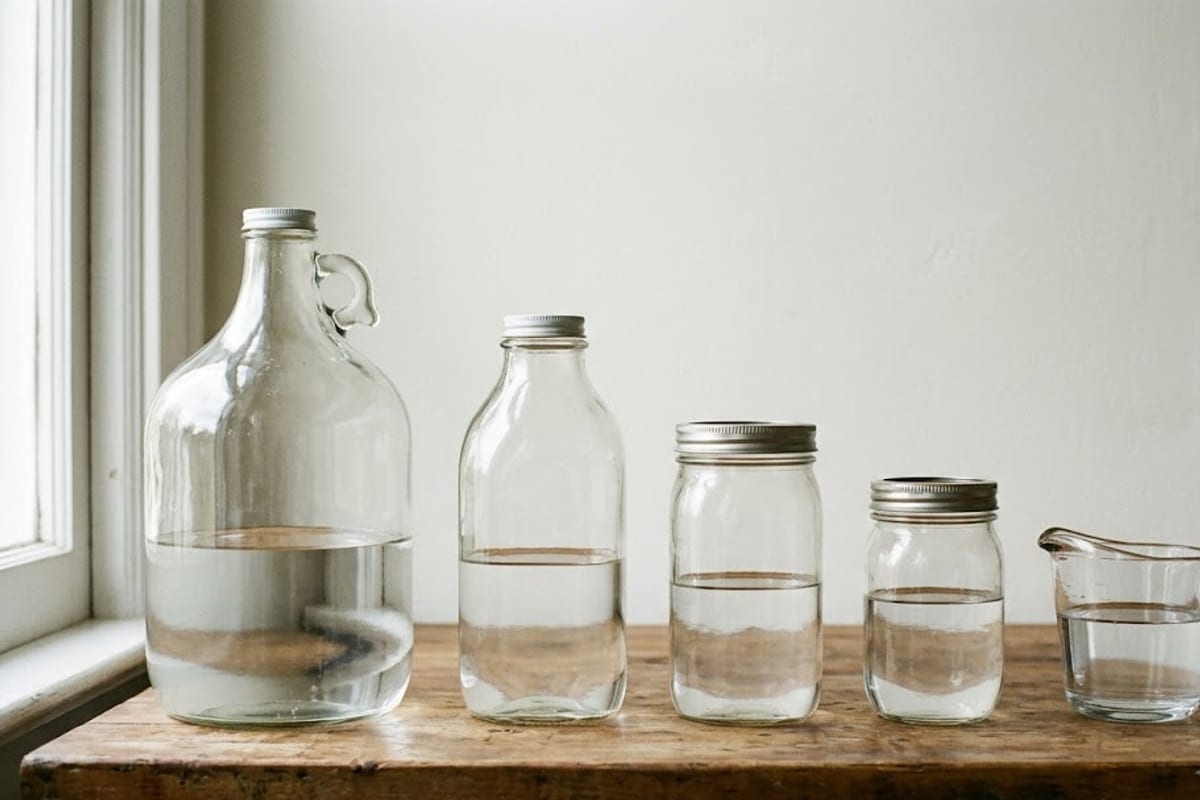
The whole ladder is halves: gallon to half-gallon to quart to pint to cup, each one half the one above it. Remembering that single fact reconstructs the entire table without memorising any of it.
The imperial gallon is 20% bigger
| US | Imperial (UK) | |
|---|---|---|
| Gallon | 3.785 L | 4.546 L |
| Cups per gallon | 16 | 20 |
| Fluid ounce | 29.57 mL | 28.41 mL |
| Pint | 16 fl oz | 20 fl oz |
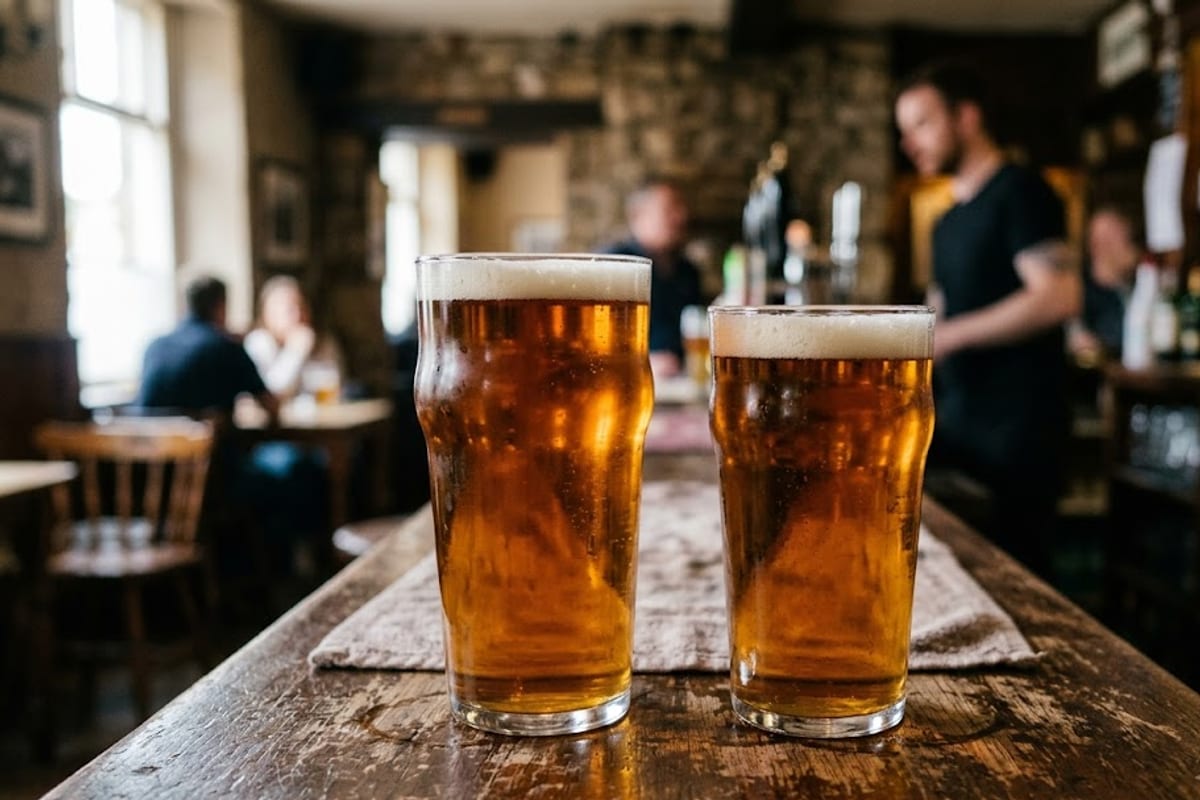
An imperial pint is 20 fluid ounces, not 16. That is why a British pint of beer is visibly larger than an American one, and why converting a recipe by numbers alone without checking its origin puts you a fifth out on every liquid.
The imperial gallon is largely historical in cooking now — modern British recipes use millilitres — but it survives in older cookbooks and in fuel economy figures, where UK miles per gallon numbers look flattering next to US ones for exactly this reason.
The metric equivalents
| US measure | Metric |
|---|---|
| 1 gallon | 3,785 mL |
| 1 quart | 946 mL |
| 1 pint | 473 mL |
| 1 cup | 237 mL |
| 1 fl oz | 29.6 mL |
| 1 tablespoon | 14.8 mL |
| 1 teaspoon | 4.93 mL |
A US cup is 237 mL, not 250. A "metric cup" of 250 mL is used in Australia and New Zealand and is about 5% larger — enough to matter in baking and not enough to matter in soup.
Dry cups and liquid cups hold the same volume
This surprises people, and it is worth stating plainly: a dry measuring cup and a liquid measuring cup of the same nominal size hold the same volume. The difference is only in how they are read.
A liquid cup has headroom and a spout, so you can fill it to a line without spilling and read it at eye level. A dry cup is filled to the brim and levelled with a straight edge, which cannot be done accurately in a vessel with a spout.
Use them the way they were designed and both are accurate. The real accuracy problem with dry ingredients is not the cup — it is that powders compress and liquids do not.
Scaling a recipe up
Doubling a recipe is not doubling every number, and the gallon-scale quantities are where that shows.
Liquids and most solids scale linearly. Twice the stock, twice the flour, twice the sugar.
Salt, spices and leavening do not. Doubling salt in a large batch commonly overshoots, because seasoning is judged against the whole and perception is not linear. Start at 1.5× and adjust.
Cooking time does not scale at all. A double batch in the same pan is deeper, and depth changes cooking time far more than volume does. Two pans at the original depth cook in the original time; one deep pan takes considerably longer and cooks unevenly.
Pan size scales by area, not by length. A 9-inch round pan holds roughly half what a 13-inch one does, not two-thirds — area goes with the square of the diameter.
The one that is genuinely different
Ounces of weight and fluid ounces are not the same unit. A cup of water is 8 fluid ounces and weighs 8 ounces, which is where the confusion starts. A cup of flour is 8 fluid ounces and weighs about 4.25 ounces.
Any recipe giving "8 oz of flour" means weight. Any recipe giving "8 oz of milk" almost certainly means volume. The unit is the same word for two different quantities, and the only reliable fix is a scale.