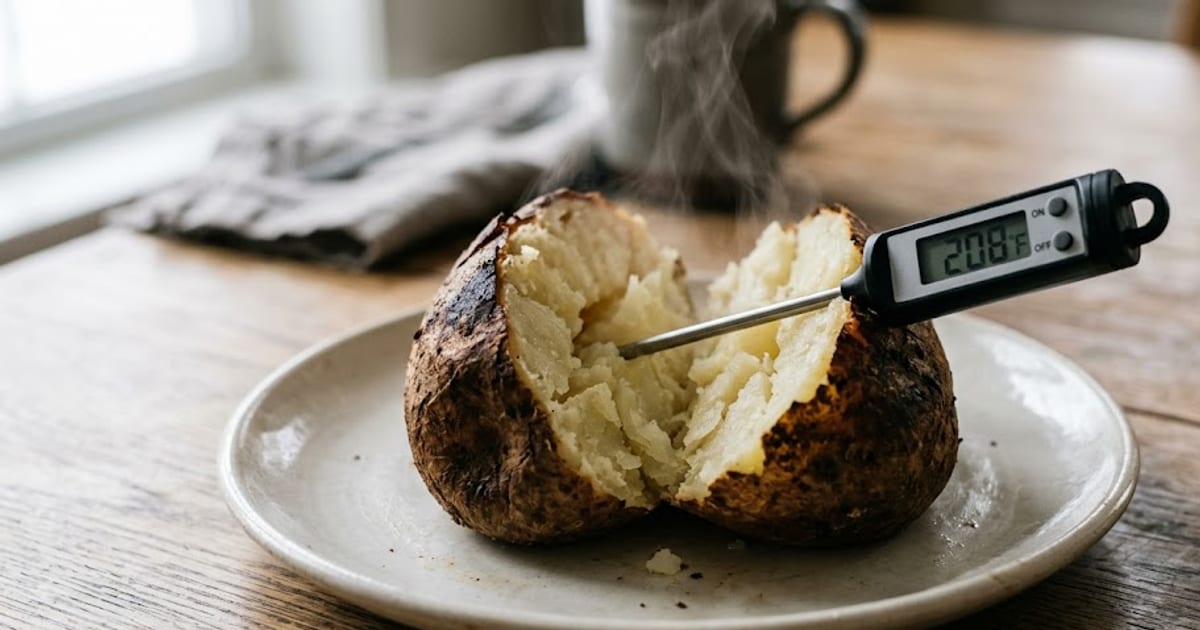
50 to 60 minutes at 400°F for a medium russet, around 8 to 10 oz. Done is 205 to 210°F internal.
| Potato | 350°F | 400°F | 425°F |
|---|---|---|---|
| Small, 5–6 oz | 55–65 min | 40–45 min | 35–40 min |
| Medium, 8–10 oz | 70–80 min | 50–60 min | 45–50 min |
| Large, 12–14 oz | 85–95 min | 65–75 min | 55–65 min |
| Sweet potato, medium | 65–75 min | 45–55 min | 40–45 min |
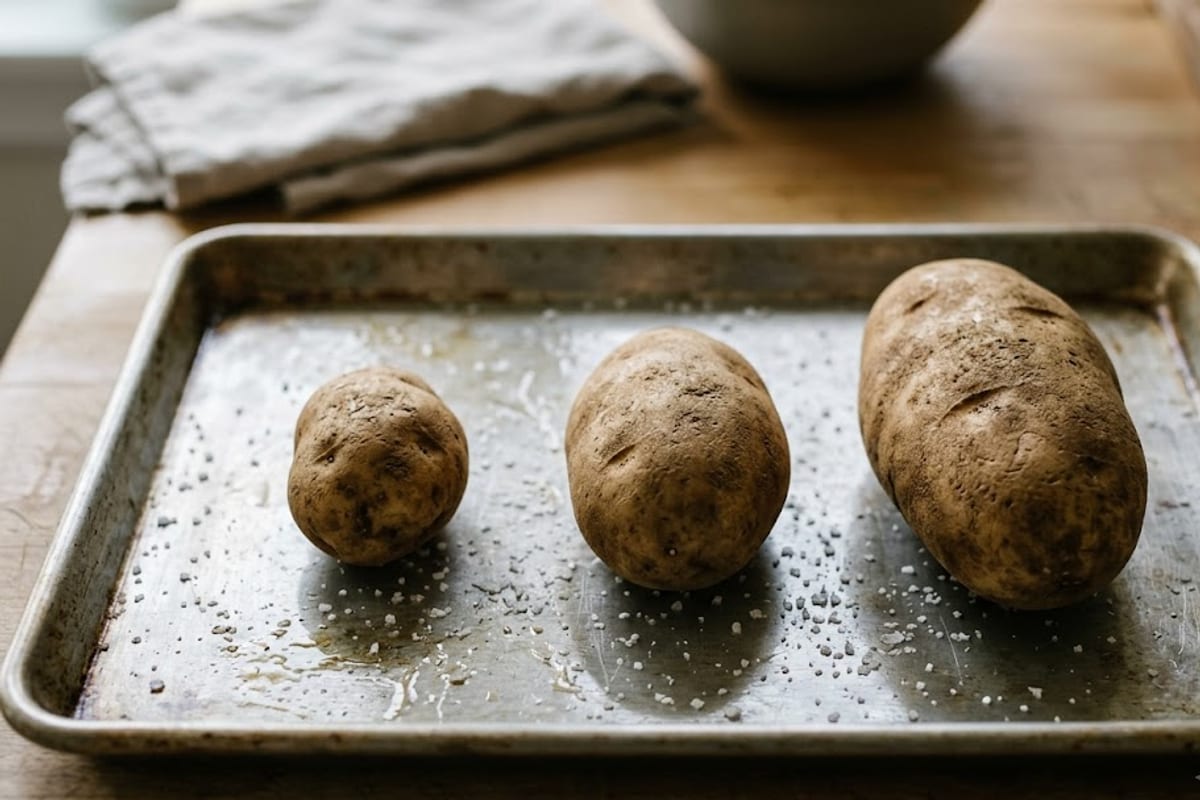
Done is a temperature, not a texture
This is the part most instructions skip. A potato is finished when the starch granules have fully gelatinised, and that happens between roughly 205 and 210°F.
Below that — even at 190°F, even with a skin that gives under a squeeze — the centre stays dense and slightly waxy. It reads as underdone without anyone being able to say why, and squeezing the outside will not detect it because the outer inch got there long ago.
A probe answers it in two seconds. The knife test detects softness, which is a proxy that fails at exactly the point it matters.
Sweet potatoes are done a little lower, around 205°F, and they have a second reason to go slowly: the enzyme that converts their starch to maltose works between about 135 and 170°F, so a potato that passes slowly through that band tastes sweeter than one rushed through it at the same final temperature.
Foil makes a different food
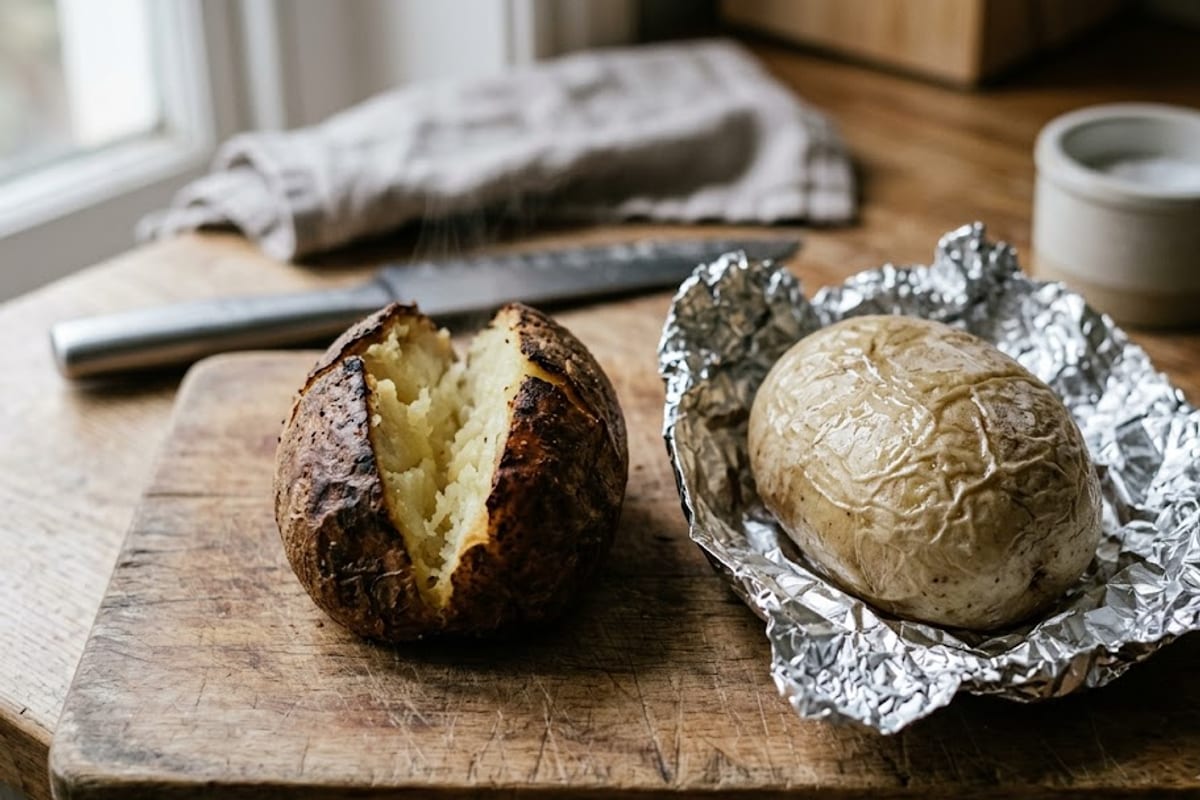
Foil traps the steam coming out of the potato. The skin never dries, so it never crisps, and the flesh is effectively steamed rather than baked.
That is a legitimate result if you want it — it is softer and it holds heat longer, which is why restaurants and caterers do it. It is not a baked potato in the sense most people mean, and it is why a potato that came home from a restaurant in foil tastes different from one out of your own oven.
Bare on the rack, pricked a few times, is the version with dry skin and a fluffy interior. A light coat of oil and salt on the outside improves the skin further; it does nothing for the inside.
Wrapping adds about 5 minutes, because the foil reflects some radiant heat.
Pricking, and the thing about explosions
Piercing the skin a few times with a fork lets steam escape. Potatoes genuinely can burst in an oven — rarely, but it happens, and cleaning it is unpleasant enough to justify four seconds of work.
It matters far more in a microwave, where steam builds much faster.
Why russets and not other potatoes
Russets are high-starch and low-moisture, which is exactly the combination that produces a dry, fluffy interior. Waxy potatoes — red, new, fingerling — hold together and stay dense however long they are baked, because they have less starch and more moisture.
That is not a cooking failure. It is what those varieties are for, and it is why roasting cubes of waxy potato works well while baking one whole does not.
The microwave shortcut, honestly
Six to eight minutes in a microwave produces a cooked potato with a soft, slightly leathery skin. Ten minutes in the microwave followed by 15 minutes in a 425°F oven produces something close to a properly baked one in a third of the time.
Straight from the microwave alone, the skin never dries and the texture is noticeably wetter. Whether that matters depends entirely on whether you eat the skin.
The doneness principle here is the same one that governs meat: a number inside, not an appearance outside — and oven temperature changes the time in a predictable way.