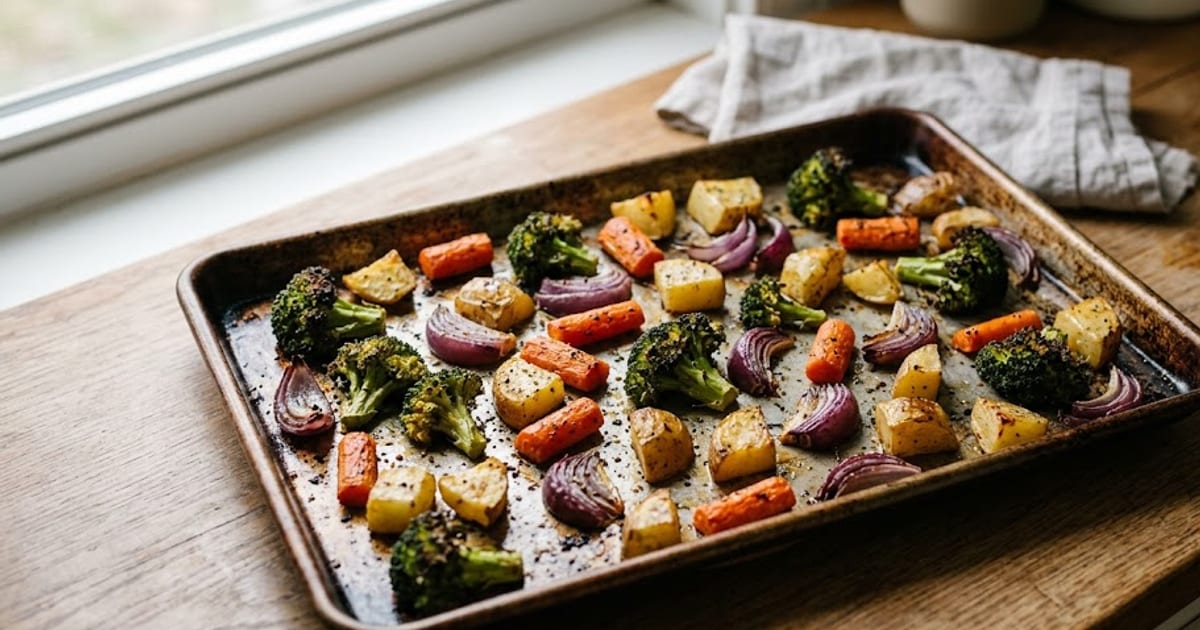
Roasting browns the outside while cooking the inside, and browning needs a dry surface and direct contact with hot metal. Everything below follows from that.
425°F (220°C) is the working temperature for most vegetables. Hotter browns faster and risks burning before the centre is done; cooler cooks through without colouring.
Times at 425°F, cut to roughly 1 inch
| Vegetable | Time |
|---|---|
| Asparagus, green beans | 12–18 min |
| Broccoli, cauliflower florets | 20–25 min |
| Brussels sprouts, halved | 20–30 min |
| Bell peppers, onions, courgette | 20–25 min |
| Carrots, parsnips | 25–35 min |
| Potatoes, 1″ cubes | 30–40 min |
| Beetroot, swede, celeriac | 40–50 min |
| Butternut squash, 1″ cubes | 25–35 min |
| Whole small potatoes | 45–60 min |
Cut size changes these more than anything else. Halving the cut roughly halves the time.
Crowding is the usual failure
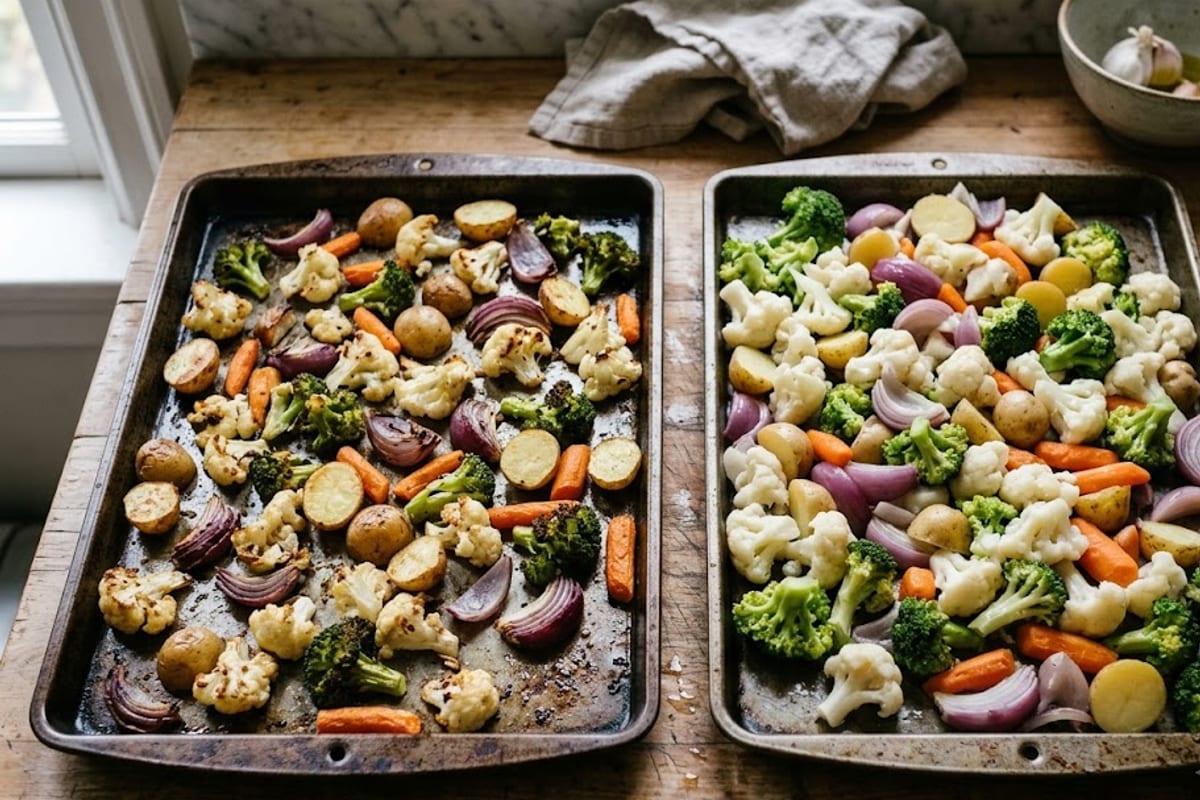
Vegetables release water as they heat. On a crowded pan that water has nowhere to go, the vegetables sit in steam, and they cook through pale and soft.
One layer, with space between the pieces. If it does not fit, use two pans rather than piling one.
A dark, heavy sheet pan browns better than a thin shiny one. Parchment is convenient and reduces browning slightly; direct contact with metal browns best.
Preheat the pan for the best result
Putting cut vegetables onto an already-hot pan starts the browning immediately rather than after the pan catches up. It makes a visible difference on potatoes and squash in particular.
Oil and salt, and when to salt
Enough oil to coat — roughly a tablespoon per pound — tossed until every surface is glossy. Too little and pieces stick and burn in spots; too much and they fry rather than roast.
Salt after roasting for the crispest result on watery vegetables, since salt draws moisture to the surface. For denser vegetables it makes little difference and salting before is fine.
Mixing vegetables on one pan
Group by cooking time rather than by what goes together on the plate. Two workable approaches:
Stagger the additions — root vegetables first, tender ones added partway through.
Cut to compensate — dice the slow vegetables smaller and the fast ones larger, so everything finishes together.
Putting broccoli and beetroot on together at the same size gives burnt broccoli and undercooked beetroot.
Turning
Once, at the halfway point, is enough for most things. Turning constantly interrupts contact with the pan and works against browning.
Some vegetables — halved Brussels sprouts, potato wedges — brown best cut-side down and undisturbed for the first two thirds of the time.
Knowing when it is done
Colour and a knife tip. Deep browning at the edges with a blade sliding in with almost no resistance is done; pale with resistance is not.
Vegetables are forgiving on timing in a way meat is not. Five minutes past is browner and better; five minutes short is the error worth avoiding.
Frozen vegetables
They roast, and they need different handling. Do not thaw — put them on the pan frozen, use a hot preheated pan, and expect them to take a few minutes longer and brown less, because they release considerably more water.
Spread them thinner than fresh for the same reason. A crowded pan of frozen vegetables is guaranteed to steam.
Convection
A fan oven browns faster and more evenly, and the usual adjustment is to drop the temperature by about 25°F or shorten the time by roughly a fifth. On vegetables, convection is a genuine improvement — the moving air carries away the moisture that would otherwise steam them.
If the oven has the option, use it for roasting and check a little earlier than the table says.
Leftovers and reheating
Roasted vegetables go soft in the fridge and never come back fully. Reheating in a hot oven or an air fryer for a few minutes restores far more of the texture than a microwave, which steams them a second time.
Cook slightly under if the plan is to reheat, and finish the browning at the second cooking rather than the first.