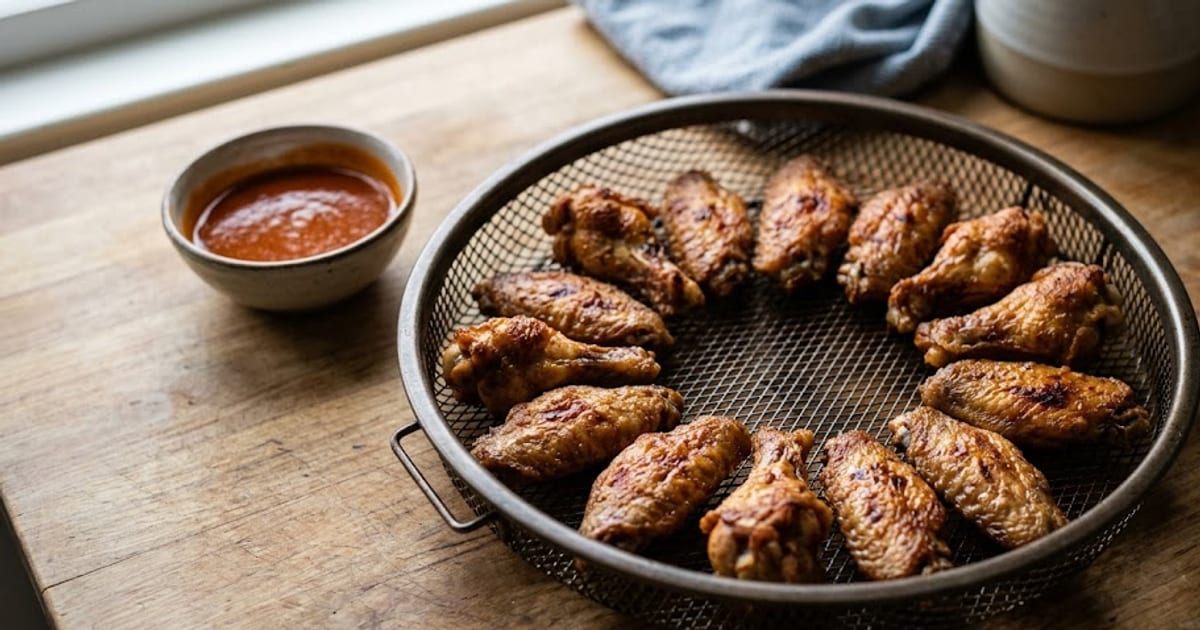
22 to 26 minutes at 400°F, flipped at 10 and again at 18 minutes. From frozen: 30 to 34 minutes, starting at 360°F for the first 10.
Pull at 175°F — well past the 165°F safety minimum, because wings are dark meat and dark meat is better past it.
| Temp | Time | |
|---|---|---|
| Fresh, whole wings | 400°F | 22–26 min |
| Fresh, flats and drums separated | 400°F | 20–24 min |
| Frozen, from solid | 360 → 400°F | 30–34 min |
| Party wings, small | 400°F | 18–22 min |
| Extra crisp finish | 400 → 425°F last 3 min | +3 min |
Doneness is not the problem
A wing is small and thin. It reaches 165°F comfortably inside fifteen minutes at any of these temperatures, and it will still be pale, soft and unpleasant.
Everything worth having in a wing happens after that: fat rendering out from under the skin, collagen in the joints converting, and the skin dehydrating enough to crisp. Those take the remaining ten minutes, and they are the reason the target sits at 175°F rather than the safety number.
This is the same logic that puts chicken thighs at 175–185°F and it runs the opposite way to breast, where every degree past 165 costs you.
The two preparation steps that decide the result
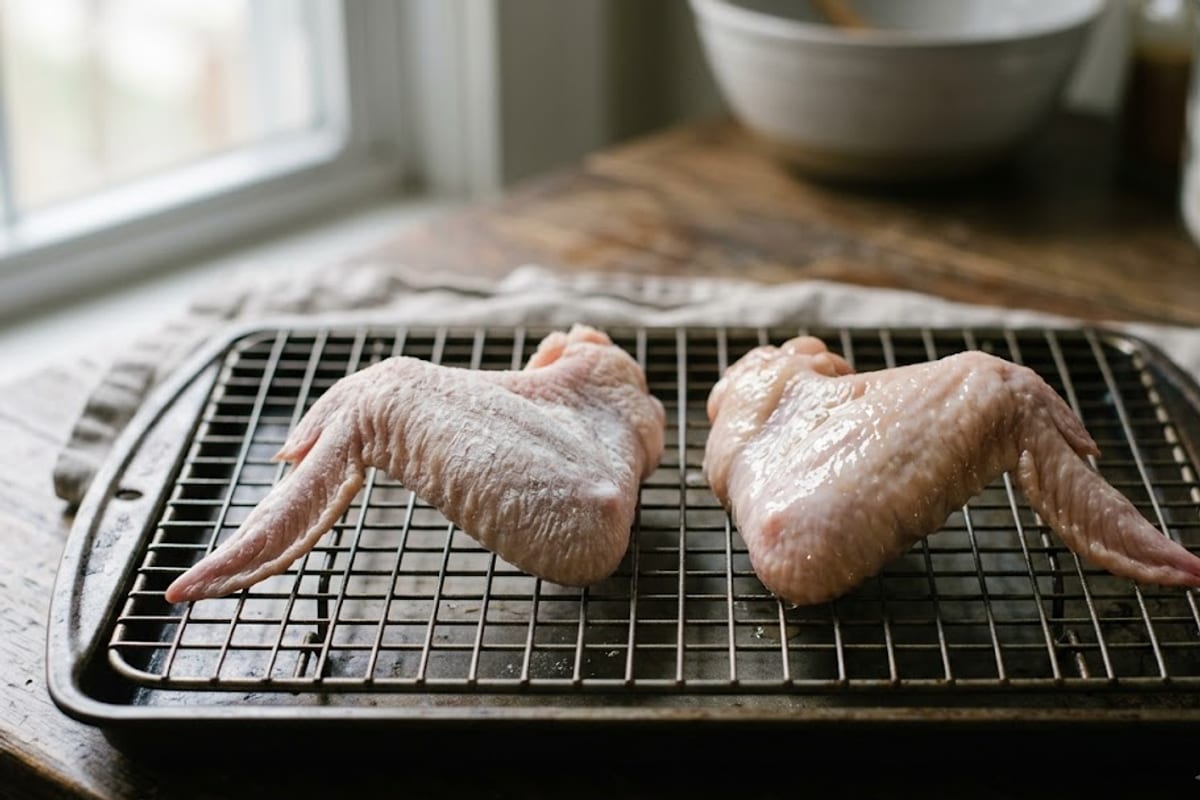
Dry the skin. Wings come out of the packet wet, and water on the surface has to evaporate before anything can brown. Patting them dry with paper towel is the minimum; leaving them uncovered on a rack in the fridge for a few hours is noticeably better.
Baking powder, not baking soda. A teaspoon of baking powder per pound, tossed with the wings before cooking, raises the surface pH and speeds the browning reactions. It also draws moisture out of the skin. This is the single largest difference between home wings and the ones that come out shatteringly crisp, and it costs nothing.
Use aluminium-free baking powder — the other kind leaves a metallic taste. Do not substitute baking soda, which is far stronger and will taste of it.
Basket load, again
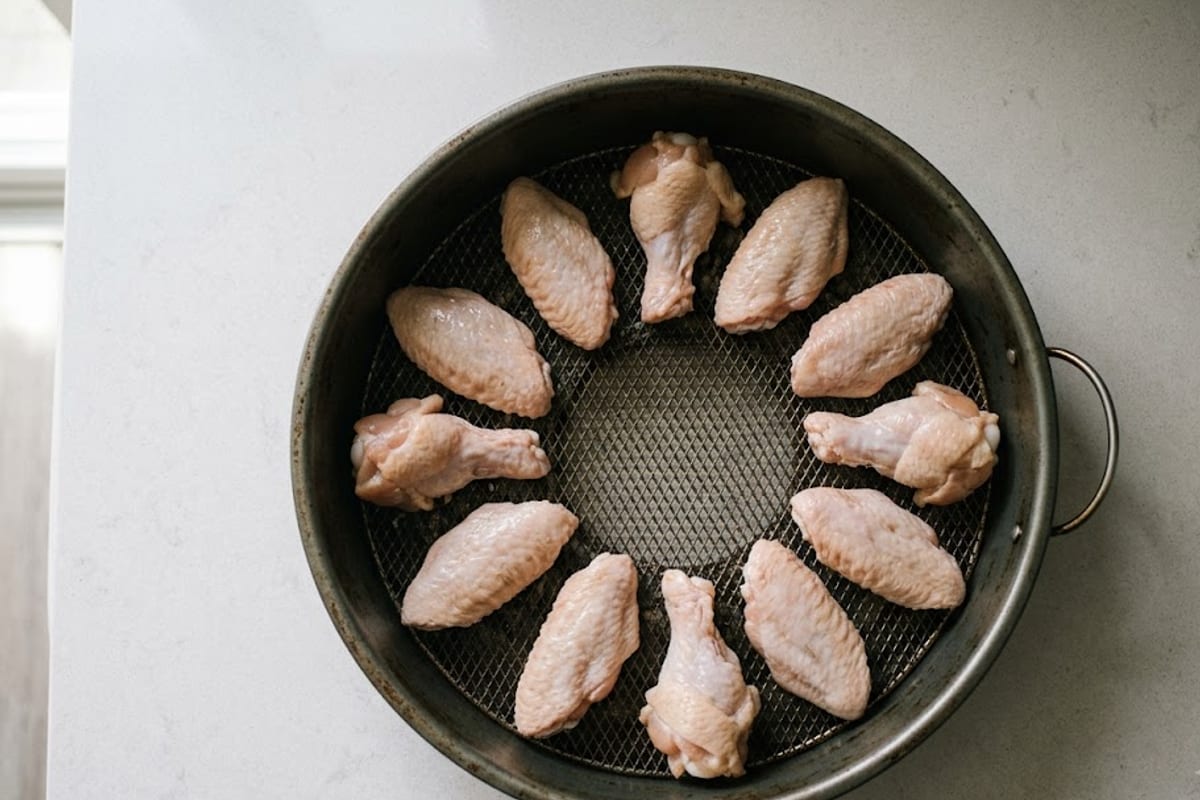
Wings render a lot of fat and need air on every surface. A single layer with gaps is not a suggestion here; it is the entire mechanism.
A 5-quart basket holds about 1 lb of wings in one layer, which is 8 to 10 pieces. Two pounds means two batches, and the second batch takes 2 to 3 minutes less because the machine is already hot.
Arranging them in a ring around the edge with the centre empty works better than filling the basket evenly, because the airflow in most drawer-style machines comes down the middle and up the sides.
The smoke, and how to stop it
Wings drip enough fat to smoke on the drawer floor once it gets hot. That is normal rather than a fault.
A tablespoon or two of water in the drawer beneath the basket stops it completely and does not affect the cooking — the basket sits above it, and the small amount of steam is gone within a minute.
Sauce goes on after, not before
Any sauce with sugar in it burns at 400°F. Buffalo sauce, barbecue sauce, honey glazes — all of them go on after the wings come out, tossed in a bowl.
The exception is a dry rub, which goes on before and is fine as long as it contains no sugar. Read the rub; most commercial ones do.
If you want the sauce set rather than wet, toss the wings and return them to the basket for 2 minutes at 400°F. Longer than that and the sugar catches.