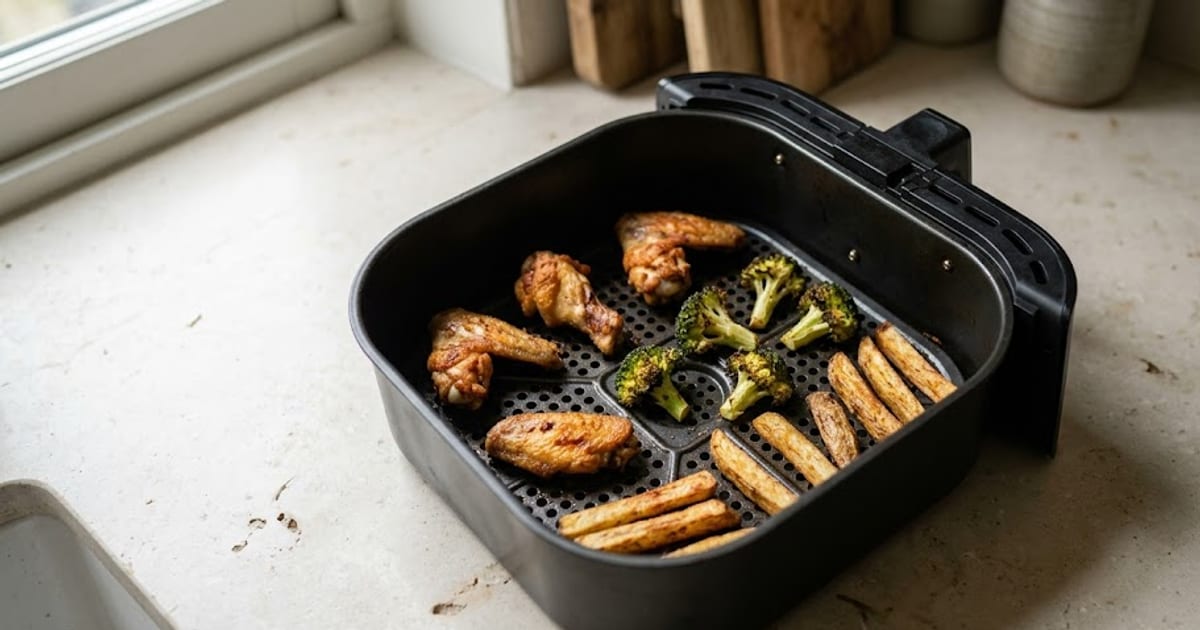
All times assume a single layer with gaps and a 3-minute preheat. Flip anything thicker than half an inch once at the halfway point.
Poultry
| Temp | Time | Pull at | |
|---|---|---|---|
| Chicken breast, boneless | 375°F | 16–20 min | 160°F |
| Chicken thighs, bone-in | 400°F | 22–28 min | 180°F |
| Chicken wings | 400°F | 22–26 min | 175°F |
| Drumsticks | 380°F | 22–26 min | 180°F |
| Whole chicken, 4 lb | 360°F | 55–65 min | 165°F breast |
| Turkey breast, 3 lb | 350°F | 45–55 min | 160°F |
Meat
| Temp | Time | Pull at | |
|---|---|---|---|
| Ribeye, 1 in | 400°F | 10–14 min | 125°F |
| Pork chops, 1 in | 380°F | 12–15 min | 140°F |
| Pork tenderloin | 400°F | 18–22 min | 140°F |
| Burgers, ¾ in | 375°F | 10–13 min | 158°F |
| Bacon | 350°F | 8–11 min | — |
| Meatballs, 1 in | 380°F | 10–12 min | 160°F |
Fish and seafood
| Temp | Time | Pull at | |
|---|---|---|---|
| Salmon fillet, 1 in | 390°F | 8–11 min | 125°F |
| Cod fillet | 380°F | 9–12 min | 140°F |
| Shrimp, large | 400°F | 6–8 min | 120°F |
| Fish fingers, frozen | 400°F | 9–11 min | — |
Vegetables
| Temp | Time | |
|---|---|---|
| Brussels sprouts, halved | 380°F | 14–18 min |
| Broccoli florets | 375°F | 8–11 min |
| Potato wedges | 400°F | 18–22 min |
| Whole baked potato | 400°F | 35–45 min |
| Asparagus | 400°F | 6–9 min |
| Carrots, batons | 380°F | 14–18 min |
| Cauliflower florets | 400°F | 12–16 min |
| Courgette / zucchini | 400°F | 10–13 min |
Frozen convenience food
| Temp | Time | |
|---|---|---|
| French fries | 400°F | 14–18 min |
| Chicken nuggets | 400°F | 8–11 min |
| Mozzarella sticks | 380°F | 6–8 min |
| Spring rolls | 390°F | 8–11 min |
| Pizza rolls | 380°F | 6–8 min |
Frozen food is what air fryers are unambiguously best at, because the surface is dry and the product was engineered for hot dry air in the first place.
The three adjustments that make any chart yours
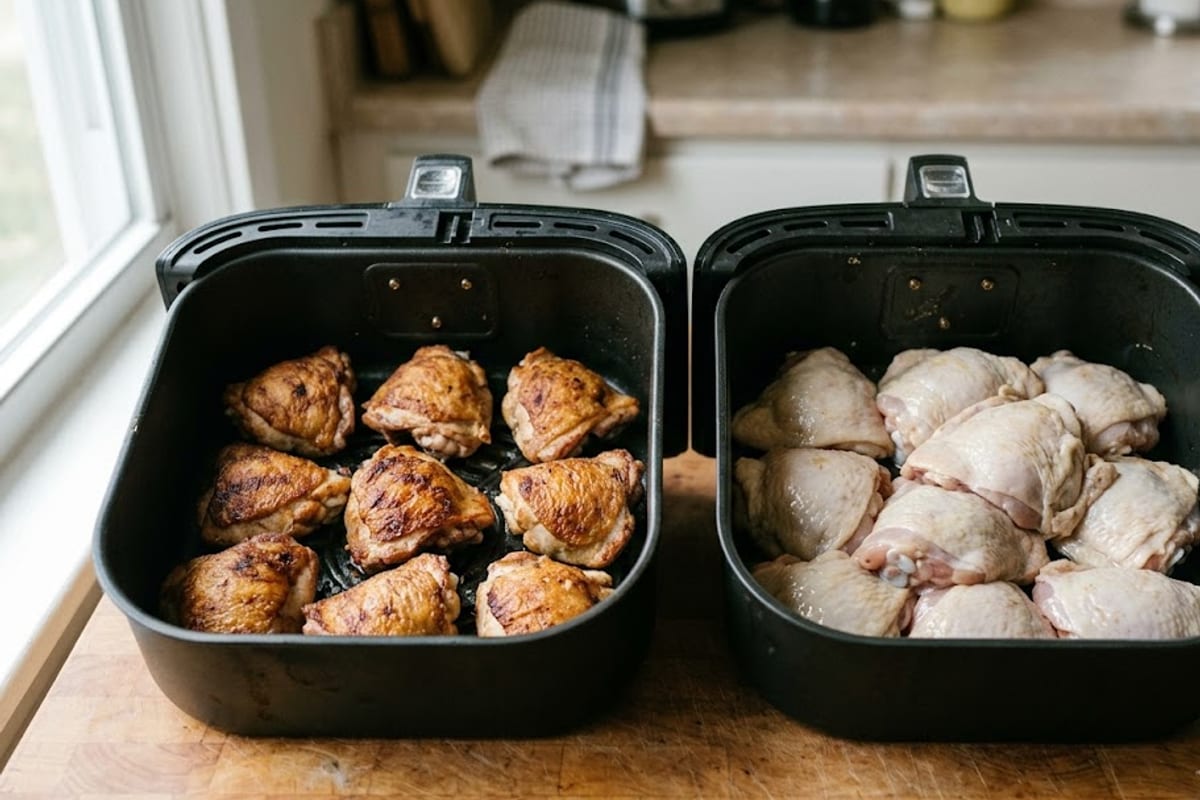
1. Load. Every number above assumes one layer with gaps. Pieces touching: add 3 to 5 minutes. Stacked: add 8 to 12 and accept that it will not crisp. Two uncrowded batches beat one crowded one every time, and the second batch runs 2 to 3 minutes quicker because the machine is already hot.
2. Your machine's real temperature. Air fryer dials are less accurate than oven dials and basket geometry is not standardised. Two 5-quart machines at 400°F can differ by 25°F at the food surface. The first time you cook something new, treat the probe reading as calibration rather than a check — note it once and you will not guess again.
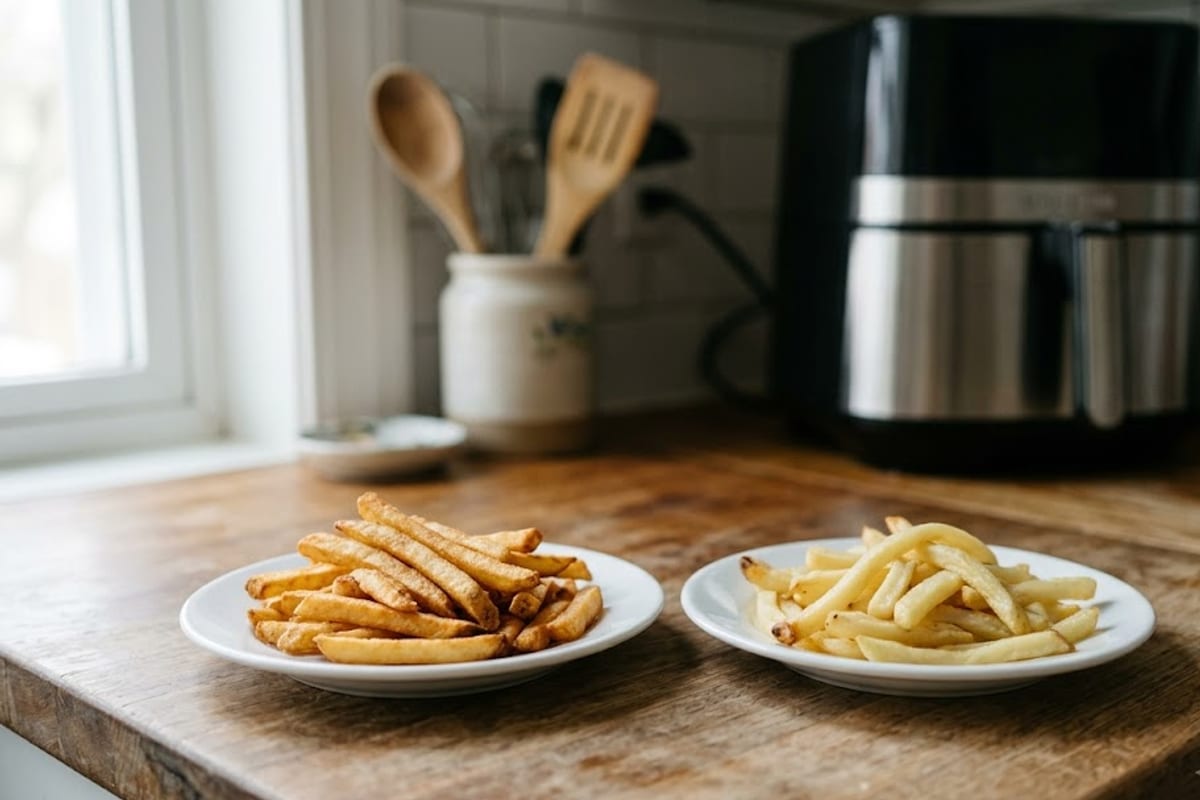
3. Preheat. A cold start adds 3 to 4 minutes and changes the texture, because the surface spends those minutes warming rather than searing. Some manuals say it is unnecessary; these times assume 3 minutes of it.
What does not change
The safety targets. Poultry still reaches 165°F, ground meat 160°F, whole cuts 145°F with a rest. Fast air changes the time, not the biology.
What it does change is carryover. Small pieces in moving air gain only 2 to 4°F after coming out, against 5 to 10°F for an oven roast — so the pull temperature and the serving temperature sit close together here, and a late check costs more than it would in an oven.
What air fryers are bad at
Wet batters, which run off with no hot oil to set them. Anything needing to rise before it sets, since the airflow is strong enough to lopside a cake. Large roasts, which do not fit in one layer by definition. And anything sauced before cooking, because sugar burns fast at these temperatures — sauce goes on in the last three minutes or after.
Individual cuts have their own pages: wings, thighs and breast.