Internal Temperature
Pull temperature against serving temperature, by meat.
There are two temperatures for every piece of meat, and almost every chart online prints only one of them.
The serving temperature is what it reads on the plate. The pull temperature is what it should read when it comes off the heat, which is lower — because food keeps cooking after the heat is gone. Cook to the serving number and you arrive one stage past where you meant to be.
How much carryover to expect
It depends on thickness and on how hot the surface got, not on weight.
| Carryover | |
|---|---|
| ¾ in steak, pan seared | 2–3°F |
| 1.5 in steak, hot pan | 5–8°F |
| 2 in steak, reverse seared | 3–5°F |
| 3 lb roast, 350°F oven | 5–10°F |
| 14 lb turkey | 10–15°F |
Two pieces of the same weight behave differently if one is thick and one is thin, and the same piece carries over less from a low oven than from a screaming pan — the gentle method never builds the steep gradient that drives it.
Safe and good are different numbers, in both directions
For steak, the USDA minimum of 145°F is medium well. Whole-muscle beef carries its risk on the surface, which a sear sterilises, and that is the reasoning behind serving it at 130–135°F.
For chicken thigh, the safe number of 165°F is well short of good — collagen needs 175–185°F to become gelatin, and thigh has the fat to survive it.
Ground meat is the case where the reasoning does not transfer at all. Grinding moves surface bacteria into the middle, where no crust reaches, so 160°F for burgers is a different problem to steak rather than a conservative version of the same one.
Where you put the probe decides the reading
Into the thickest part, away from bone and away from fat: bone conducts heat faster and reads high, fat reads low. In anything under about an inch and a half, go in from the side rather than down through the top, or the tip sits nearer the pan than the centre. Check the coldest piece on the tray, not the nearest one.
Anyone cooking for a young child, an older adult, a pregnant person or anyone immunocompromised should use the USDA column rather than the culinary one.
15 articles
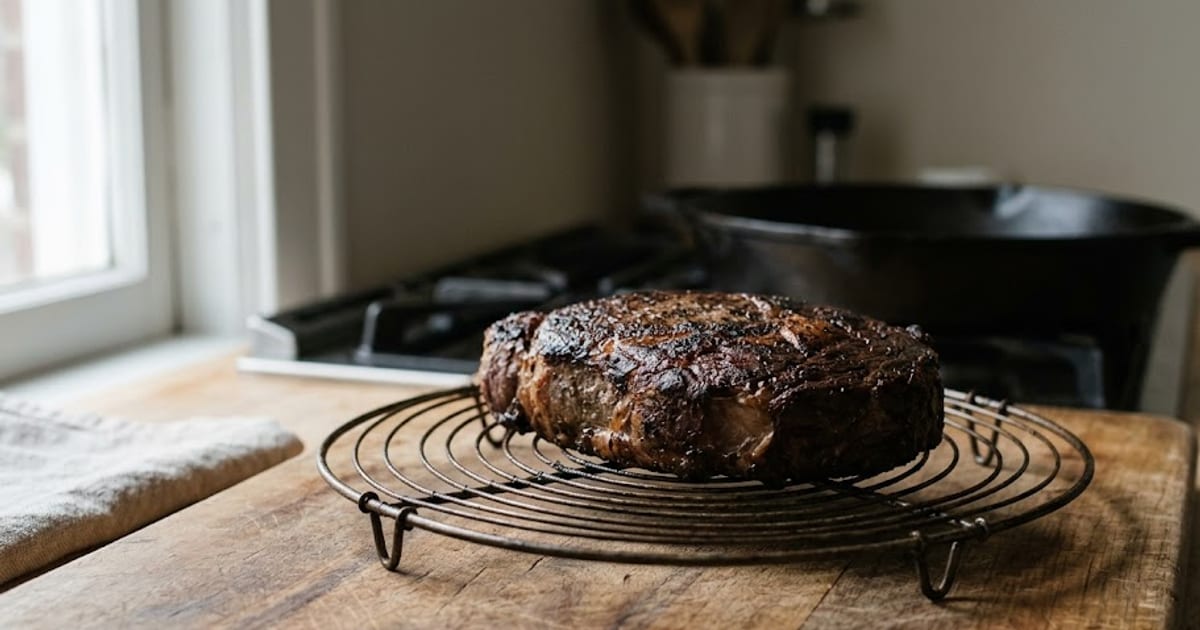 How Long to Rest Meat: 5 Minutes for a Steak, 20 to 30 for a Turkey
Resting does two jobs. It lets the heat already inside the meat finish the cooking, and it lets the muscle relax so less juice runs out when you cut. The first matters more than most recipes say.
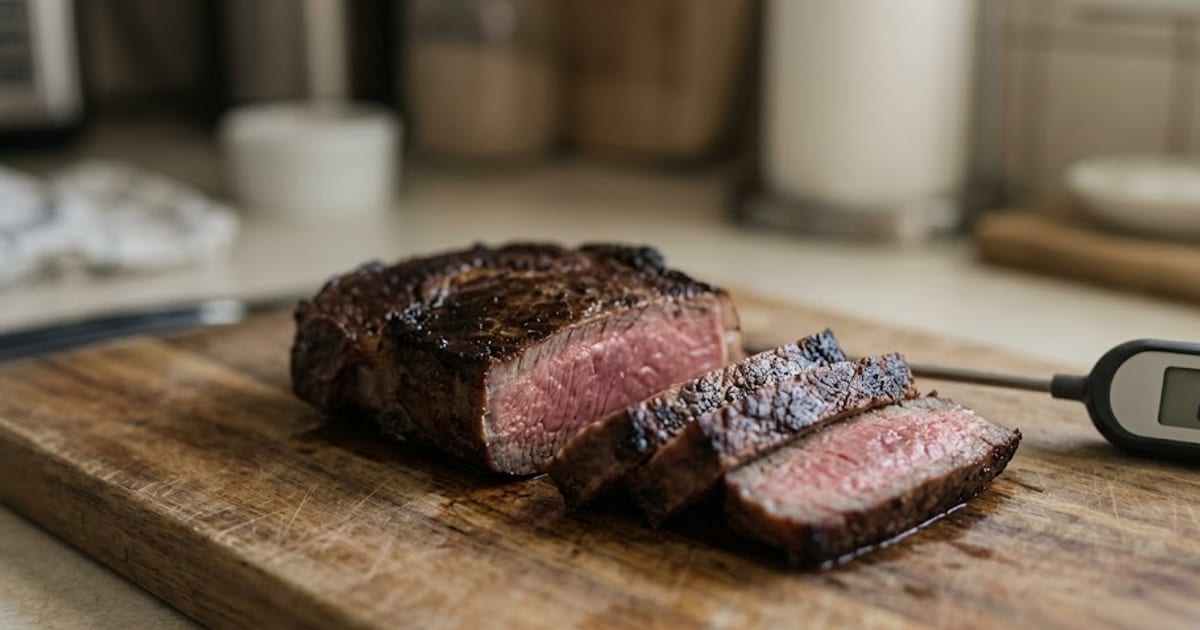 Internal Temperature for Medium Rare Steak: Pull at 125°F, Serve at 130–135°F
Every doneness chart prints the serving temperature. Almost none print the pull temperature, and the gap between them is the reason a steak cooked to the chart comes out one stage over.
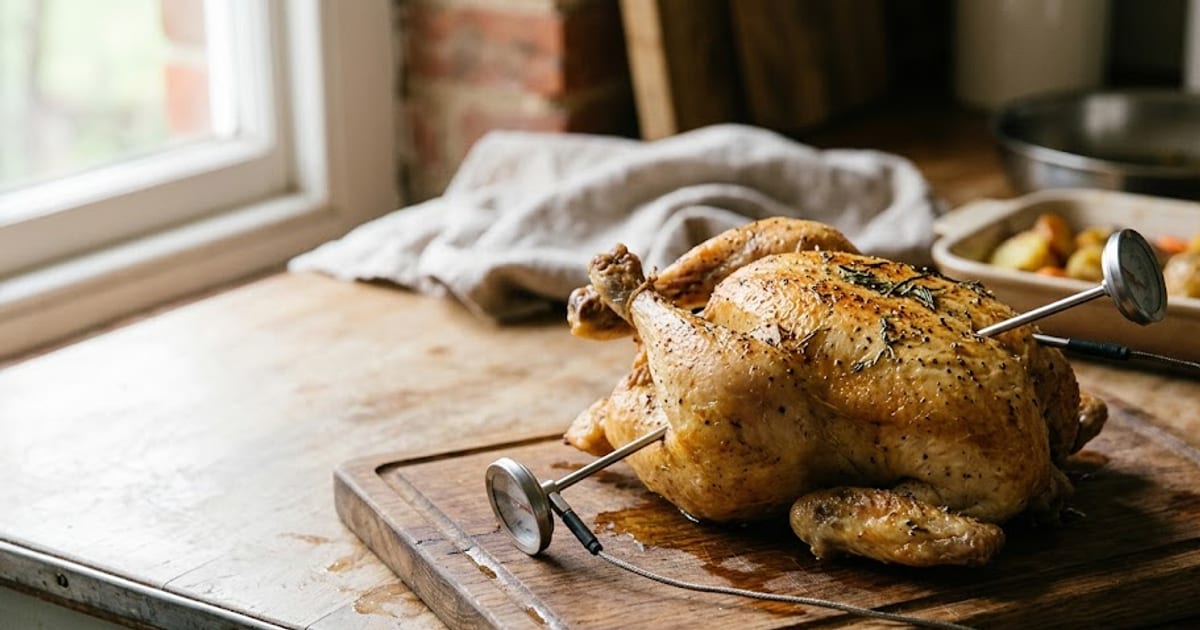 Internal Temperature for Chicken: 165°F Is Safe, and Thigh Wants 175–185
Chicken is the one meat where the safe number and the good number pull in opposite directions depending on which part of the bird you are holding.